
Last updated September 21, 2026
Full 25-point door and opener safety check with every visit - springs, cables, rollers, tracks, and your LiftMaster or Chamberlain opener included
You get a price before we start. It does not change when the truck arrives.

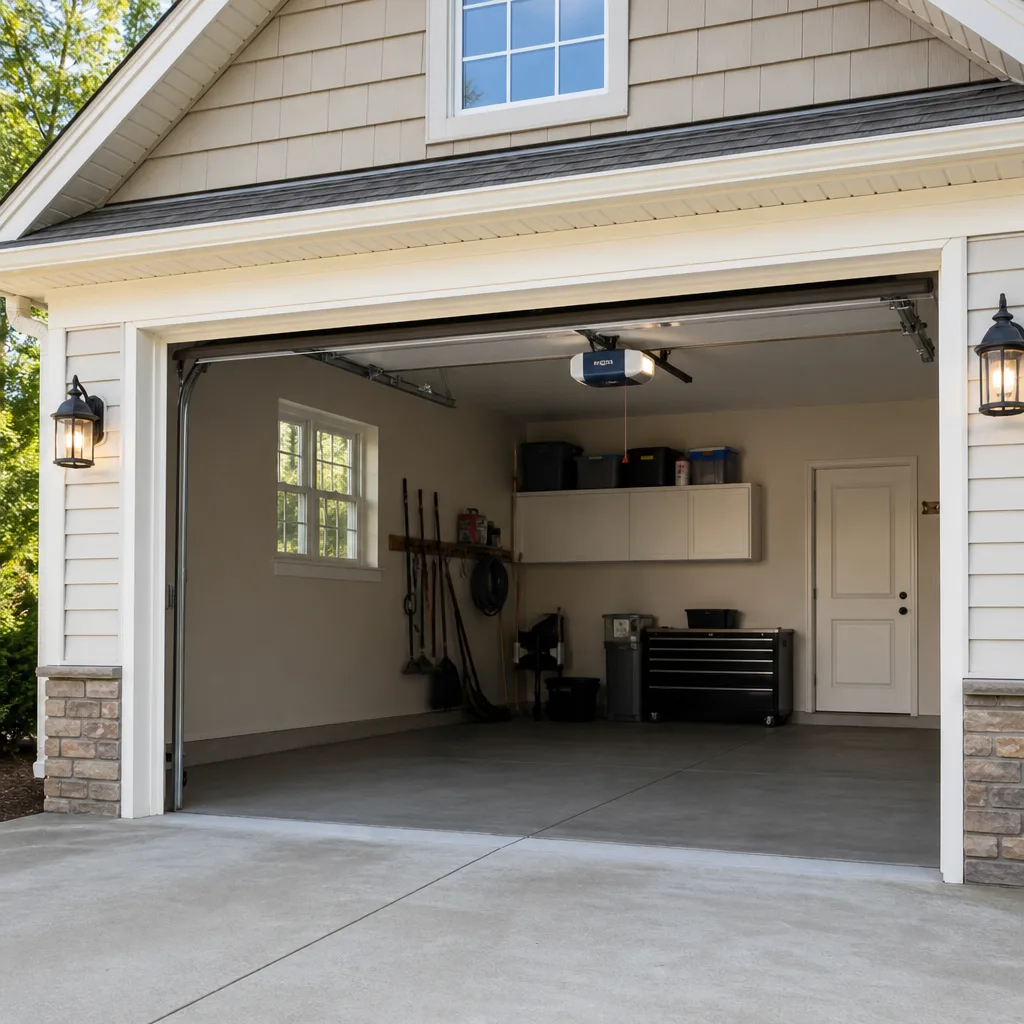
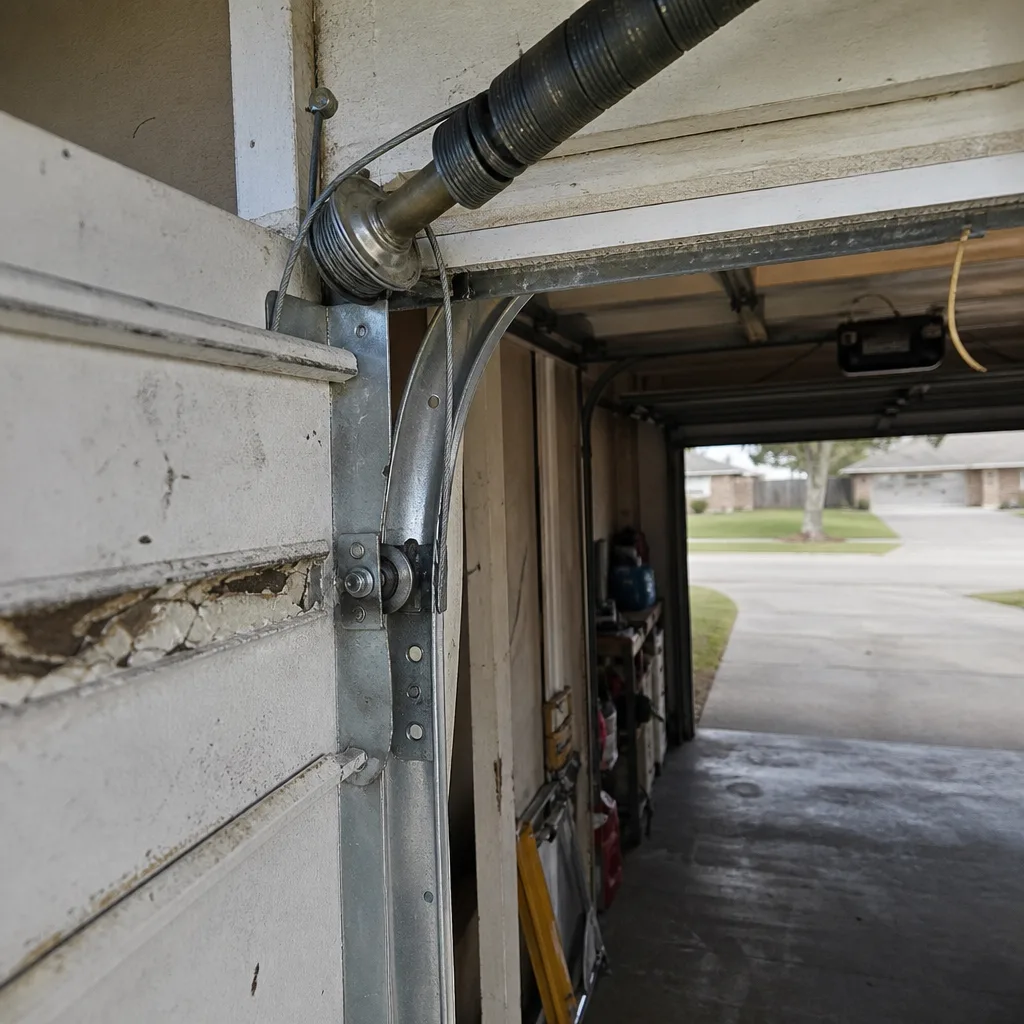 Before
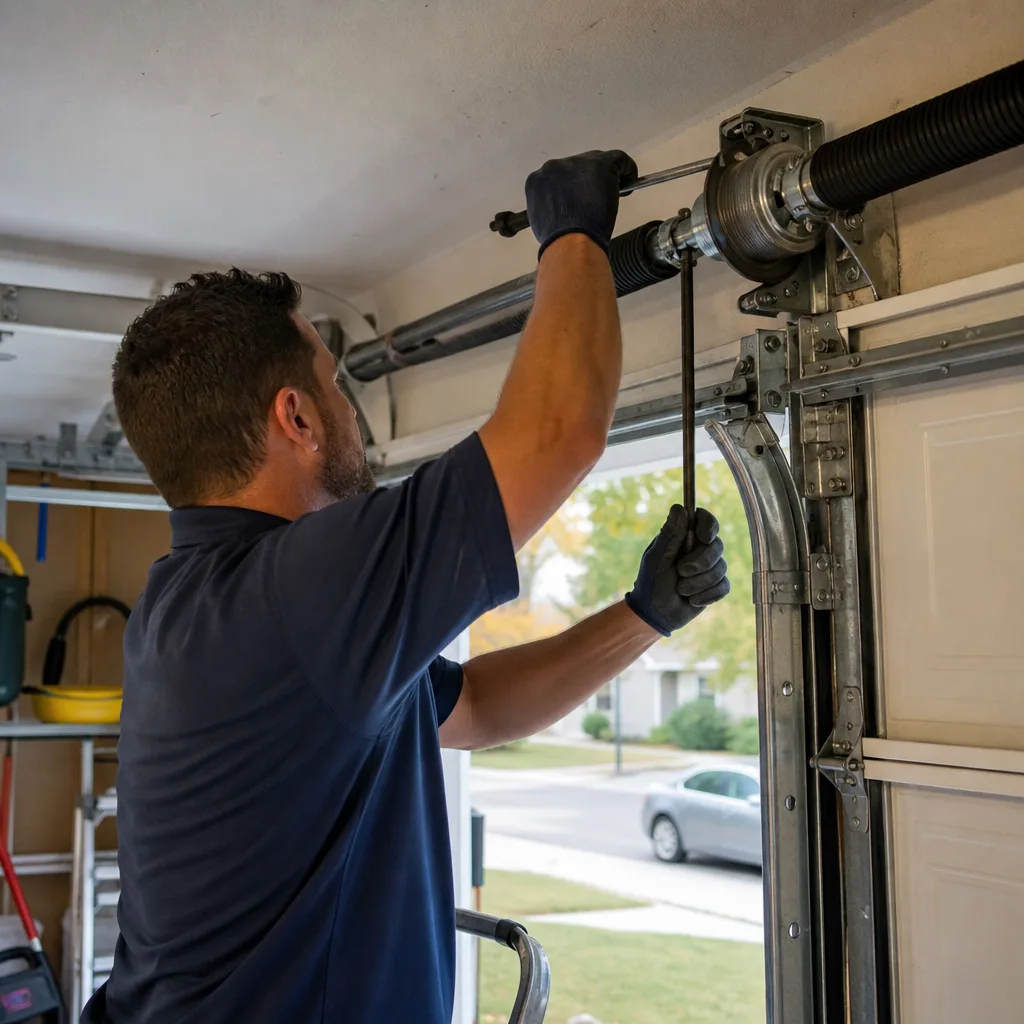 After
After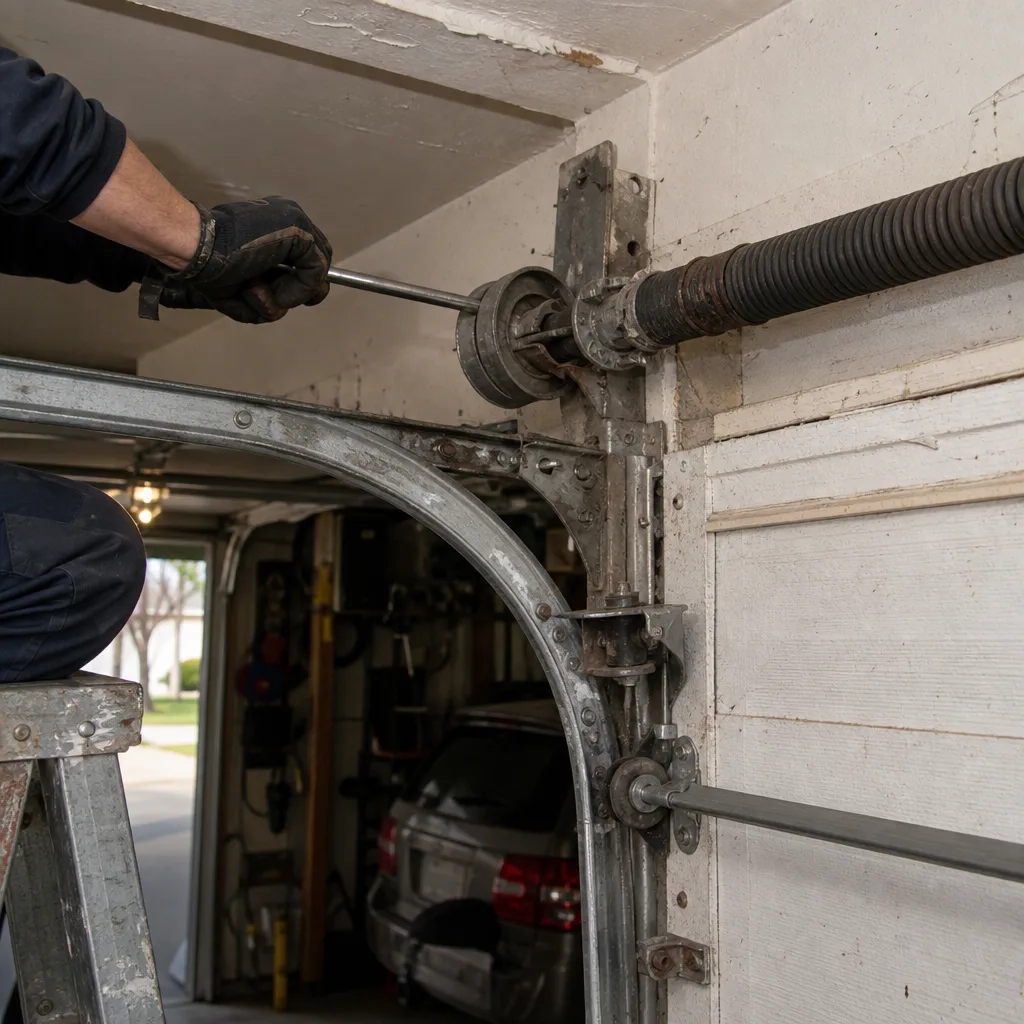 Before
 After
After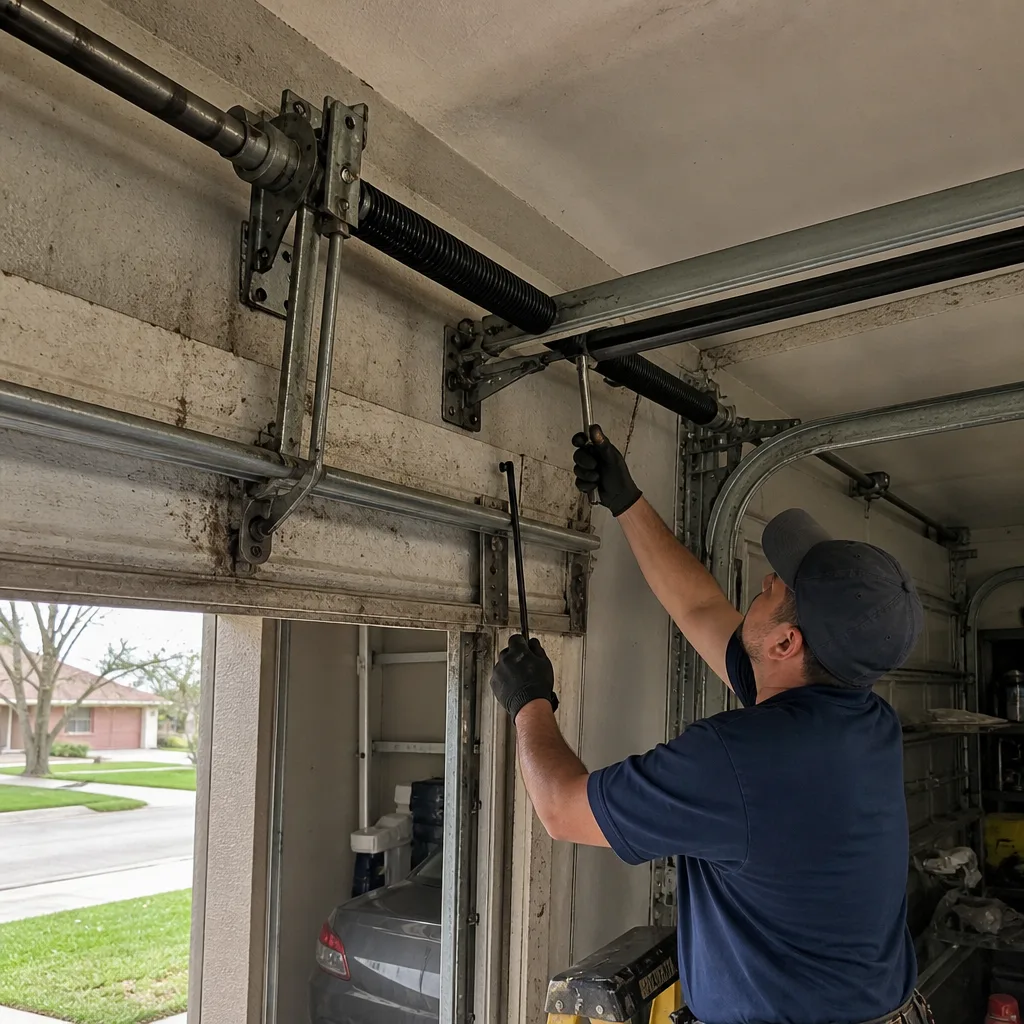 Before
 After
AfterGarage Door Warning Signs: A Missouri City Homeowner’s Reference Guide
A garage door that shudders on the way down is not having a bad day. It is showing you that one cable is carrying more load than the other, which is the precursor to a cable snap, which is the precursor to a panel drop that the safety sensors are not designed to catch. In Missouri City, where afternoon humidity spikes above 80% for months and garage temperatures swing 40 degrees between summer and winter, these mechanical stresses accelerate faster than homeowners expect. This guide - along with our Complete Guide to Garage Door in Missouri City - pairs every symptom with its cause, its risk level, and whether it can wait or cannot. You’ll learn to distinguish a spring problem from a cable problem from an opener problem when the symptom looks the same, and you’ll know exactly what to photograph if your door fails mid-cycle.
Quick Answer
The critical garage door warning signs are: uneven movement (cable imbalance, risk of panel drop), loud popping or snapping sounds (torsion spring failure, immediate stop-use), grinding metal on metal (worn rollers or bent track, schedule within 30 days), and a door that reverses before closing (sensor misalignment or track obstruction, safe to monitor but fix promptly). In Missouri City’s climate, rust from humidity and thermal expansion from temperature swings make cable fraying and spring fatigue more common than in drier markets; see our Seasonal Garage Door Care for Missouri City for prevention steps.
Table of Contents
- Symptom-to-Cause Mapping: What Each Noise and Movement Means
- Risk Classification: Monitor, Schedule, or Stop Using Now
- Slow Operation: Spring vs. Cable vs. Opener - Three Different Diagnoses
- Visual Inspection Points You Can Check Without Opening the Door
- What to Photograph If Your Door Fails Mid-Cycle
- How Missouri City’s Climate and Code Affect Your Garage Door
- Common Mistakes to Avoid
- When to Call a Professional
- Frequently Asked Questions
 Before
 After
AfterSymptom-to-Cause Mapping: What Each Noise and Movement Means
Most warning sign guides lump every sound into “unusual noises.” That is not useful. A grinding noise and a popping noise point to entirely different components, entirely different price ranges, and entirely different safety implications. Here is what we have found across 18,000+ garage doors in the Missouri City market and surrounding Fort Bend County.
Grinding Metal on Metal
This is the sound of steel rollers wearing through their bearings and riding directly on the roller stem, or of a door dragging against a bent track section. The pitch tells you which: a high, continuous grind suggests rollers; an intermittent, location-specific scrape suggests track contact. In Missouri City’s older neighborhoods like Quail Valley, where many homes were built in the 1980s with original tracks still in service, we see track deformation from decades of thermal cycling. The metal expands in August afternoons above 100 degrees and contracts on January mornings below freezing. Over 35 years, that cycling fatigues the vertical track sections.
Component: Rollers (steel) or track alignment
Typical repair range in Missouri City: $140-$280 for roller replacement; $180-$340 for track section repair or realignment
Risk level: Schedule within 30 days. The door will operate until it doesn’t, but grinding accelerates wear on every connected component.
Popping or Snapping Sounds
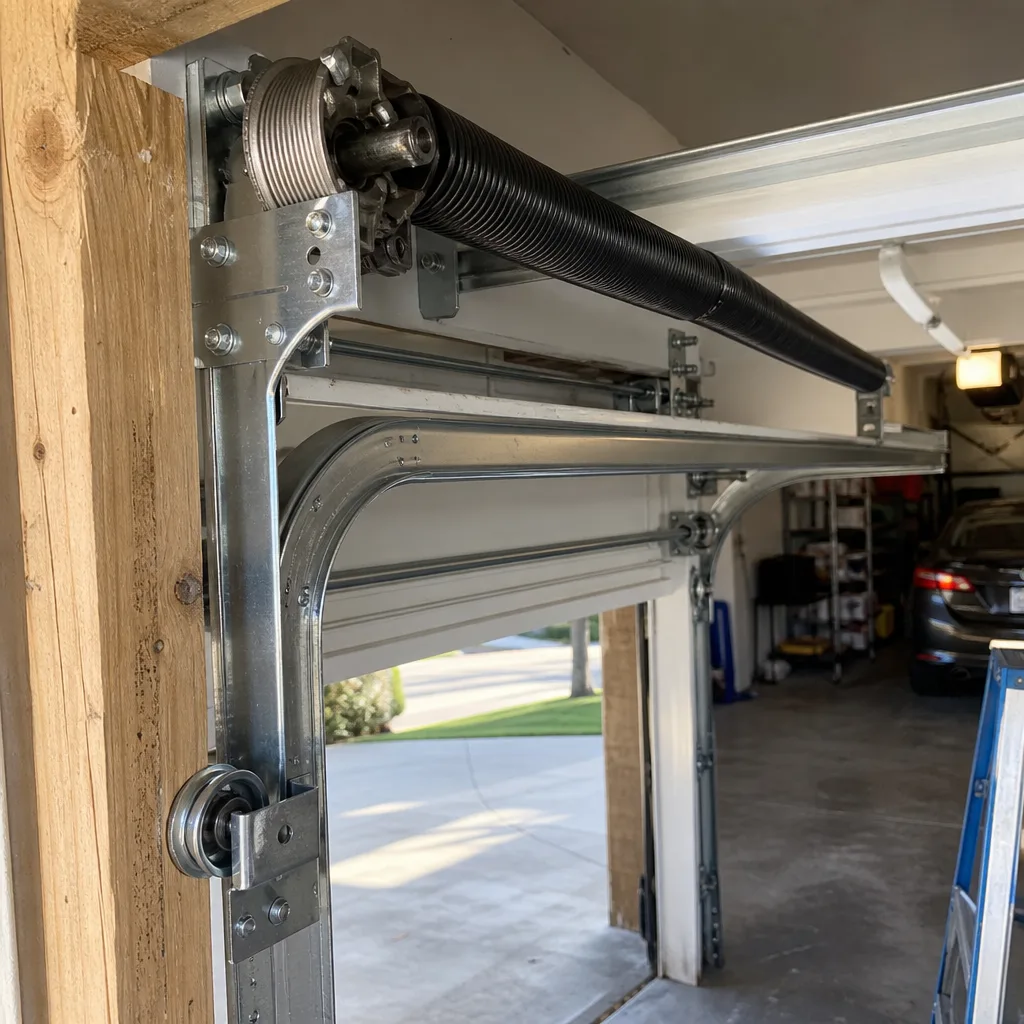
A single loud pop, often followed by the door slamming down or refusing to lift, is a torsion spring failure. The torsion spring is the coiled steel shaft above your door that stores mechanical energy to counterbalance the door’s weight. When it breaks, that energy releases instantly. The sound is unmistakable. We have had Missouri City customers describe it as “like a gunshot in the garage.”
A snapping sound from the side of the door, accompanied by a visible gap in the cable, is a lift cable failure. Cables are the braided steel ropes that transfer the spring’s torque to the bottom corners of the door. When one cable snaps, the full load transfers to the other cable and the remaining spring, which often causes immediate secondary failure.
Safety note: Torsion springs are under extreme tension. Do not attempt to release, adjust, or replace them. The stored energy can cause serious injury or death. This is not a DIY repair.
Component: Torsion spring or lift cable
Typical repair range in Missouri City: $180-$340 for single spring replacement; $280-$480 for spring pair with cables; $140-$220 for cable pair replacement
Risk level: Stop using the door immediately. A door with a broken spring or cable can drop without warning.
Scraping or Rubbing at One Side
This indicates a door that is running crooked in the track, usually from a failing roller on one side, a bent track flange, or - most critically - a cable that has come off its drum. The cable drum is the grooved wheel at each end of the torsion shaft that winds and unwinds cable as the door moves. When a cable slips off the drum, that side of the door loses support and drops lower than the other, causing the scraping sound as the door edge contacts the track.
In Missouri City’s Sienna Plantation and Lake Olympia developments, where many homes have 16-foot-wide doors for three-car garages, the cable-to-drum geometry is more sensitive to small imbalances. Wider doors have less tolerance for asymmetry.
Component: Cable drum, cable alignment, or roller failure
Typical repair range in Missouri City: $120-$200 for cable reseat and drum inspection; $180-$340 if roller replacement or track adjustment is needed
Risk level: Stop using the door. A cable off its drum will not reseat itself and typically worsens with each cycle.
Shuddering or Jerking During Travel
As described in the opening: this is load imbalance between the two lift cables, caused by uneven cable wear, a partially seized roller on one side, or a torsion spring that has lost tension asymmetrically. The door literally fights itself on every cycle. Each shudder stresses the hinges, the panels, and the opener’s trolley carriage - the arm that pushes or pulls the door.
For opener systems, a jerking motion can also indicate a failing trolley carriage or a bent opener rail. On chain-drive openers (common on older Chamberlain and Craftsman units in Missouri City), a jerking accompanied by chain slack suggests worn sprockets or a failing motor coupler.
Component: Cable balance, roller condition, or opener drive mechanism
Typical repair range in Missouri City: $140-$280 for cable and roller service; $220-$380 for opener drive repair; $480-$780 for full opener replacement
Risk level: Schedule within 14 days. Shuddering is progressive and will cause cascading failures.
High-Pitched Whine from the Opener Motor
This is typically a failing gear set inside the opener housing, or - on belt-drive units like newer LiftMaster models - a belt that has stripped teeth and is slipping. The whine is the motor running at full speed while the drive mechanism fails to transfer power. On screw-drive Genie units, a whine accompanied by slow travel suggests a dry or stripped screw drive rail that needs lubrication or replacement.
Component: Opener gear set, drive belt, or screw drive rail
Typical repair range in Missouri City: $180-$320 for gear or belt replacement; $480-$780 for full opener replacement if the motor is damaged
Risk level: Schedule within 30 days. The opener will eventually fail to move the door, potentially leaving it stuck open or closed.
Risk Classification: Monitor, Schedule, or Stop Using Now
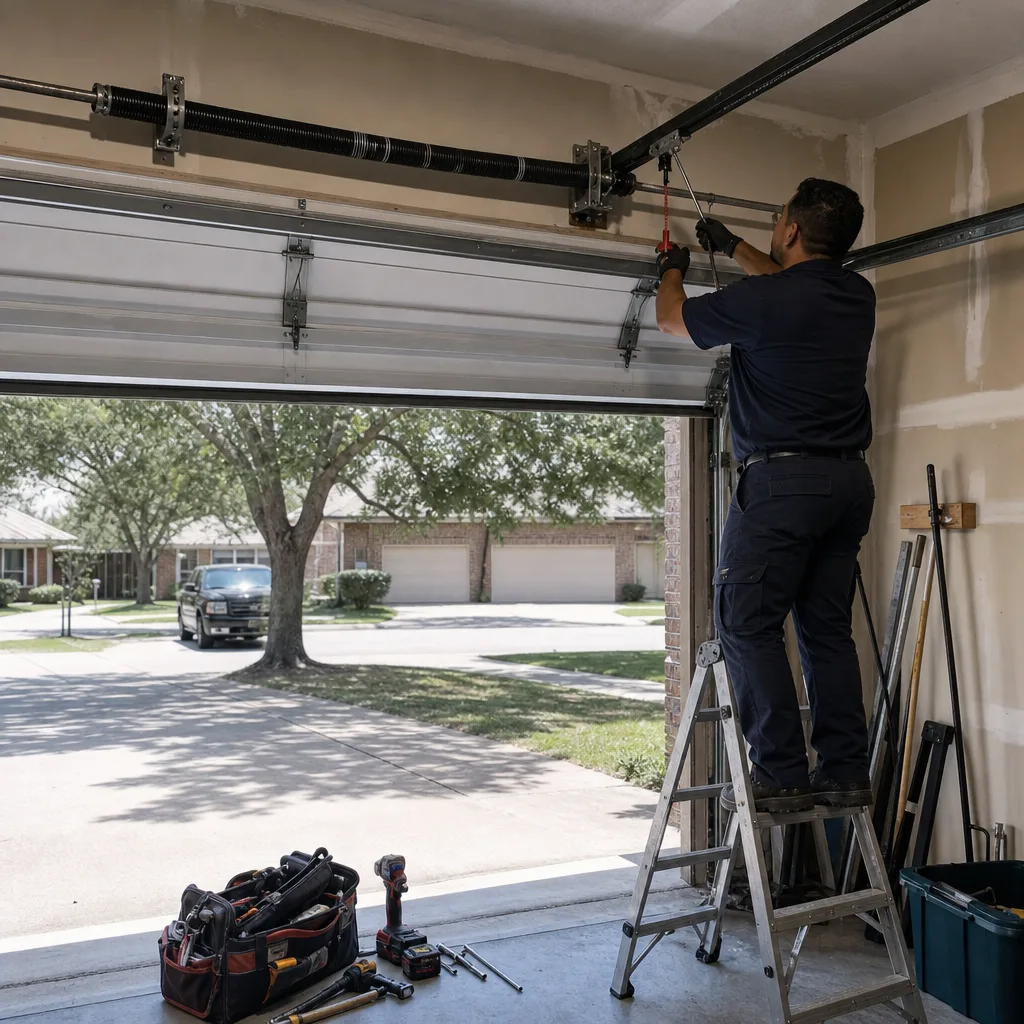
Every symptom needs a decision. Here is the framework we use on every service call in Missouri City, mapped to the mechanical reality behind each classification.
Safe to Monitor (Address Within 60-90 Days)
- Slight sag in the bottom seal - The rubber or vinyl seal at the door’s bottom edge has compressed or torn. This allows water, dust, and pests into the garage. In Missouri City’s flash-flood-prone areas near Oyster Creek, a failed bottom seal can allow significant water intrusion during heavy rains. The door operates safely; the risk is environmental, not mechanical.
- Cosmetic rust on track surface - Surface oxidation without pitting or flaking. Clean and assess annually. Missouri City’s humidity makes this common on north-facing garage doors that stay shaded and damp.
- Remote intermittent at range - Likely weak battery or antenna interference. Replace the battery; if the issue persists, the opener’s logic board may have a failing receiver circuit. The door operates safely with wall button control.
- Minor panel dent, no track contact - Aesthetic issue unless the dent has deformed the panel edge enough to rub the track.
Schedule Within 30 Days (Progressive Wear, Predictable Failure)
- Grinding rollers - Will eventually seize or break, causing the door to jam mid-cycle. A seized roller on a door in motion can bend the track.
- Opener gear whine - The gear set will strip completely, usually at an inconvenient time. The door may be stuck open during a storm or stuck closed when you need to leave.
- Weatherstripping gaps at sides or top - Allows moisture and air infiltration. In Missouri City’s climate, this accelerates rust on internal hardware and can damage stored items.
- Wall button works, remotes fail consistently - Indicates failing logic board receiver. The door is safe but the convenience factor degrades; more importantly, this is often the first sign of broader electrical issues in the opener.
Stop Using the Door Immediately (Stored Energy or Structural Failure Risk)
- Visible gap in torsion spring - The spring has broken or is about to. Even a visible gap of 1/4 inch means the spring has lost significant tension. Operating the door stresses the remaining spring and the opener, which is not designed to lift the full door weight.
- Frayed or separated lift cable - A cable with visible broken strands has lost strength unpredictably. It can snap under load without warning.
- Door visibly crooked in the track - Indicates cable off drum, broken spring on one side, or failed bottom fixture. Any of these can cause sudden, uncontrolled door drop.
- Door free-falls when released manually - The spring system has failed completely. The door is a dead weight with no counterbalance. This is a critical safety hazard.
Our documented photo record on every visit includes a risk classification sheet that the customer receives with their written price quote. Clause 4 of The Haven Standard requires the technician to photograph the failed component and present it before quoting replacement. The risk classification is part of that documentation.
Slow Operation: Spring vs. Cable vs. Opener - Three Different Diagnoses
“My door is slow” is the most common description we hear from Missouri City homeowners, and it is also the least specific. Slow operation can originate from three entirely different subsystems with three different price points. Here is how to distinguish them before the technician arrives.
The Spring Diagnosis
A torsion spring that has lost tension through metal fatigue will cause the door to feel heavy and move slowly in both directions, but the symptom is most pronounced when the door is rising from the fully closed position. The opener strains; you may hear the motor laboring. On a manually operated door, the door feels heavy to lift and accelerates downward when released.
Key test: Disconnect the opener (pull the red emergency release cord) and lift the door manually. If it feels heavy to lift and does not stay open at waist height, the springs are failing. In Missouri City, we see this most often on 10-15-year-old doors that have cycled through thousands of hot, humid summers. The spring wire develops micro-cracks from thermal stress.
Repair: Spring replacement, typically $180-$340 for a standard two-car door in Missouri City.
The Cable Diagnosis
A cable that has stretched unevenly or is fraying internally will cause slow, jerky operation with visible asymmetry. One side of the door may lag behind the other. The opener works hard because the door is binding in the track due to uneven cable pull.
Key test: Visually inspect the cables from a safe distance. Look for visible fraying, broken strands, or a cable that sits deeper in the drum grooves on one side than the other. Do not touch the cables. If you see fraying, stop using the door.
Repair: Cable replacement, typically $140-$220 in Missouri City; often paired with spring service if the uneven loading has stressed the springs.
The Opener Diagnosis
An opener that is slow but sounds normal may have a failing capacitor or a motor that is losing torque. A slow opener with abnormal sounds - grinding, whining, or clicking - points to specific drive component failure as described above. On newer smart openers like the LiftMaster 8500W or Chamberlain B970, slow operation can also indicate a software or limit switch issue. The limit switch tells the opener when the door is fully open or closed; if it drifts, the opener may run longer cycles or hesitate at endpoints.
Key test: Disconnect the opener and operate the door manually. If the door moves freely and balances properly, the problem is in the opener, not the door system.
Repair: Opener repair $180-$380; full replacement $480-$780 for standard chain or belt drive in Missouri City. We service all major brands including LiftMaster, Chamberlain, and Genie opener systems.
Visual Inspection Points You Can Check Without Opening the Door
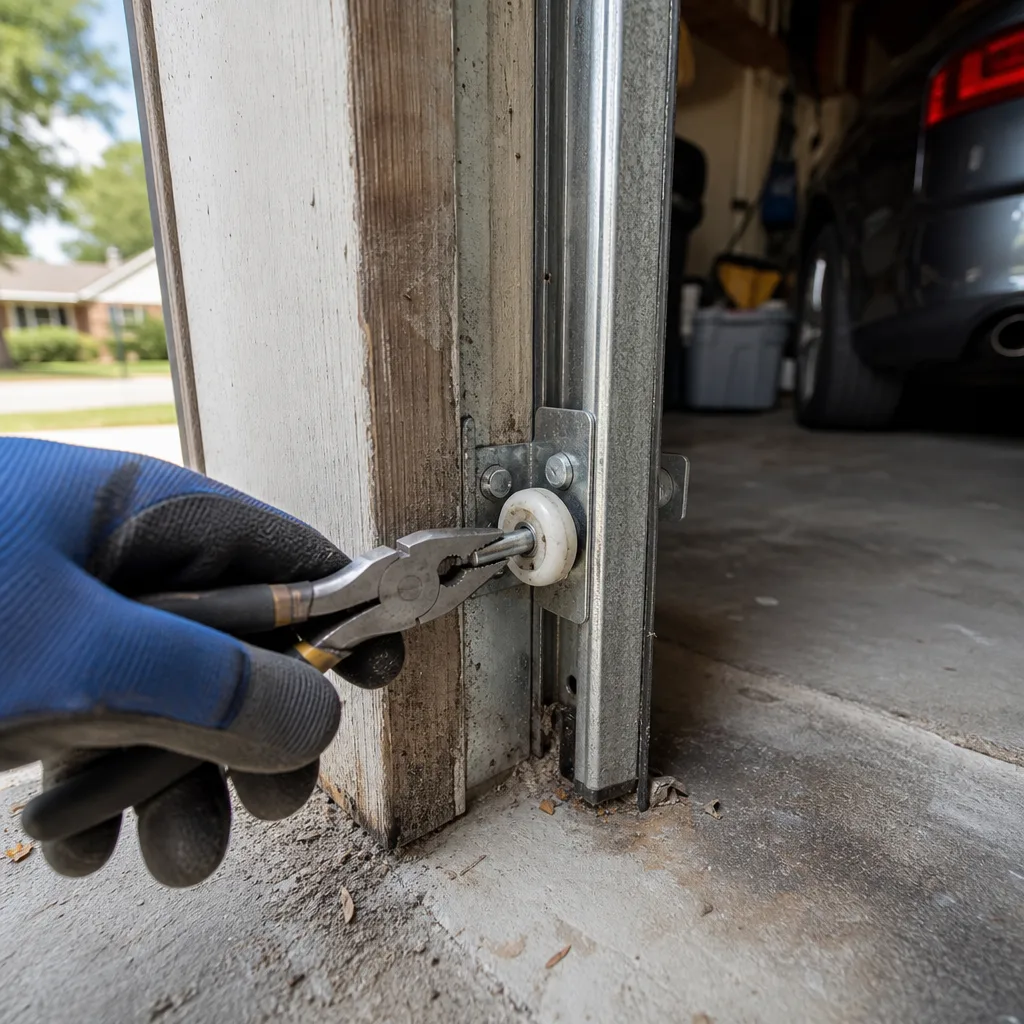
You do not need to be a technician to gather useful information. These four inspection points require no tools and no contact with tensioned components. Perform them monthly, and especially after severe weather.
- Cable gap inspection. Stand to one side of the closed door and sight along the cable from bottom fixture to drum. The cable should run straight and taut, with no visible gaps between strands and no slack loops. In Missouri City, humidity accelerates internal cable corrosion that may not be visible as external rust. Look for any cable that appears wavy or loose when the door is closed.
- Spring gap inspection. Look at the torsion spring above the door. It should be a continuous coil with no visible separation between coils. A gap of even a few coils means the spring has broken internally. On many doors, you can see this from the ground with a flashlight. Do not stand under the spring; inspect from the side of the door.
- Bottom seal contact. Close the door and look for daylight under the bottom edge. The seal should make continuous contact with the floor. In Missouri City’s clay-heavy soils, foundation settling is common in newer developments like Sienna Ranch and Lake Olympia, and even a 1/4-inch gap can admit significant water during our intense spring thunderstorms.
- Sensor alignment LED status. The safety sensors are the small boxes mounted 4-6 inches above the floor on each side of the door track. Each should show a steady LED: typically green for the sending eye and amber or red for the receiving eye. If either LED is off, blinking, or dim, the sensors are misaligned or obstructed. This is the most common cause of a door that reverses before closing, and it is the simplest homeowner fix - but only if you know to check it.
Document what you find. If you call Servo Garage Doors for repair service in Missouri City, describing these four inspection points accurately will help our technician arrive with the correct parts and complete the repair in a single visit.
What to Photograph If Your Door Fails Mid-Cycle
A door stuck half-open is a security and safety problem. Before you do anything else, document the scene. This protects you from disputes about pre-existing damage and gives the technician critical diagnostic information before they arrive. Our Clause 4 photo record protocol, which we use on every service call, is adapted here for homeowner use.
- Wide shot of the entire door from inside the garage. Show the door position, any visible gaps between panels, and the general state of the track system. Include the opener rail in the frame if possible.
- Close-up of each cable, both sides. Photograph from a safe distance using zoom. Look for fraying, separation, or the cable off its drum. Do not touch the cables to position them for a better photo.
- Close-up of the torsion spring assembly. Again, do not approach closely or touch. Use zoom from the side of the door. Show any visible gap in the spring coils.
- The opener unit and its display or LED status. On smart openers like the LiftMaster myQ series, error codes or flashing LEDs indicate specific faults. Photograph any visible code or pattern.
- Any visible damage to the door panels, track, or surrounding structure. Include the floor area under the door if the door has dropped or shifted.
- The wall button and any remote you used last. This helps distinguish an opener issue from a door hardware issue.
Send these photos when you call. Our live phone coverage, available 24/7 including holidays, will route them directly to the assigned technician. In Missouri City, we typically provide an on-the-way text with the technician’s name and estimated arrival, not a callback window.
How Missouri City’s Climate and Code Affect Your Garage Door
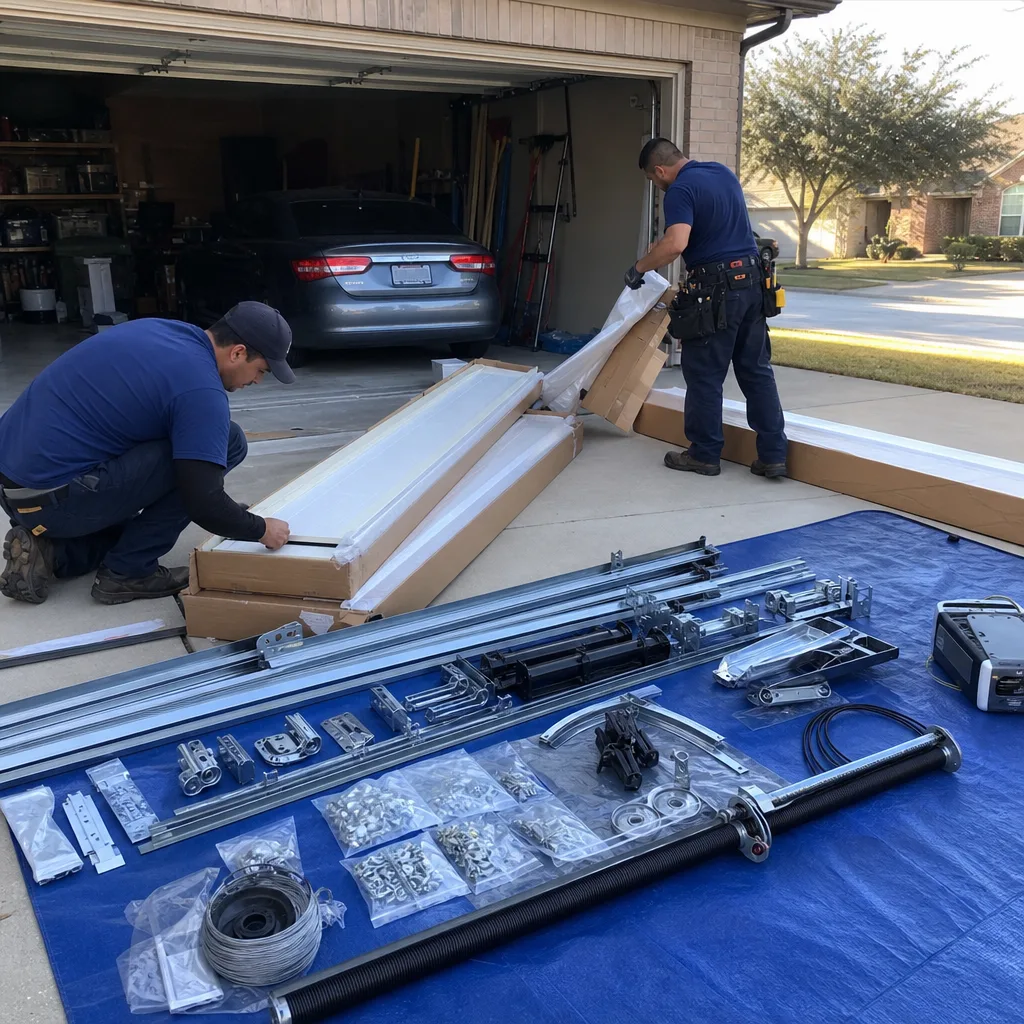
Garage door systems are not generic. Local conditions matter, and Missouri City has specific conditions that accelerate certain failures.
Humidity and Corrosion
Missouri City’s average annual humidity exceeds 75%, with summer afternoons regularly above 80%. This moisture condenses on cooler metal surfaces, particularly north-facing garage doors and unventilated garages. The result is accelerated rust on track hardware, cable corrosion that begins internally before visible externally, and premature failure of steel rollers. We recommend annual inspection of all hardware for oxidation, and we stock corrosion-resistant components for Missouri City installations.
Thermal Cycling
The temperature swing from a 35-degree January morning to a 105-degree August afternoon creates significant metal expansion and contraction. Torsion springs are particularly sensitive: the wire diameter expands microscopically in heat and contracts in cold, stressing the metal at the molecular level. Over years, this contributes to fatigue failure. In Missouri City’s climate, we typically see torsion spring life at the lower end of the 10,000-cycle rating rather than the upper end.
Wind Load Requirements
Fort Bend County, including Missouri City, falls within wind zones that require garage doors to meet specific wind load ratings. After Hurricane Harvey in 2017, many Missouri City homeowners learned that their older doors lacked adequate wind reinforcement. A door that rattles excessively in wind may be indicating inadequate bracing or deteriorated track mounting. For new garage door installation in Missouri City, we specify wind-rated doors with proper header and jamb anchoring to current local code.
Soil and Foundation Movement
Missouri City’s expansive clay soils shrink and swell with moisture changes, causing foundation movement that affects garage door alignment. A door that worked perfectly in spring but binds in summer may be responding to slab movement rather than component failure. We check frame squareness on every service call and will tell you if the issue is structural rather than mechanical.
Common Mistakes to Avoid
- Ignoring a single loud pop and continuing to use the door. We have responded to calls in Quail Valley where a homeowner heard the spring break, manually closed the door, and then tried to open it with the opener the next morning. The opener burned out its motor trying to lift a 200-pound door with no spring assistance. A $280 spring repair became a $780 opener replacement.
- Applying WD-40 to rollers or the torsion spring. WD-40 is a solvent, not a lubricant. It strips existing grease and attracts dust, creating abrasive paste. On rollers, it causes premature bearing failure. On the torsion spring, it does nothing useful and makes the surface dangerously slippery for technicians.
- Adjusting the opener force settings instead of fixing the underlying problem. When a door becomes hard to move, some homeowners increase the opener’s force setting to compensate. This masks the real issue - typically spring fatigue or roller wear - and overloads the opener until it fails. It also defeats the safety reverse system, creating a crushing hazard.
- Replacing only one spring on a two-spring door. Torsion springs are matched sets. Installing one new spring with one worn spring creates immediate imbalance, accelerates wear on the new spring, and causes the shuddering motion described above. We always replace torsion springs in pairs, with a written scope that specifies both.
- Assuming a slow door means the opener is failing. As detailed above, slow operation is more often a spring or cable issue. Replacing a functional opener is an expensive misdiagnosis. Our free second opinion applies to any written estimate from another company - bring the paperwork and we will assess whether the proposed repair matches the actual symptoms.
- Waiting for “both springs to go” before calling. This is a false economy. When one spring fails, the remaining spring carries double load and will fail soon after, often catastrophically. The door is also unsafe to operate in the interim. In Missouri City’s climate, the second spring typically fails within 2-4 weeks of the first.
- Not verifying technician credentials. Texas requires garage door contractors to hold a valid contractor license. Our license number appears on every written quote, not buried in fine print. Always verify; unlicensed work voids manufacturer warranties on doors and openers from brands like Clopay and Amarr.
When to Call a Professional
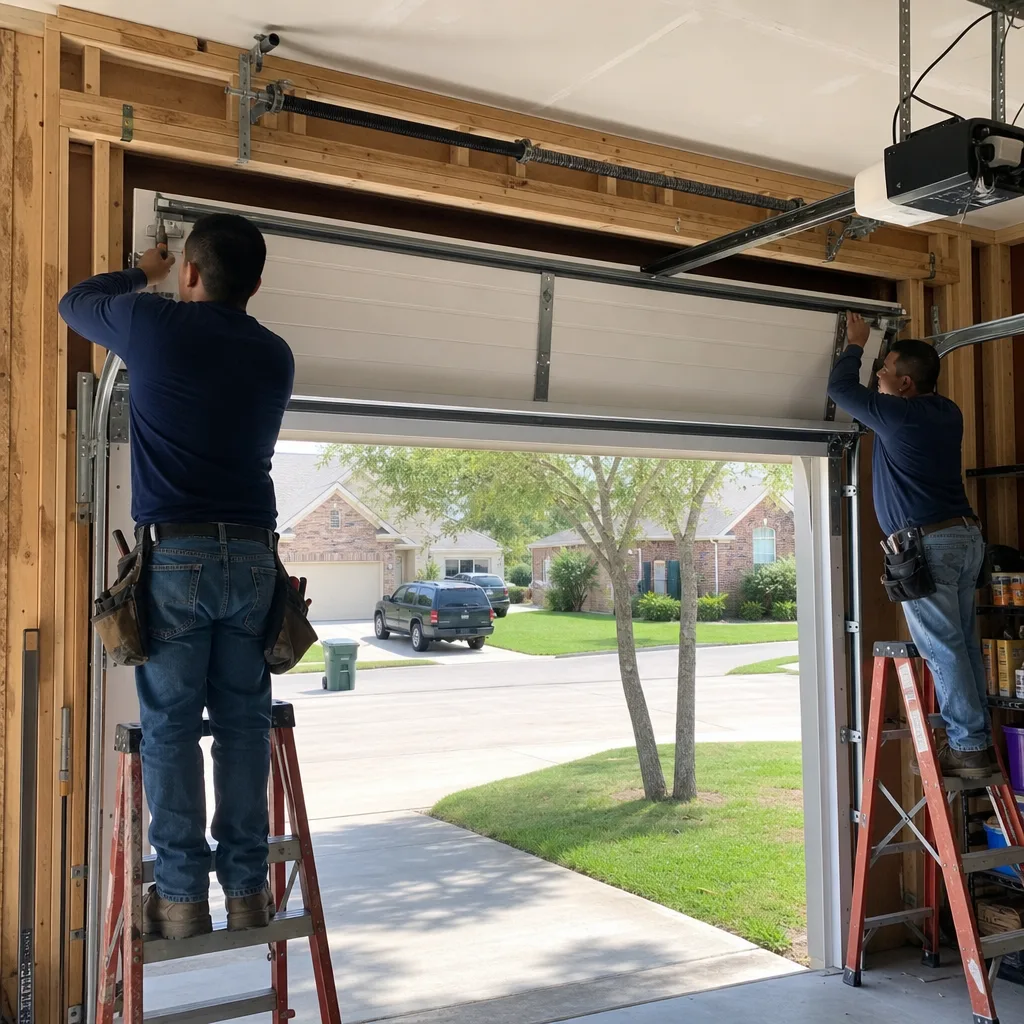
Call when you observe any symptom classified “stop using immediately” above: visible spring gap, frayed cable, crooked door, or free-fall descent. Call when you cannot confidently distinguish between spring, cable, and opener causes of slow operation. Call when your inspection reveals anything outside normal parameters and you want documentation before the condition worsens.
Servo Garage Doors Missouri City offers free estimates in Missouri City - call (346) 456-5565 - and publishes more guides & resources for local homeowners. Every estimate includes a flat, written price and written scope before any work begins, per Clause 1 of The Haven Standard. There is no “call for a quote” here; the price is named on-site, documented, and agreed before tools touch the door. Our background-checked, uniformed technicians arrive with a named introduction and an on-the-way text, and every visit closes with a documented photo record of findings and completed work.
Frequently Asked Questions
Single torsion spring replacement typically runs $180-$340, and double spring replacement with cable service runs $280-$480, depending on door size and spring specification. We quote a flat, written price before any work starts, and our Free Second Opinion applies to any competing written estimate. Call (346) 456-5565 for an exact quote - estimates are free.
You should not. The door weighs 150-250 pounds without spring assistance, and the opener is not designed to lift that load. Attempting to open it will likely burn out the opener motor or cause the door to drop uncontrollably. In Missouri City, we respond to emergency spring calls with live phone coverage 24/7, including holidays.
Standard 10,000-cycle springs typically last 7-12 years in Missouri City’s humidity and thermal cycling, toward the lower end of that range for doors in unventilated garages or with high daily use. High-cycle springs rated at 25,000-50,000 cycles are available for doors with heavy use patterns.
The most common cause is misaligned safety sensors. Check that both sensor LEDs are steady and that nothing obstructs the beam. If the LEDs are correct and the problem persists, the issue may be a damaged limit switch in the opener or a track obstruction that flexes the door enough to trigger the safety reverse. We diagnose this systematically on service calls in Missouri City neighborhoods from Hunters Glen to Brightwater.
No. Our written price is flat and final. Clause 1 of The Haven Standard requires that the scope and price are documented and agreed before work begins. If we discover additional issues during service, we document them, quote them separately, and obtain your approval before proceeding. The original quoted work proceeds at the original price regardless.
Yes. Our Missouri City service vehicles carry a full inventory of common torsion springs, extension springs, lift cables, rollers, and opener components for all major brands we service, including LiftMaster, Chamberlain, and Genie. For standard door sizes, this enables same-day completion without a return visit. For specialty or oversized doors, we measure, order, and schedule follow-up with the same flat-price guarantee.
The Bottom Line
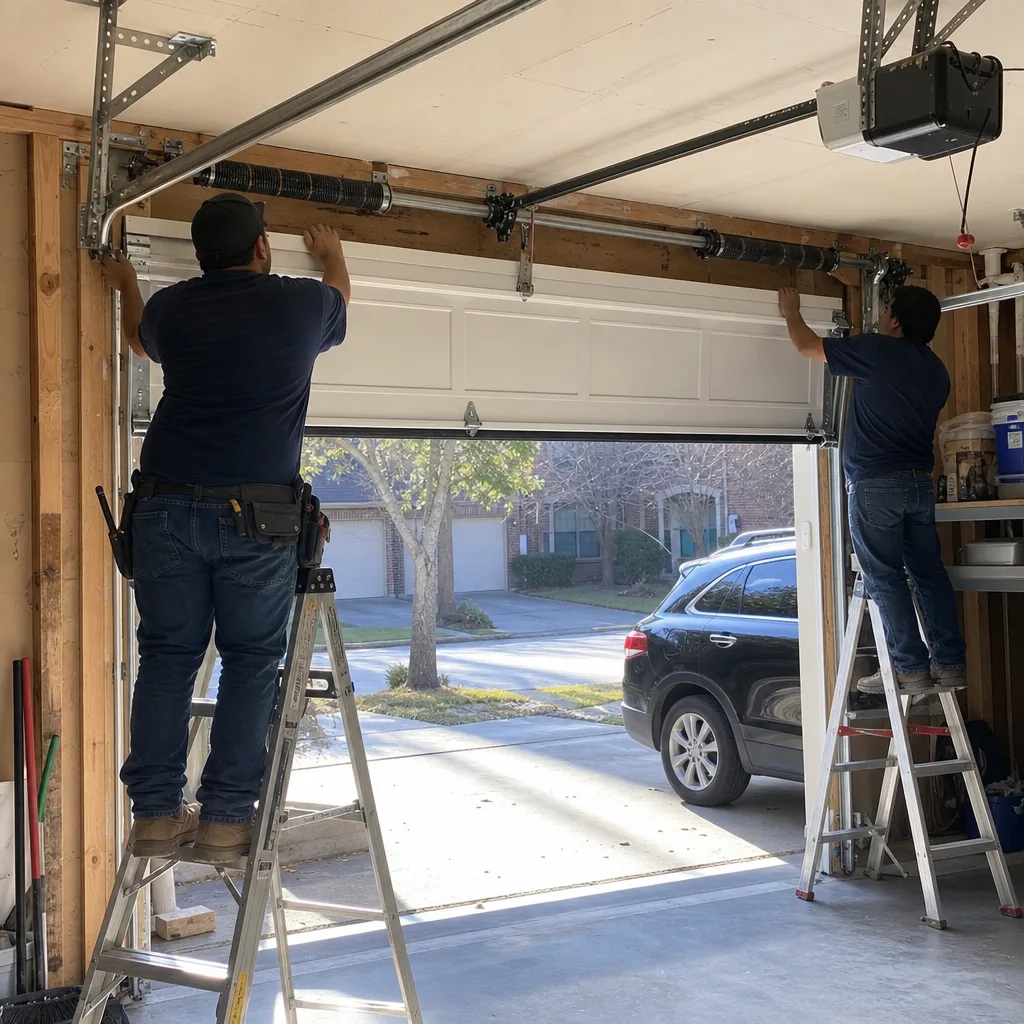
Garage door warning signs are not mysteries. They are mechanical symptoms with specific causes, specific risks, and specific timelines for action. The homeowner who can distinguish grinding from popping, who knows to check sensor LEDs before calling, and who documents a mid-cycle failure with systematic photography, will make better decisions and avoid the cascading costs of misdiagnosis. In Missouri City’s climate, proactive inspection matters more than in drier markets: humidity and thermal cycling accelerate wear that slower climates forgive. When a symptom exceeds your comfort level, a documented, written-price-first service call provides clarity without pressure. That is the standard we have operated under since 2015.
Written by Marcus Deller, Owner at Servo Garage Doors Missouri City, serving Missouri City since 2015.