
Last updated September 21, 2026
Full 25-point door and opener safety check with every visit - springs, cables, rollers, tracks, and your LiftMaster or Chamberlain opener included
You get a price before we start. It does not change when the truck arrives.
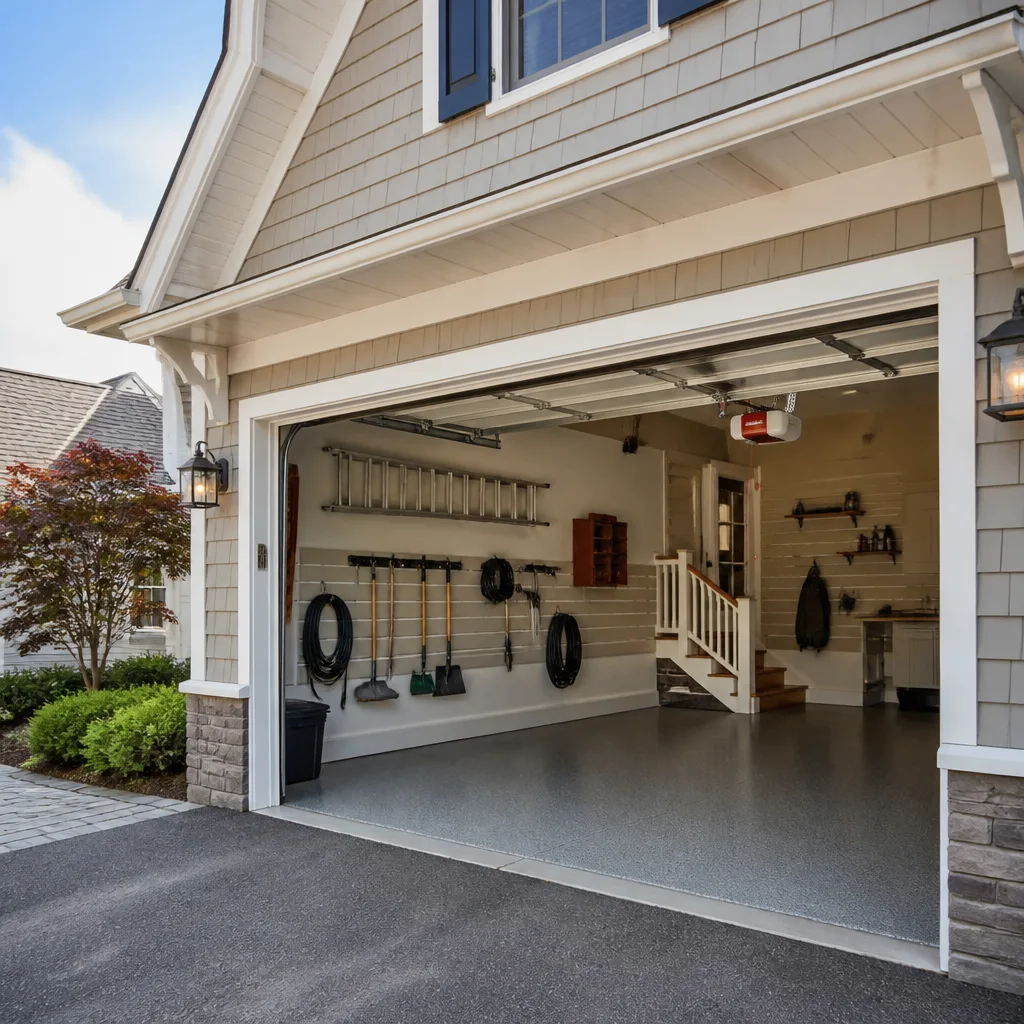
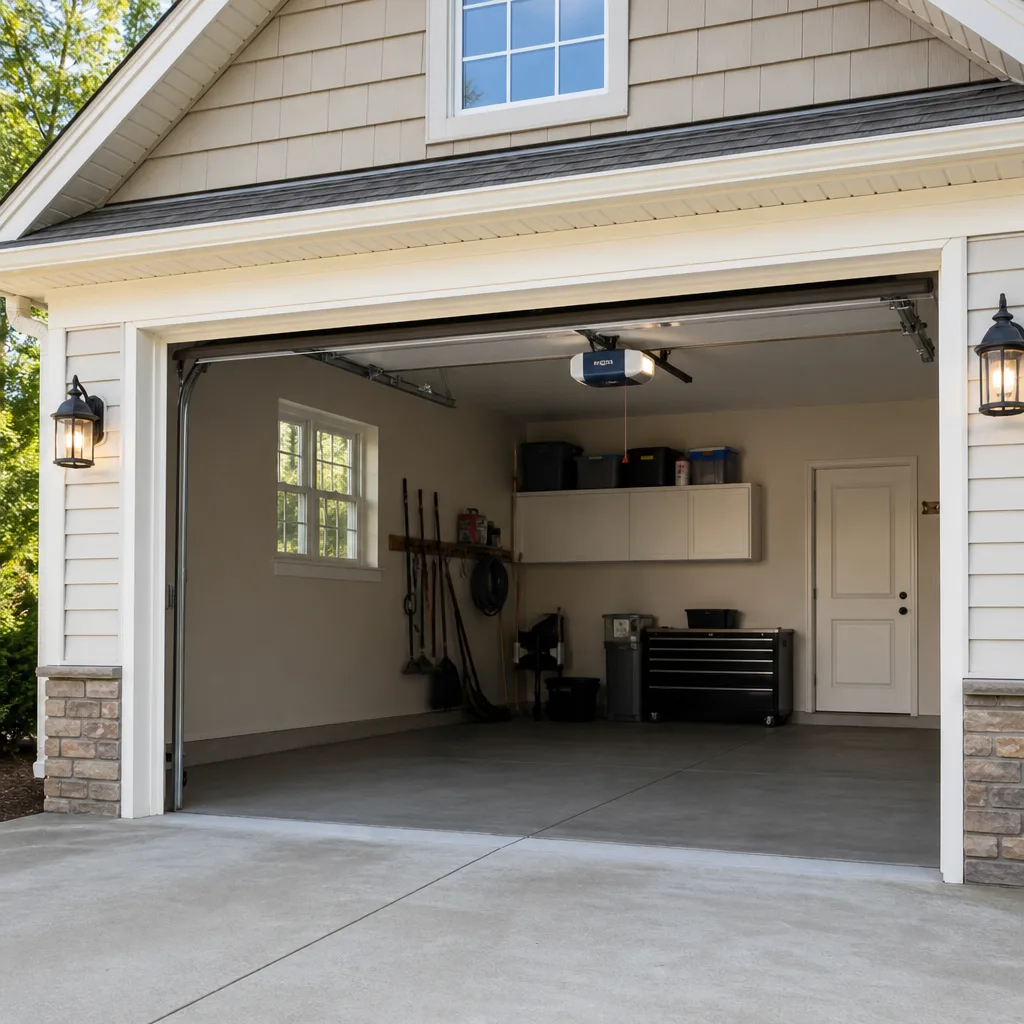
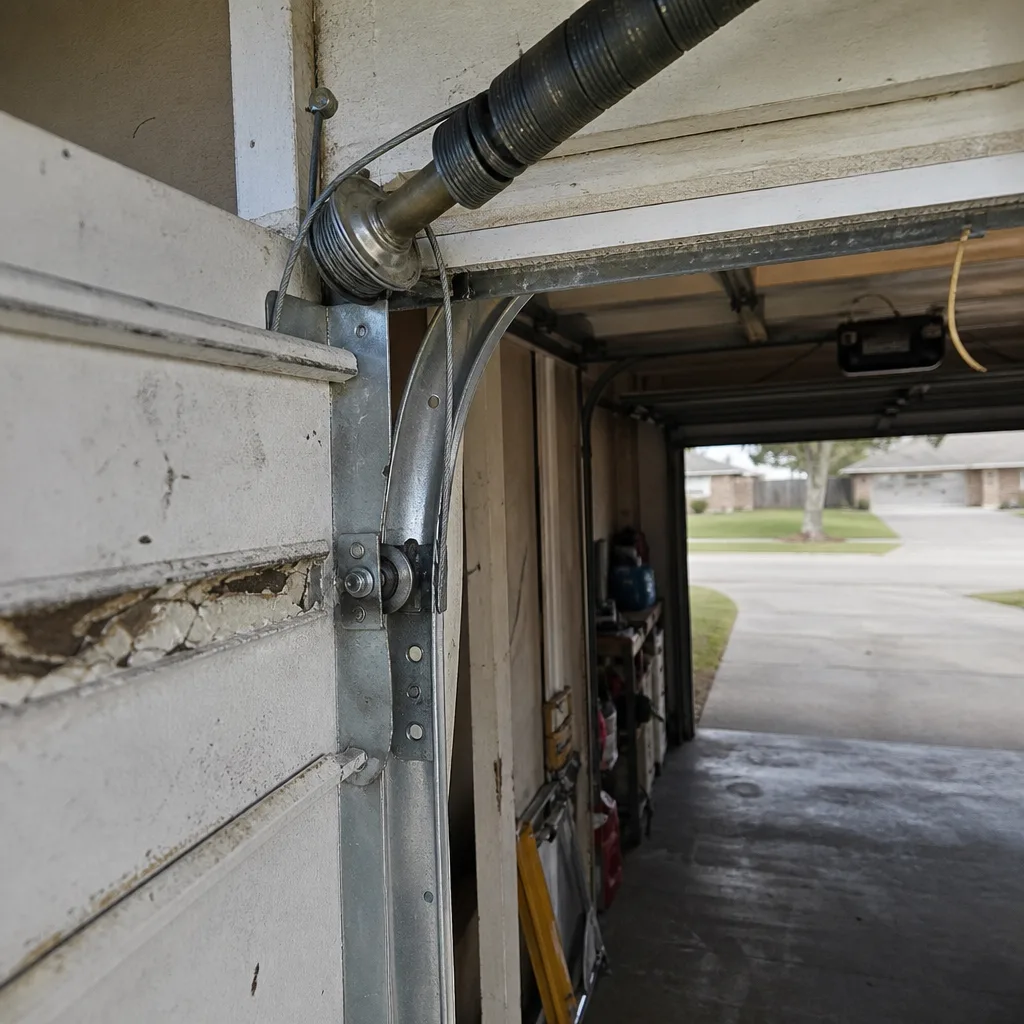 Before
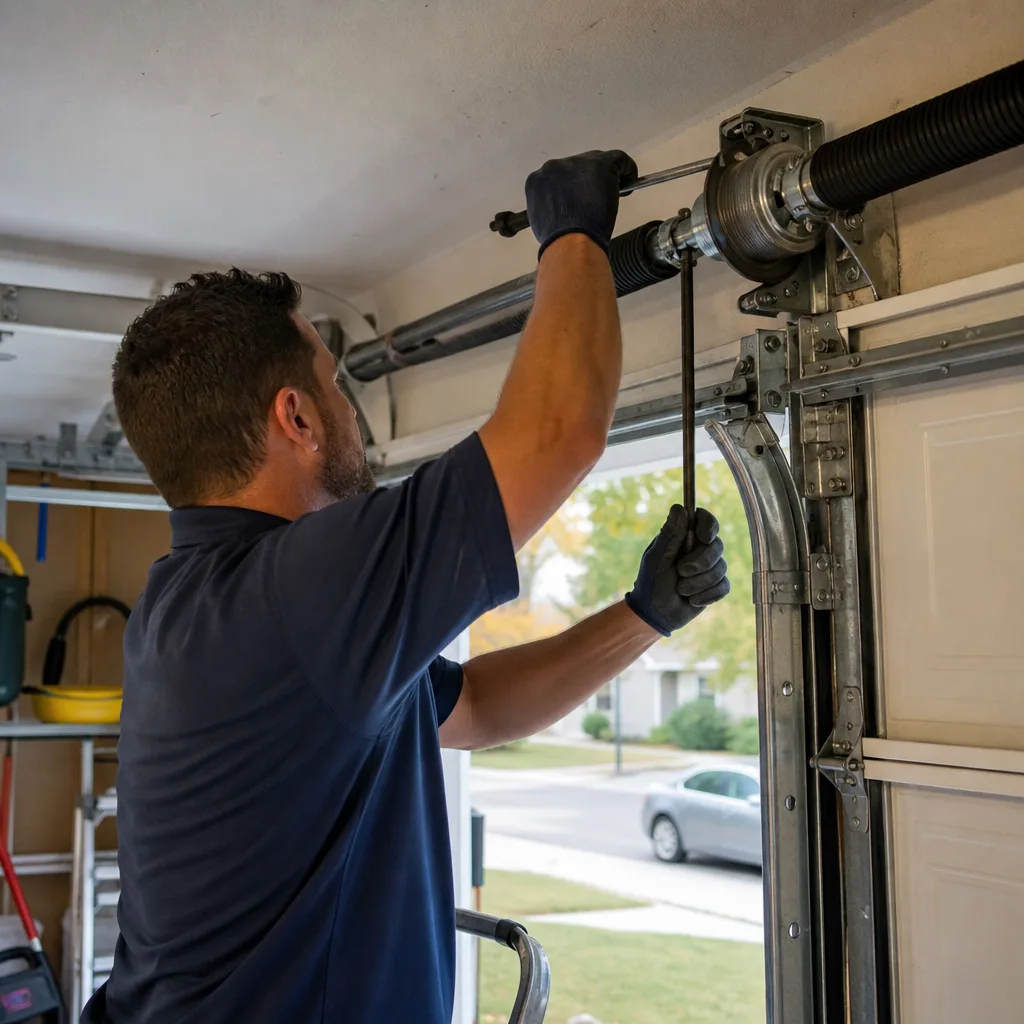 After
After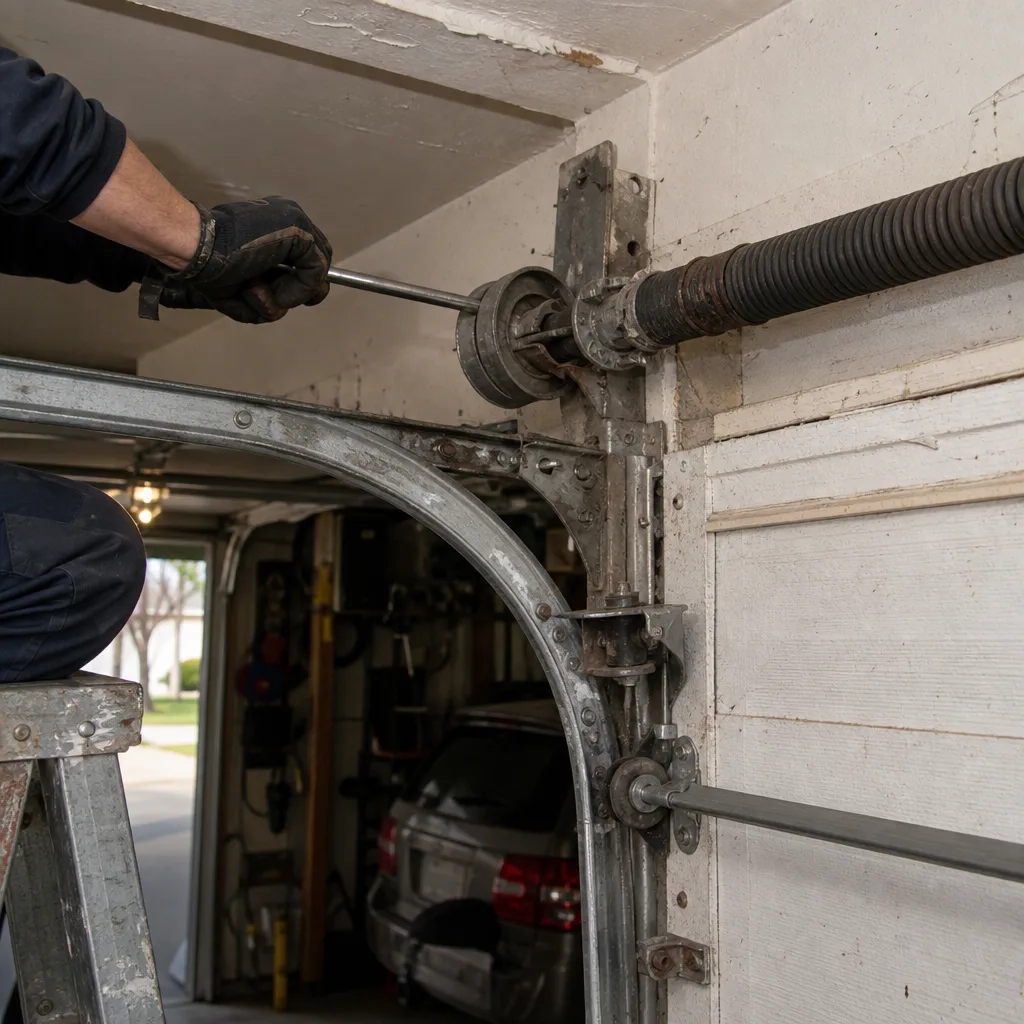 Before
 After
After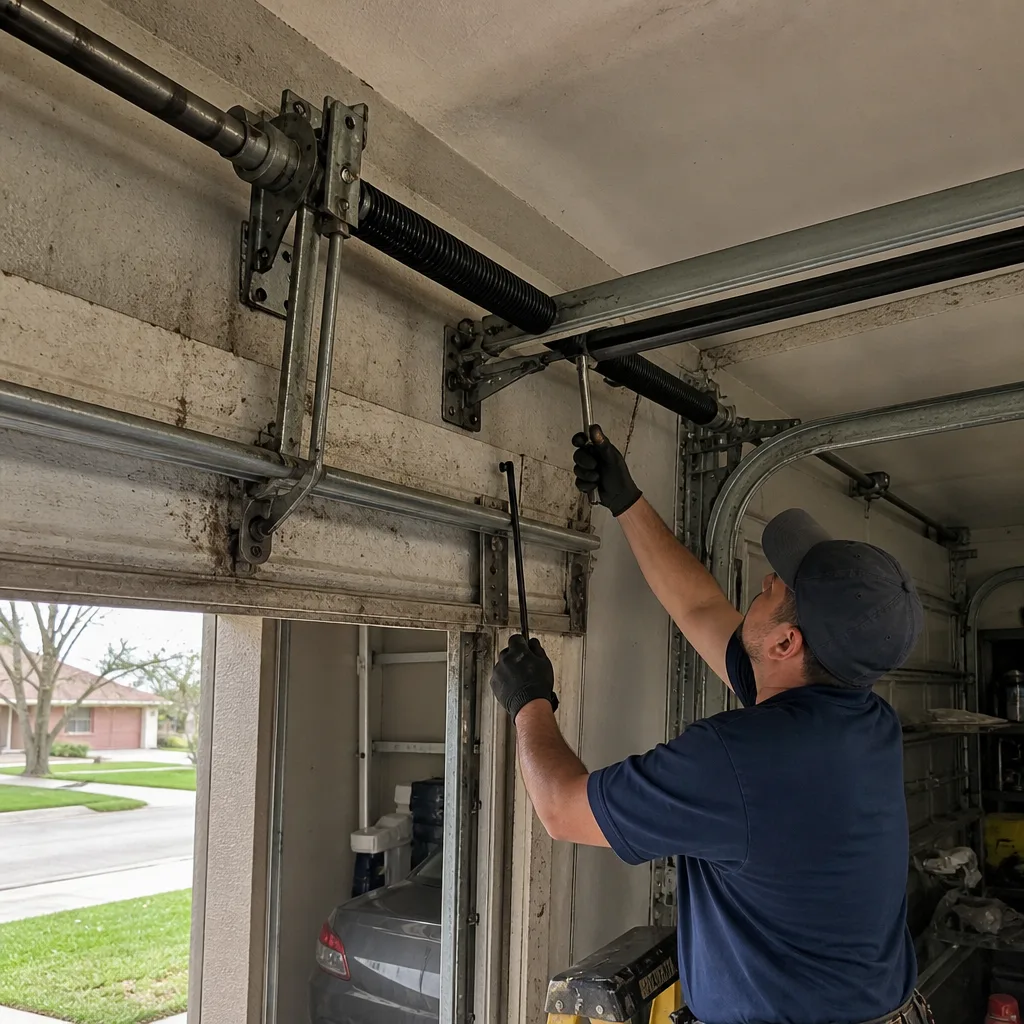 Before
 After
AfterSeasonal Garage Door Care for Missouri City: Year-Round Homeowner’s Guide
The best time to lubricate torsion springs in Missouri City is October, not spring. By the time national maintenance calendars tell you to oil moving parts, our summer has already baked the grease off, and January’s first cold snap will find dry steel contracting under maximum tension. Missouri City doesn’t run on a four-season clock - it runs on a long, aggressive summer that degrades UV-sensitive components, a brief but freeze-capable winter, and two short shoulder seasons where the real maintenance work happens. In this guide, you’ll learn a month-by-month task map built on Fort Bend County’s actual climate data, how to spot summer damage before it becomes a winter failure, and which tasks you can handle yourself versus which require locking the door out of operation.
Quick Answer
Seasonal garage door care in Missouri City means lubricating torsion springs and rollers in October before winter contraction, inspecting UV-damaged weatherstripping in September after peak summer, and testing opener force settings after every significant temperature swing. Most homeowners can safely handle visual inspections, track cleaning, and photo-eye alignment - but spring tension adjustments, cable replacement, and opener logic board work require a trained technician with the door locked out.
Table of Contents
- Why Missouri City’s Climate Breaks National Maintenance Templates
- Summer Survival: UV, Heat, and What 100°F Days Do to Your Door
- Fall Maintenance: The Real Pre-Winter Window
- Winter-Specific Risks: Freeze Events and Metal Contraction
- Spring Recovery: Inspection After the Cold
- Post-Storm Inspection Protocol for Hail and High-Wind Events
- What You Can Safely Do vs. What Requires a Lockout
- Month-by-Month Task Map for Missouri City Homeowners
 Before
 After
AfterWhy Missouri City’s Climate Breaks National Maintenance Templates
Most seasonal garage door guides divide the year into four equal quarters. That model works for Cleveland or Denver. It fails in Fort Bend County.
Missouri City’s climate calendar looks like this: six to seven months of sustained heat and humidity (May through October), a brief transitional November, a winter that can deliver hard freezes but rarely sustains them (December through February), and a volatile March-April period with rapid temperature swings and severe weather. The garage door repair in Missouri City calls we field most often trace back to homeowners following national timing - lubricating in April when grease will cook off by June, or inspecting weatherstripping in March when UV damage hasn’t fully manifested.
The specific hazards:
- Thermal cycling amplitude: A January morning can start at 28°F and hit 65°F by afternoon. That 37-degree swing causes steel torsion springs to expand and contract more in 12 hours than they might across an entire week in a stable northern climate.
- UV load: Missouri City receives roughly 2,050 hours of bright sunshine annually. The bottom seal rubber and vinyl weatherstripping on a south- or west-facing door can reach surface temperatures exceeding 140°F - enough to accelerate polymer degradation by a factor of three compared to shaded or northern installations.
- Humidity + freeze: Our Gulf moisture doesn’t disappear in winter. When a freeze follows a rainy period, ice can form in the track bottom, binding rollers that were already coping with expanded metal tolerances.
- Hail frequency: Fort Bend County averages 2-3 hail events per year with stones exceeding 1 inch. The dent-resistant ratings on Clopay and Amarr doors matter here, but so does post-impact inspection of track alignment and opener force calibration.
We’ve documented this pattern across 18,000+ garage doors since 2015. The failures cluster: September-October for UV-degraded seals, January for contraction-stressed springs, and April for storm-damaged components that went uninspected. This guide reverses that timeline - maintenance before the stress, not repair after the break.
Summer Survival: UV, Heat, and What 100°F Days Do to Your Door
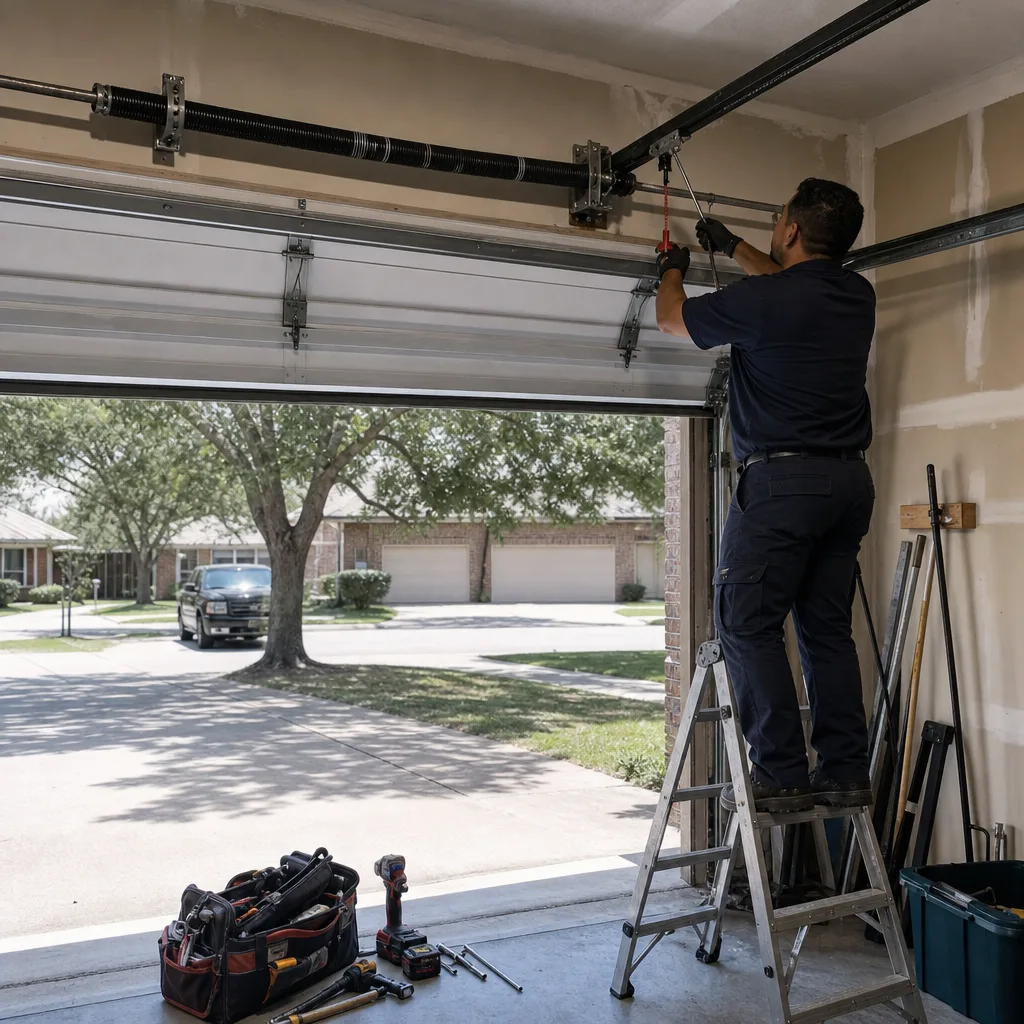
Summer in Missouri City is not a season. It’s a six-month stress test. The components that suffer most are the ones national guides barely mention.
Bottom seal rubber: This is the horizontal gasket at the door’s lower edge, compressed against the concrete when closed. In July and August, a dark-colored door or direct afternoon sun can heat this EPDM or vinyl strip to temperatures that soften the compound. The result is permanent deformation - the seal no longer rebounds to its original profile, creating gaps that admit water, insects, and garage-cooled air. In Sienna Plantation and Lake Olympia, where many homes have west-facing garages with minimal shade, we replace these in September at roughly triple the rate of shaded, north-facing installations.
Weatherstripping: The vinyl or rubber seals on the door’s sides and top degrade differently. UV causes surface cracking - shallow, irregular fissures that look cosmetic but propagate inward. Heat causes splitting - clean, perpendicular tears where the material has exceeded its elastic limit. Cracking can be monitored. Splitting requires immediate replacement, as the seal has already failed structurally.
Opener electronics: The logic board - the circuit that interprets remote signals and controls motor direction - operates in a metal housing that can exceed 120°F in an unventilated garage. Heat reduces capacitor life and can cause intermittent faults that disappear when temperatures drop. We see this in August: the door works at 7 a.m., fails at 3 p.m., works again at 8 p.m. The homeowner assumes a wiring issue; it’s thermal degradation of a $12 capacitor on a $180 board.
Lubricant evaporation: Standard lithium-based garage door grease has a dropping point around 380°F, but sustained 180-200°F roller and hinge temperatures cause base-oil separation. The grease doesn’t melt away - it separates into oil that drips and soap that cakes. By September, the remaining lubricant is often a gritty residue that accelerates wear rather than preventing it.
What to do in summer:
- Inspect bottom seal profile monthly. Close the door and look for light gaps from inside. Any visible gap means replacement, not adjustment - the material has permanently compressed.
- Check weatherstripping for splitting, not just cracking. Run a fingernail across surface cracks; if they catch and open, that’s cracking. If you find a clean tear through the material, that’s splitting - replace before October rains.
- Test opener function at peak heat, around 2-4 p.m. If the door hesitates, reverses unexpectedly, or the remote requires multiple presses, the logic board may be thermally stressed. Document the temperature and time - this helps a technician distinguish thermal faults from RF interference or switch failure.
- Do NOT lubricate in summer. Fresh grease will cook off faster. Wait for October.
Fall Maintenance: The Real Pre-Winter Window
October is the critical month for Missouri City garage door maintenance. The UV load has dropped, humidity is moderating, and you have a narrow window to prepare for January’s contraction events.
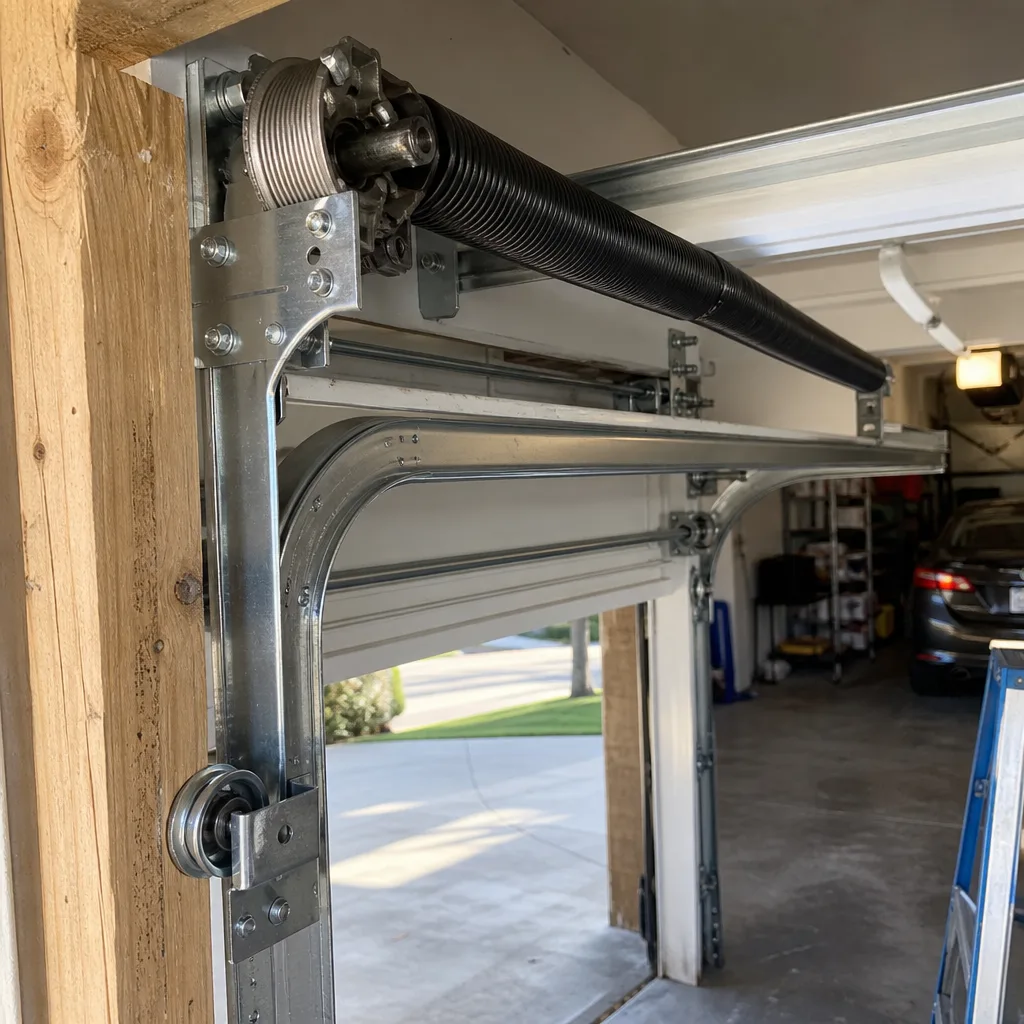
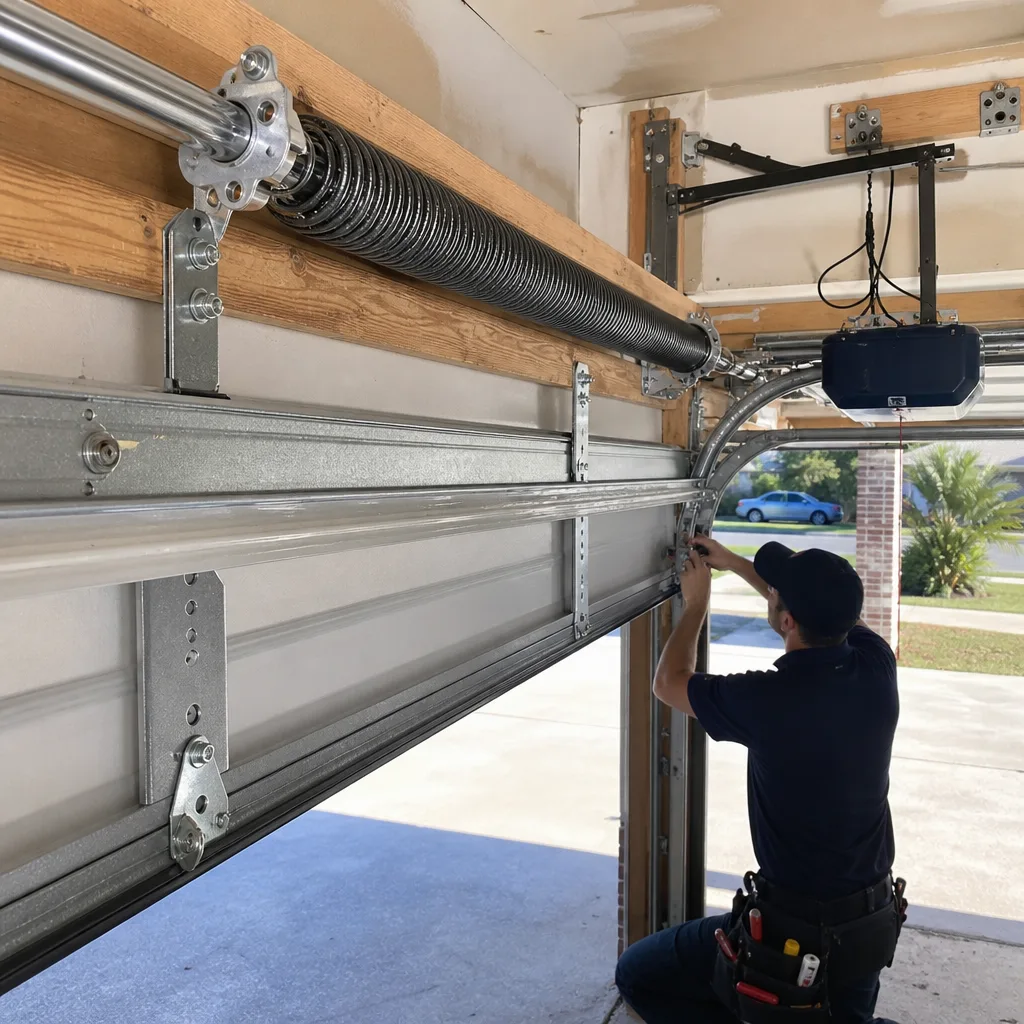
Torsion spring lubrication: Torsion springs are the coiled steel assemblies above the door that store mechanical energy to offset the door’s weight. In Missouri City, these are typically oil-tempered or galvanized steel, 2-3 inches in diameter, with wire between 0.207 and 0.273 inch depending on door size. When cold weather contracts the steel, the spring’s already-high internal stress increases. A dry spring has higher friction between coils, which amplifies the stress concentration at the coil body’s inner surface - where fatigue cracks initiate.
We use a lithium-based NLGI #2 grease with a -40°F pour point. The application is specific: a thin film across the top two-thirds of the coil body, never the bottom third where grease attracts grit, and never the winding cones or stationary cone where slippage could affect spring calibration. A homeowner can apply this with a rag and patience, but cannot safely verify spring tension or check for early fatigue cracks - that requires unloading the spring with winding bars, which is a Servo Garage Doors Missouri City home service call, not a DIY task.
Roller and hinge service: Nylon rollers (standard on most Clopay and Wayne Dalton doors installed after 2010) don’t require lubrication - the nylon is self-lubricating and grease attracts dust that abrades the stem. Steel rollers need a drop of light machine oil on the stem bearings. Hinge pivot points get the same lithium grease as springs, but sparingly - excess grease in hinges collects Fort Bend County’s fine caliche dust and forms an abrasive paste.
Track inspection: Clean the vertical and horizontal tracks with a dry cloth. Look for dents from summer projects, corrosion at the lower vertical section where humidity pools, and loose bracket fasteners. The track must be plumb within 1/4 inch over the full vertical run; any deviation causes binding that the opener’s motor will compensate for until it can’t.
Opener force and limit settings: These are calibrated in the installation manual and should be verified seasonally. The down-force setting controls how hard the door pushes when closing; the limit switch tells the motor when to stop. In October, with moderate temperatures and normal expansion, test the door’s auto-reverse with a 2×4 laid flat - the door should reverse on contact. Then test the photo-eye alignment by interrupting the beam during closing. If either fails, the settings need adjustment. Do not increase force to overcome a mechanical binding - fix the binding.
Fall is also when we document the door’s baseline condition. Our technicians photograph spring coil spacing, seal profile, and track alignment. When January brings a “my door won’t close” call, we compare to October’s record. Often the issue is a shifted photo-eye from thermal expansion, not a failed component - and the photo record proves it.
Winter-Specific Risks: Freeze Events and Metal Contraction
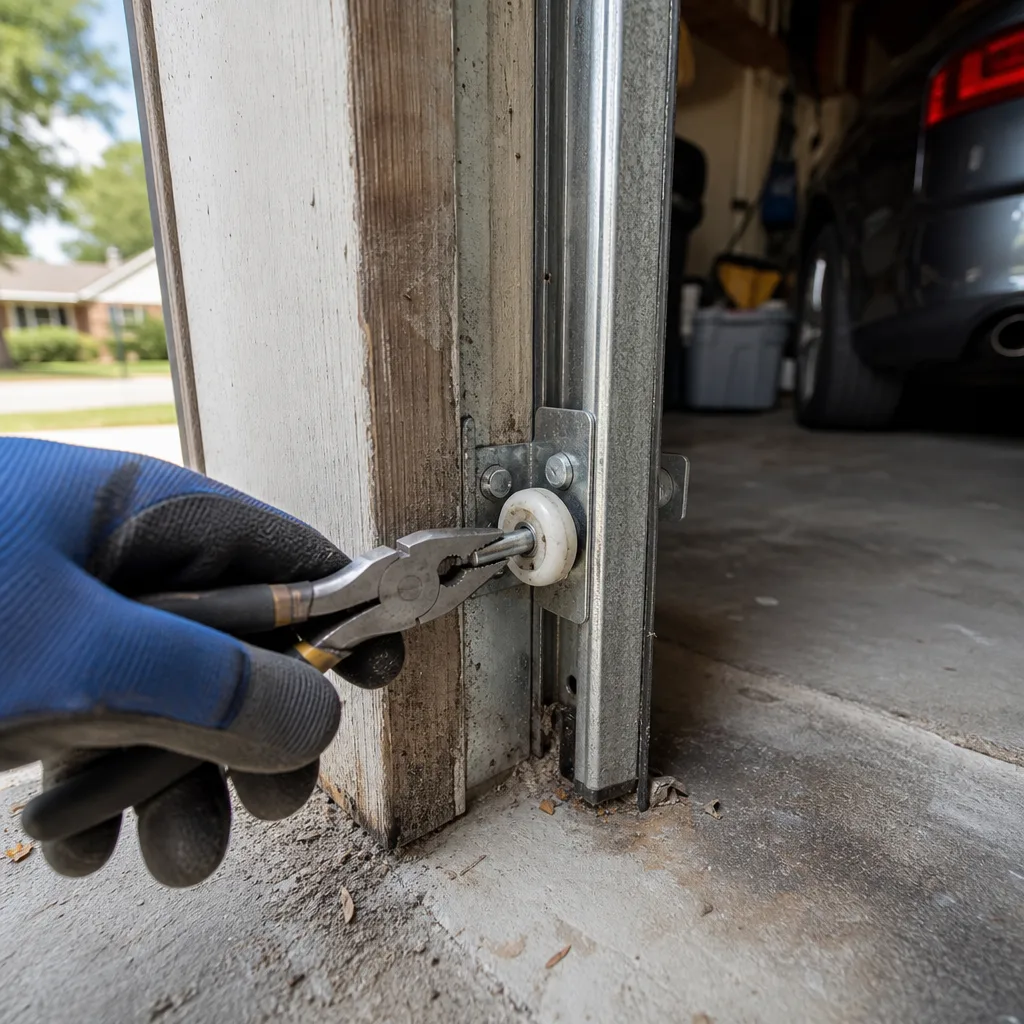
Missouri City’s winter is brief but capable of genuine damage. The January 2024 freeze reached 18°F in parts of Fort Bend County. That matters for garage doors in specific, predictable ways.
Spring tension increase: Steel’s coefficient of thermal expansion is approximately 6.5 microinches per inch per degree Fahrenheit. A 2-inch diameter torsion spring cooling from 70°F to 25°F contracts roughly 0.006 inch in diameter - small in absolute terms, but significant relative to the preload stress already in the spring. The spring’s torque output increases slightly, which can overstress a weakened spring or cause premature failure in a spring already near its cycle limit. We see spring breaks cluster 24-72 hours after the first hard freeze of winter, not during the freeze itself - the thermal shock plus the first post-freeze operation does the damage.
Lubricant viscosity: Grease that flowed properly at 50°F becomes stiff at 30°F. The door requires more opener force to move, which can trip the force-limit safety or cause the motor to overheat. If your door worked fine in October but stalls or reverses in January, the first check is lubricant condition - but the safe check is calling a technician, because forcing a cold, stiff door can overload the opener’s drive gear.
Photo-eye misalignment: The photo-eye brackets are typically mounted to the track or wall with slotted holes for adjustment. Thermal contraction of the mounting surface or track can shift bracket position by 1/8 inch - enough to break the infrared beam’s alignment. The symptom is a door that opens normally but reverses immediately when closing, or a constantly blinking photo-eye LED. Realignment requires loosening the bracket, adjusting until the LEDs show solid (not blinking) alignment, and retightening without shifting. This is within capable homeowner range, but requires kneeling at track level and working with small fasteners - not ideal in freezing conditions.
Ice in the track: After rain followed by freeze, ice can form in the track’s lower section. Do not force the door through ice binding. The opener’s force limit should prevent damage, but repeated attempts can strip the trolley carriage (the component that connects the opener arm to the door) or damage the top section. Use a hair dryer or warm water to melt the ice, then dry the track thoroughly to prevent refreeze.
What to do after a freeze event:
- Operate the door manually (disengage the opener by pulling the red release cord) to feel for binding or unusual resistance. If manual operation is stiff, the issue is mechanical - lubricant, track, or spring - not electrical.
- Inspect springs for visible gaps in the coil body. A “set” spring with coils touching where they shouldn’t indicates fatigue failure in progress.
- Test auto-reverse and photo-eye function. Document any changes from October baseline.
- If the opener strains, stalls, or reverses without obstruction, stop operating it. The motor or drive gear is at risk. Call for service - this is not a settings adjustment to make yourself.
Spring Recovery: Inspection After the Cold
March in Missouri City is volatile. Temperatures swing 40 degrees in a week, severe weather season begins, and homeowners emerge from winter hibernation to find problems that developed unnoticed.
The priority inspection in March is structural: what changed during winter that hasn’t been detected yet?
Spring fatigue: Torsion springs are rated in cycles (one open-close = one cycle), typically 10,000 for standard oil-tempered, 25,000-30,000 for high-cycle springs. A two-car garage door used four times daily accumulates roughly 1,460 cycles annually. After 6-7 years, standard springs enter their failure window. Winter contraction accelerates this. In March, inspect for coil gaps, rust streaking (indicates internal corrosion from humidity), and a “sagging” appearance when the door is open - the spring should hold its coil spacing uniformly.
Cable wear: The lift cables that transfer spring torque to the bottom corners of the door run over pulleys or drums with sharp edges. Cold makes cable wire more brittle. Look for fraying, especially at the bottom loop where the cable attaches to the door bracket. A single broken strand is a replacement indicator - cable failure under load can whip with lethal force, and garage door installation in Missouri City standards require full cable replacement, not splicing.
Panel and section alignment: Winter operation with degraded rollers or binding can cause door sections to shift relative to each other. The horizontal joints between sections should be uniform in gap width. A widening gap on one side indicates a hinge problem or structural fatigue in the section itself.
Opener rail and chain/belt: Chain-drive openers need slack adjustment - too tight stresses the drive gear, too loose causes ratcheting. Belt-drive openers (common on newer Craftsman and LiftMaster models) can develop cracks in the reinforced rubber belt after thermal cycling. Inspect the full belt length with the door closed.
March is also when to schedule any deferred maintenance before April’s severe weather. A door that fails in a thunderstorm with 60-mph winds is a security and safety issue, not merely an inconvenience.
Post-Storm Inspection Protocol for Hail and High-Wind Events
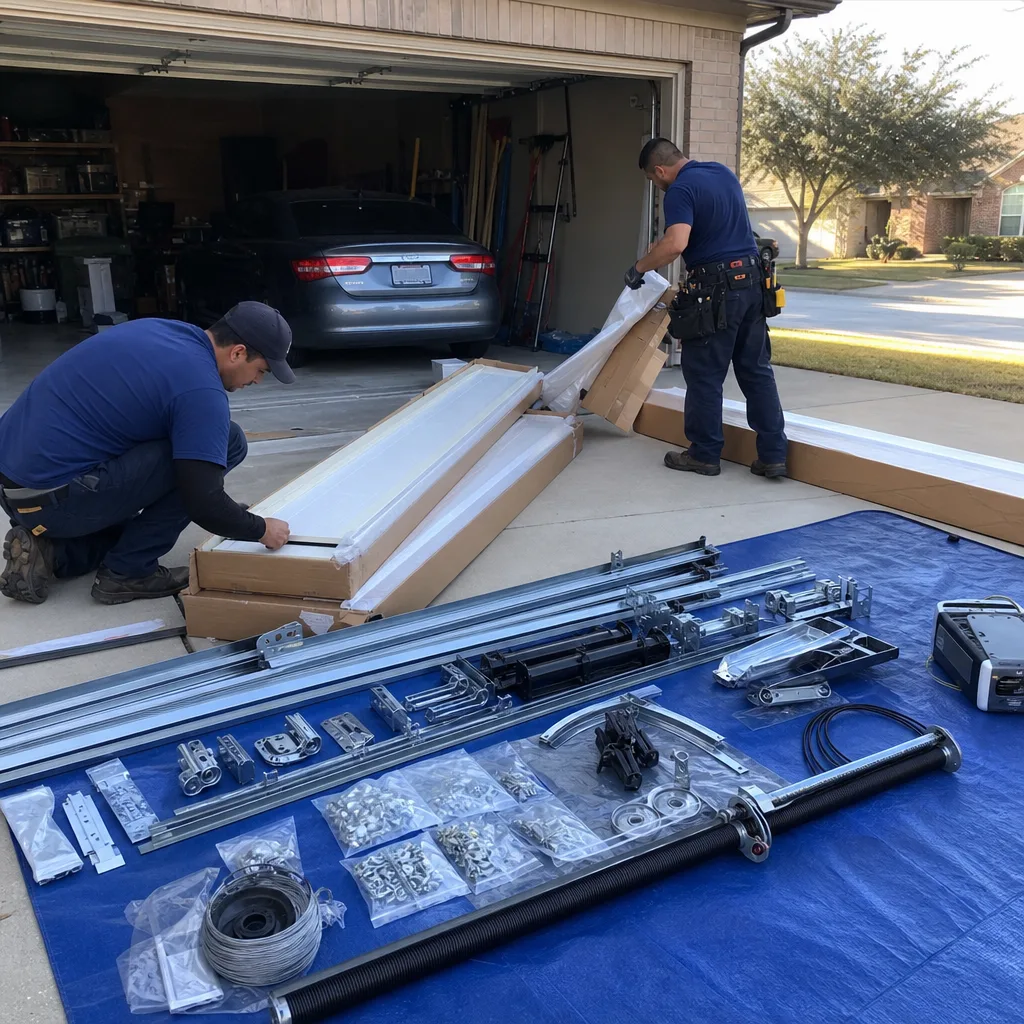
Fort Bend County’s position on the Gulf Coast puts it in the severe weather corridor. Hail and high winds don’t always cause immediate door failure, but they create damage that propagates. The key is documentation - for insurance, for warranty claims, and for your own record of when a condition changed.
Immediate post-storm inspection (within 24 hours):
- Photograph the full door face from 10 feet, centering the door in frame. Include the house number or a timestamp reference. This establishes pre-claim baseline if damage develops later.
- Inspect panel surfaces for dents. Run your hand across each section - small hail dents may not be visible in diffuse light but are detectable by touch. On Clopay and Amarr steel doors, denting can crack the factory paint film, creating a rust initiation point. On Wayne Dalton fiberglass or wood-composite doors, denting indicates substrate damage that may delaminate.
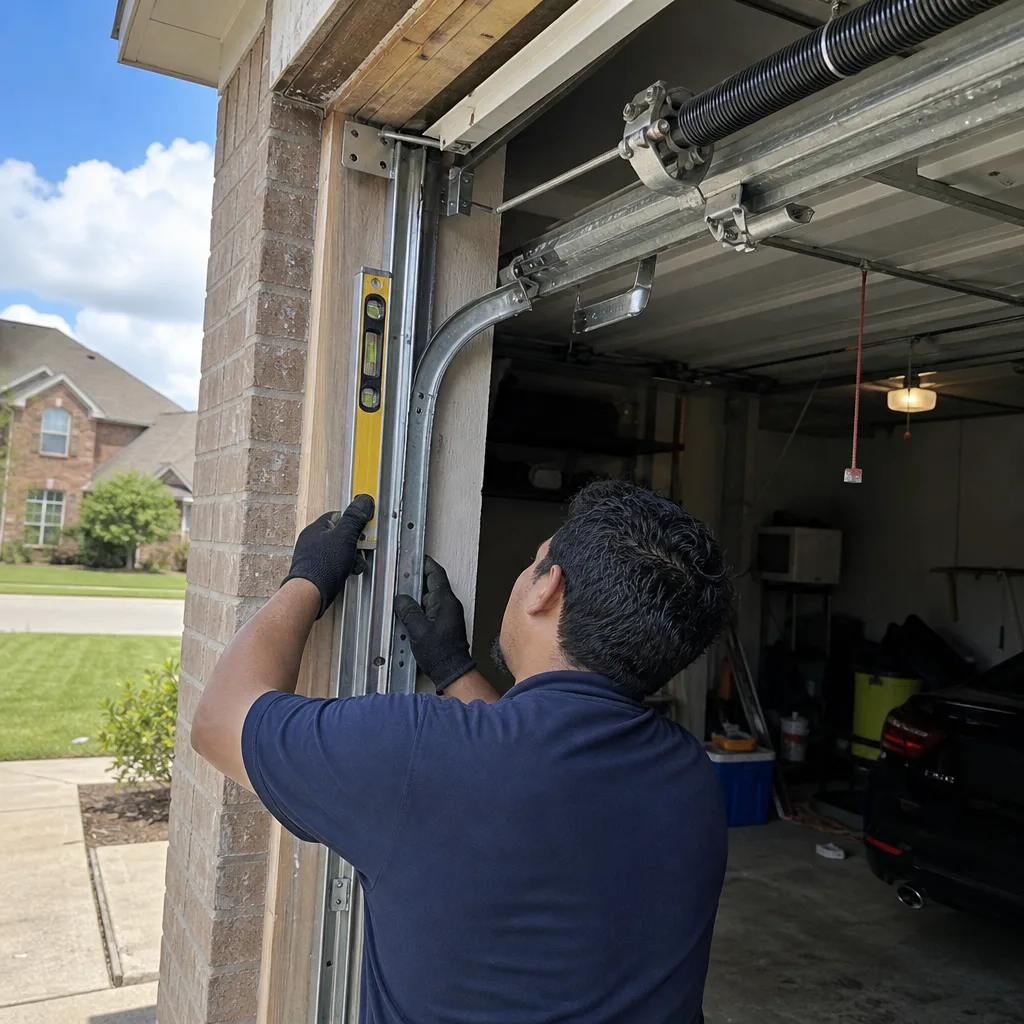
- Check track verticality. Wind pressure on a closed door can rack the track brackets. Use a level on the vertical track - any visible deviation from plumb needs correction before operation stresses the rollers.
- Test opener force settings. Wind-loaded doors may have shifted in the track, creating new binding points. The opener that worked before the storm may now be compensating for mechanical resistance. Run the full open-close cycle and listen for strain - motor laboring, chain rattling, or door hesitation.
- Inspect weatherstripping for impact damage. Wind-borne debris can tear seals. Any gap is an entry point for the next storm’s rain.
Documentation for insurance: Most homeowner policies cover sudden, accidental damage from hail or wind. They do not cover gradual wear. The critical distinction is proving when damage occurred. Our technicians provide a dated photo record and written scope - Clause 4 of The Haven Standard requires photographing the failed or damaged component before quoting replacement. This documentation has supported customer claims where the adjuster initially attributed denting to long-term wear.
If your door is dented but functional, you have a decision: claim now for cosmetic panel replacement, or monitor for rust propagation. We provide the photo record and a written price for replacement panels or full door replacement, with costs broken down in our 2026 Missouri City reference, valid for 365 days under our Done Right Promise. You decide the timing; we document the condition.
What You Can Safely Do vs. What Requires a Lockout
Garage door systems store significant mechanical energy and operate under electrical power. Some tasks are genuinely safe for homeowners. Others require the door to be locked out of operation - mechanically secured so it cannot move - and performed by a trained technician with the proper tools.
Safe homeowner tasks (door may remain operational):
- Visual inspection of springs, cables, rollers, and hinges from a standing position - no contact required
- Track cleaning with dry cloth or brush
- Photo-eye alignment using manufacturer procedure (typically LED indicators on the sensors)
- Weatherstripping and bottom seal replacement on doors with simple retainer channels
- Opener remote battery replacement and code reprogramming
- Lubrication of hinge pivot points and steel roller stems (not nylon rollers)
Tasks requiring lockout and professional service:
- Any work on torsion springs, including lubrication of the full coil body - the spring must be unwound with winding bars before safe contact
- Cable replacement or adjustment - cables are under spring tension and can cause severe injury if released improperly
- Spring tension adjustment or spring replacement - requires calibrated winding bars and knowledge of door weight
- Opener logic board replacement or motor service - involves line voltage and stored mechanical energy
- Track realignment or bracket reattachment - requires verifying plumb and level under load
- Bottom bracket replacement (the brackets at the door’s lower corners where cables attach) - these are under full spring tension
The lockout procedure for a torsion-spring door involves clamping the door to the track at multiple points, releasing spring tension with winding bars inserted in the cone cogs, and verifying zero stored energy before any component contact. This is not described in consumer manuals for good reason. Our technicians carry calibrated torque-measuring tools and document spring torque before and after any adjustment - part of the photo record you receive.
For garage door opener repair & installation in Missouri City, the electrical hazard is often underestimated. The 120V supply to the opener is protected by a ground-fault circuit in modern installations, but many Missouri City homes built 2010-2018 have non-GFCI garage outlets. A logic board replacement with live power present is a shock hazard even for experienced DIYers.
Month-by-Month Task Map for Missouri City Homeowners
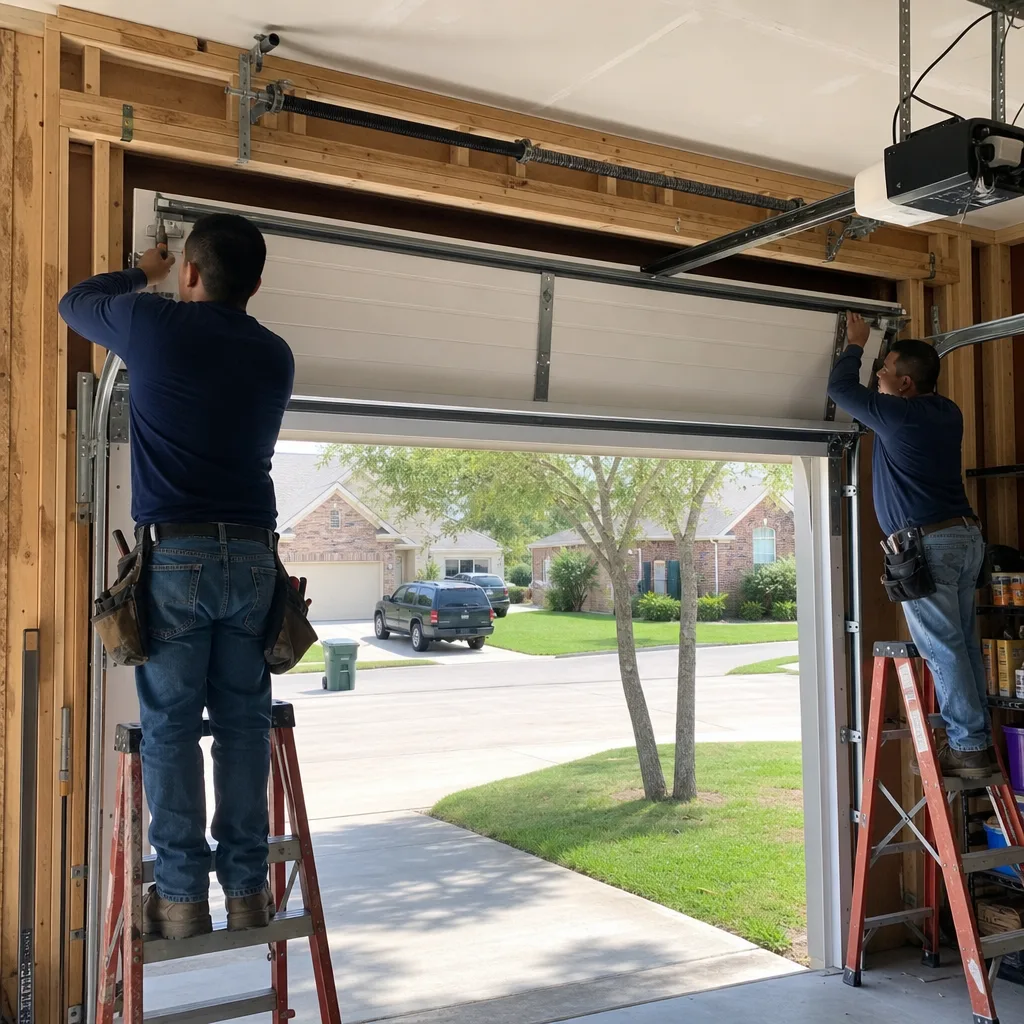
This calendar replaces generic four-season advice with tasks timed to Fort Bend County’s actual climate stressors.
January: Post-freeze inspection. Check spring coil spacing, test auto-reverse after cold-weather operation, verify photo-eye alignment. If the door showed any strain during freeze events, schedule professional inspection - spring fatigue failures peak in late January.
February: Continue monitoring for delayed winter failures. Lubricant stiffness from January may have caused hinge or roller wear that manifests now. Listen for new noises - grinding, squealing, or rhythmic clicking.
March: Full spring recovery inspection. Document panel alignment, cable condition, and opener rail integrity. Schedule deferred maintenance before severe weather season. This is the second-busiest repair month after January - book early if you need service.
April: Post-storm inspection after every severe weather event. Follow the protocol above. Check drainage around the garage - April rains in Missouri City can pool at the door threshold, accelerating bottom seal and track base corrosion.
May: First heat-wave preparation. Verify opener ventilation - clear any insulation or storage that blocks airflow to the motor housing. Test door balance: disconnect opener and lift manually to mid-height; the door should stay in place. Drifting indicates spring weakening before total failure.
June-July-August: Monthly visual inspection only. Do not lubricate - fresh grease will degrade. Monitor bottom seal compression and weatherstripping for splitting. Document any opener thermal faults with temperature and time. In Quail Valley and Hunters Glen, where afternoon sun is most direct, check south- and west-facing doors weekly.
September: UV damage assessment. Inspect weatherstripping for surface cracking versus splitting. Check bottom seal profile - permanent compression means replacement. This is the peak replacement month for seals in our service history.
October: Primary maintenance window. Lubricate torsion springs, steel rollers, and hinge pivots. Clean and inspect tracks. Verify opener force and limit settings. Test auto-reverse and photo-eye. Document baseline condition with photos - yours or ours.
November: Verify winter readiness. Confirm lubricant is distributed, not pooled. Check weatherstripping replacement from September - did it seat properly? Test manual release function (red cord) so you know it works before an ice event.
December: Monitor first cold snaps. Any door that worked in October but strains in December has a developing problem - likely spring fatigue or degraded lubricant. Address before January’s harder freezes.
Common Mistakes to Avoid
- Lubricating in spring or summer. National calendars say April; Missouri City’s heat says October. Fresh grease applied in April cooks off by June, leaving a residue that accelerates wear. Wait for the October maintenance window.
- Using WD-40 on moving parts. WD-40 is a water displacer and light solvent, not a lubricant. It evaporates within days, leaving metal unprotected. Use lithium-based NLGI #2 grease for springs and hinges, light machine oil for steel roller stems.
- Ignoring “cosmetic” weatherstripping cracks. Surface cracking on vinyl seals propagates inward through thermal cycling. By the time you see a gap, the seal has already failed. Replace when cracking is detectable with a fingernail, not when daylight shows through.
- Adjusting opener force to overcome mechanical resistance. If the door requires more force to move, the problem is binding, spring weakness, or track misalignment - not insufficient opener power. Increasing force masks the problem until the opener drive gear fails or the safety system is compromised.
- DIY spring work with inadequate tools. Winding bars must be solid steel, precisely fitting the cone cogs, and used in pairs. Using screwdriver bits, adjustable wrenches, or single bars has caused fatalities. This is not hyperbole - torsion springs store enough energy to cause lethal trauma.
- Skipping post-storm documentation. Insurance adjusters distinguish sudden damage from wear. A photo taken the day after hail, with timestamp and address visible, supports your claim. A photo taken six months later does not.
- Assuming all rollers need lubrication. Nylon rollers are self-lubricating; grease attracts abrasive dust. Steel rollers need oil on the stem bearing only. Applying grease to nylon rollers accelerates wear and creates a cleaning problem.
When to Call a Professional
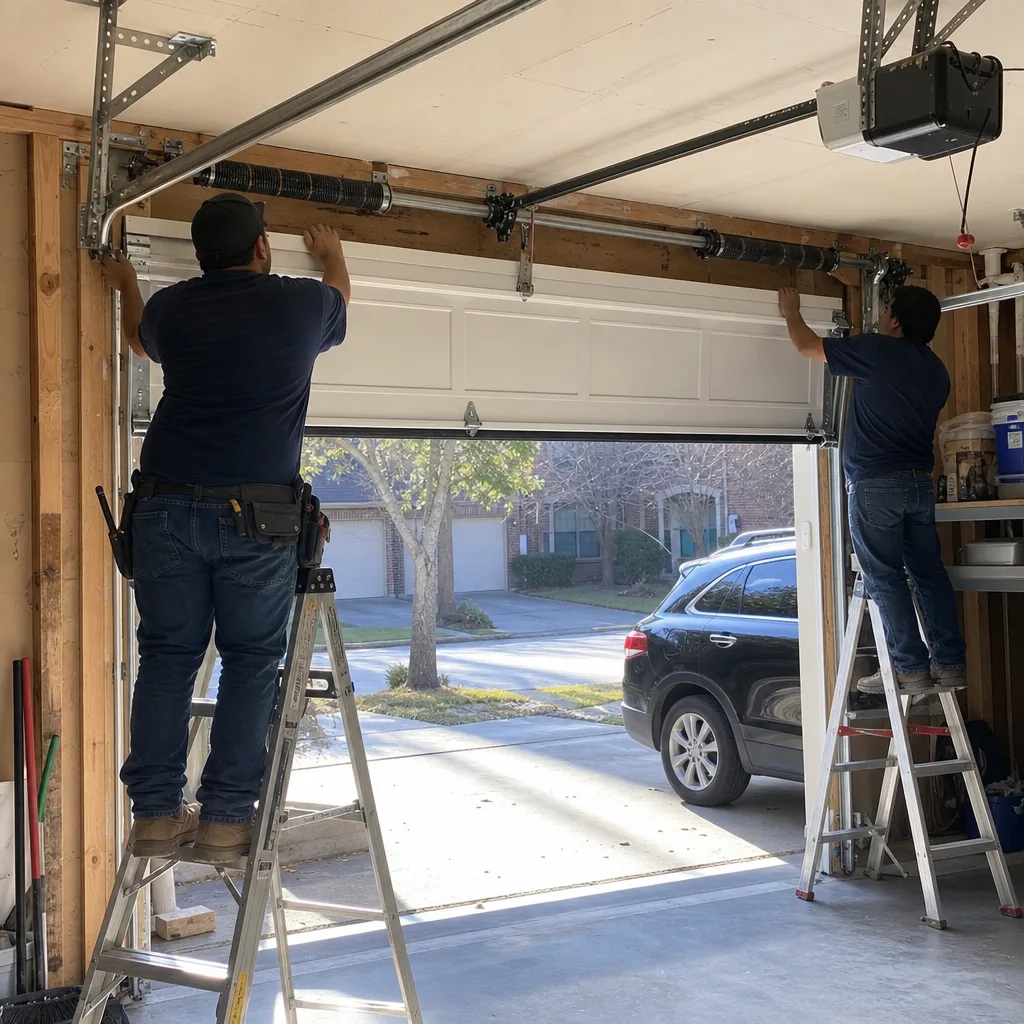
Call a technician when you encounter stored energy (springs, cables, bottom brackets), line voltage (opener internals), or any condition where the door’s movement could cause injury or property damage. Specific scenarios: a broken spring or cable, a door that won’t stay open manually, an opener that strains or stalls, track damage from impact, or any post-storm condition where structural integrity is uncertain.
Servo Garage Doors Missouri City offers free estimates in Missouri City - call (346) 456-5565. Every visit includes a documented photo record of findings and completed work, a flat written price before any work starts per Clause 1 of The Haven Standard, and the 365-Day Done Right Promise. We service all major brands including Clopay, Amarr, and Wayne Dalton, and we provide free second opinions on any competing written estimate you bring in.
Frequently Asked Questions
Lubricate torsion springs, steel roller stems, and hinge pivot points once annually, in October, before winter cold snaps cause metal contraction. Nylon rollers and plastic hinges do not require lubrication. Call (346) 456-5565 for an exact quote on professional lubrication service - estimates are free.
No. Torsion springs store lethal mechanical energy and require specialized winding bars, training, and lockout procedures for safe handling. The Consumer Product Safety Commission attributes multiple fatalities annually to DIY spring work. Our technicians carry calibrated tools and document spring torque before and after adjustment as part of Clause 4 of The Haven Standard.
Thermal expansion of metal components, opener logic board heat sensitivity, or degraded lubricant that thickens in morning coolness and thins excessively in afternoon heat. In Missouri City’s climate, afternoon heat failure most often indicates a thermally stressed logic board or lubricant that has separated into non-functional residue. A technician can distinguish these with temperature-correlated testing.
Bottom seal replacement typically runs $85-$180 depending on door width and seal type (vinyl, EPDM, or bulb-style). Full perimeter weatherstripping (sides and top) ranges $140-$280 for standard residential doors. We quote a flat, written price before any work starts - Clause 1 of The Haven Standard - and provide a documented photo record of the installed seal profile. Call (346) 456-5565 for an exact quote on your door.
No. Our written price and written scope are delivered before any work begins, with no exceptions. If we find additional issues during inspection, we document them with photos, provide a separate written scope and price, and you choose whether to proceed. This is Clause 1 of The Haven Standard, and it applies to every job since 2015.
Yes. Our trucks stock torsion springs in common wire sizes and diameters, lift cables, rollers, hinges, bottom seals, weatherstripping, and logic boards for LiftMaster, Chamberlain, Genie, and Craftsman openers. For less common components - specialized Wayne Dalton TorqueMaster springs, for example - we typically source within 24 hours. We confirm parts availability when you schedule, not when we arrive.
The Bottom Line
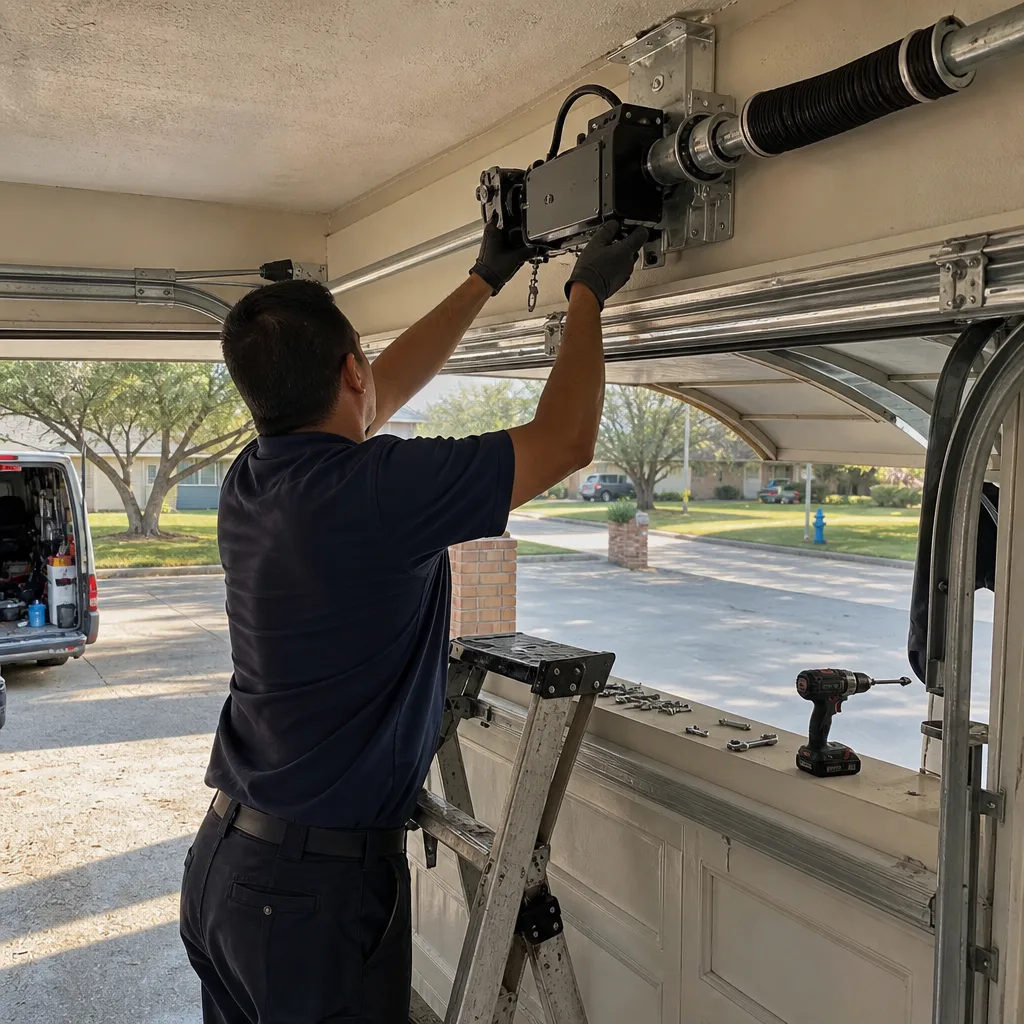
Missouri City’s climate demands a maintenance calendar that ignores national templates. Lubricate in October, not April. Inspect for UV damage in September, when it’s fully developed. Document everything after storms, when insurance claims depend on timing. Know which tasks are safe to handle and which require locking the door out of operation. The homeowners who avoid emergency calls are the ones who match their maintenance to Fort Bend County’s actual weather pattern - six months of heat degradation, a brief but hard freeze, and the shoulder seasons where preparation happens.
Written by Marcus Deller, Owner at Servo Garage Doors Missouri City, serving Missouri City since 2015.