
Last updated September 21, 2026
Full 25-point door and opener safety check with every visit - springs, cables, rollers, tracks, and your LiftMaster or Chamberlain opener included
You get a price before we start. It does not change when the truck arrives.
 Before
 After
After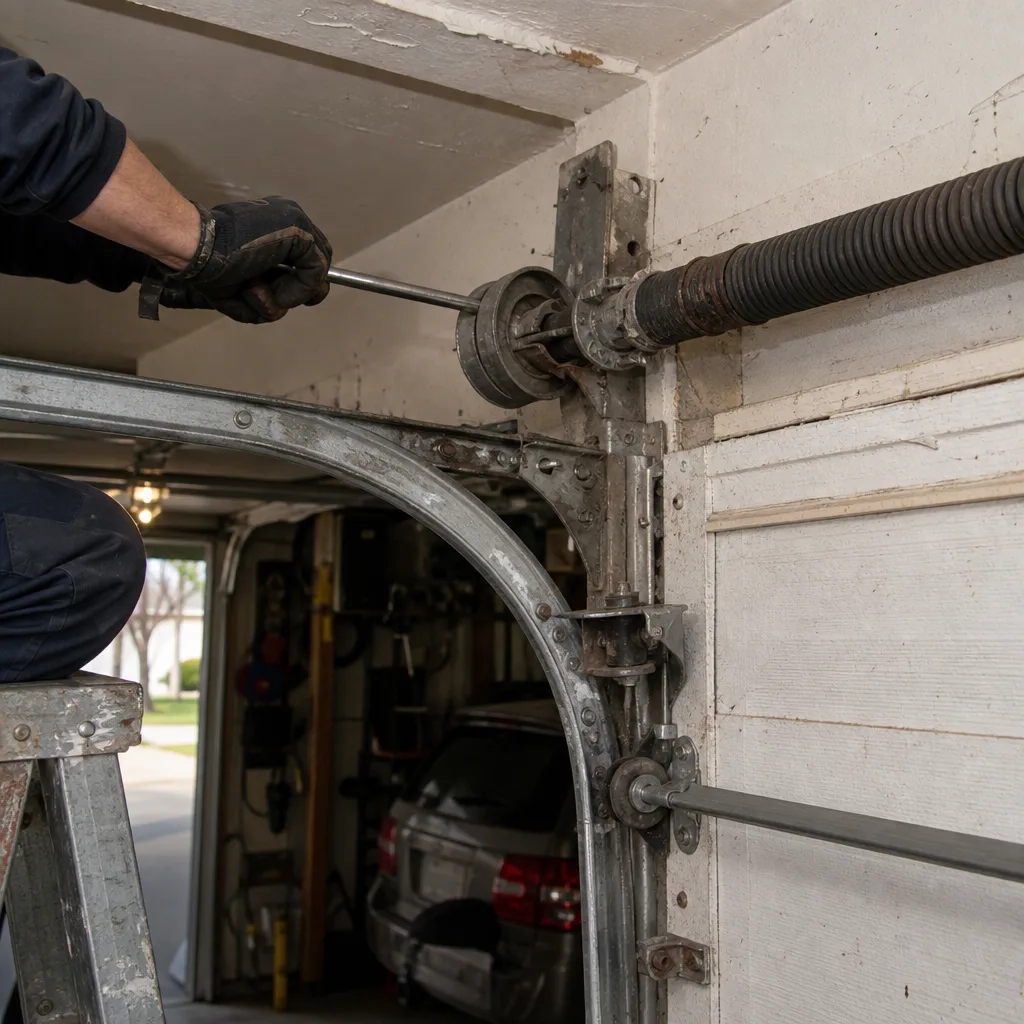 Before
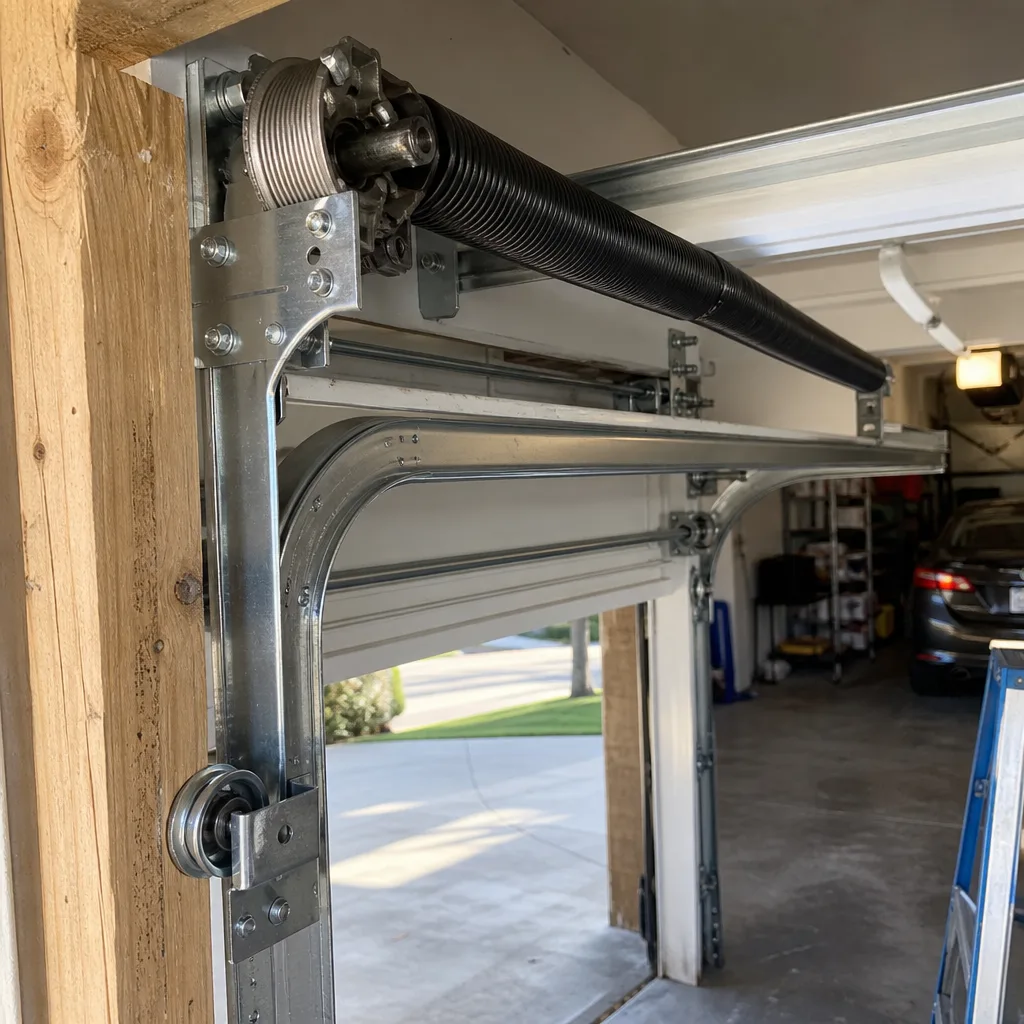 After
After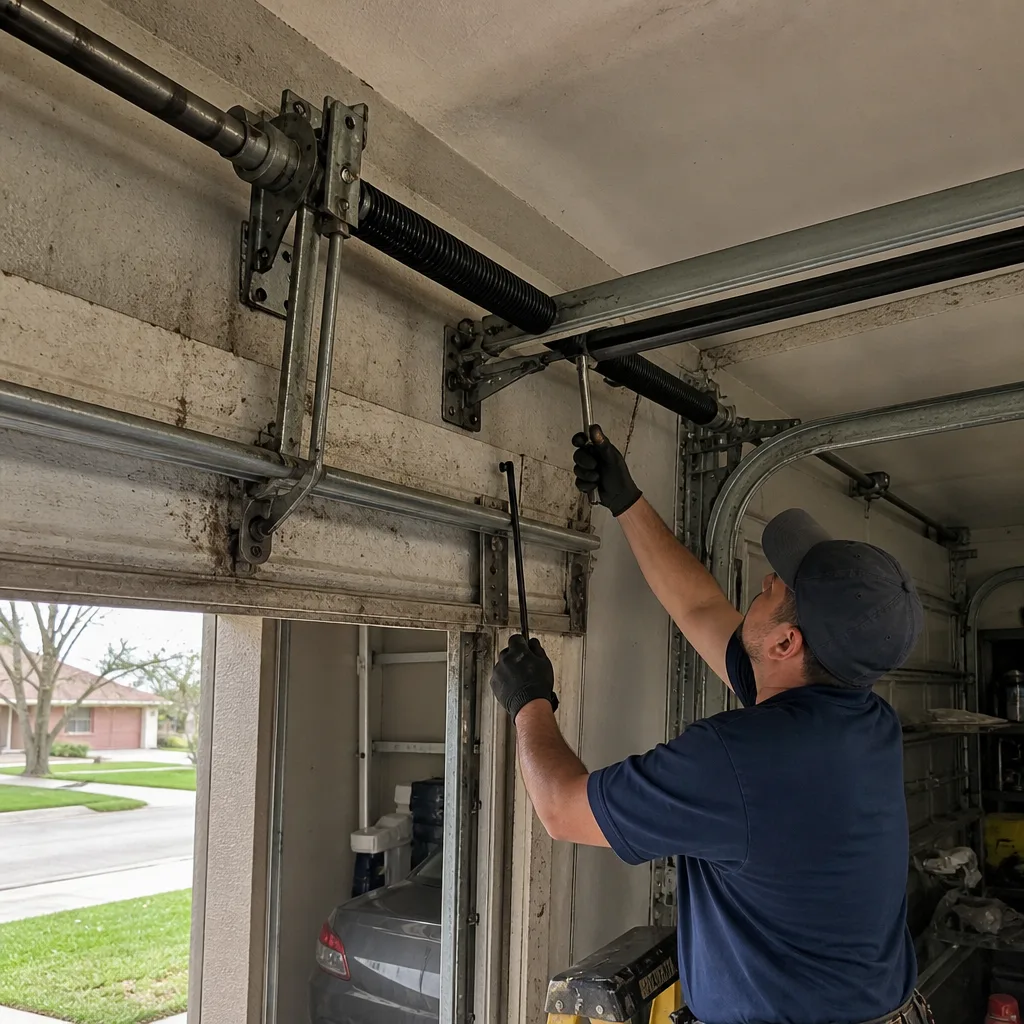 Before
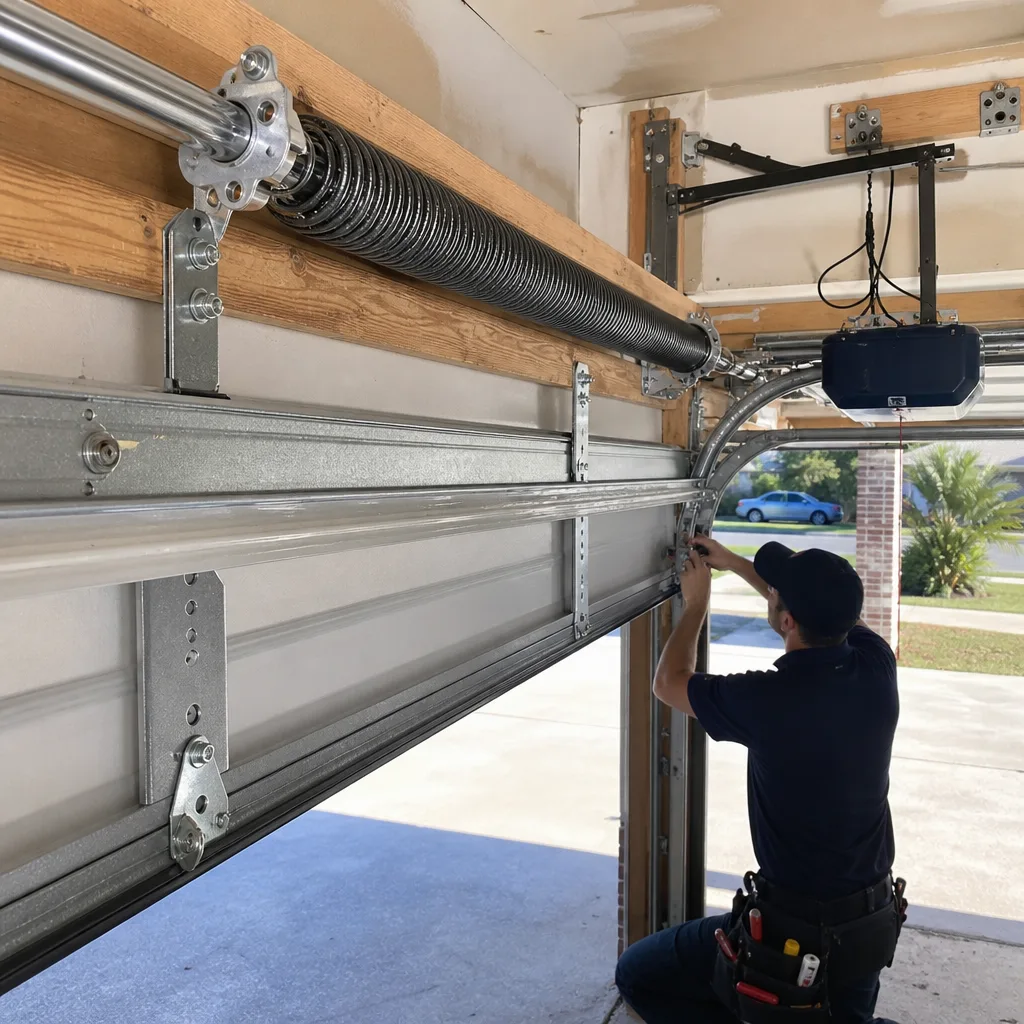 After
AfterThe Complete Guide to Garage Door in Missouri City
The average Missouri City homeowner replaces their garage door opener before the springs, even though the springs are statistically the first component to fail and the opener was just straining to compensate. We’ve seen this pattern across thousands of homes in Fort Bend County since 2015 - a homeowner hears the motor laboring, assumes the opener is dying, and buys a new LiftMaster or Chamberlain while the real problem, a fatigued torsion spring, continues to stress the new unit. This guide maps every component in your garage door system, how Missouri City’s heat and humidity attacks each one, and what you should expect to pay before any technician touches a wrench - or explore our Garage Door Cost Breakdown: The Missouri City Homeowner’s Reference for 2026 for detailed pricing.
Quick Answer
A complete garage door system in Missouri City consists of six interdependent components - springs, cables, tracks, panels, opener, and safety sensors - each with its own lifespan, failure mode, and repair cost. In Fort Bend County’s climate, torsion springs typically fail first (7-12 years) due to heat cycling and humidity corrosion, while openers last 10-15 years and panels 20-30 years if properly maintained. Understanding this stack before anything breaks lets you distinguish a $180 spring repair from a $2,400 full replacement, and spot a quote that omits critical details.
Table of Contents
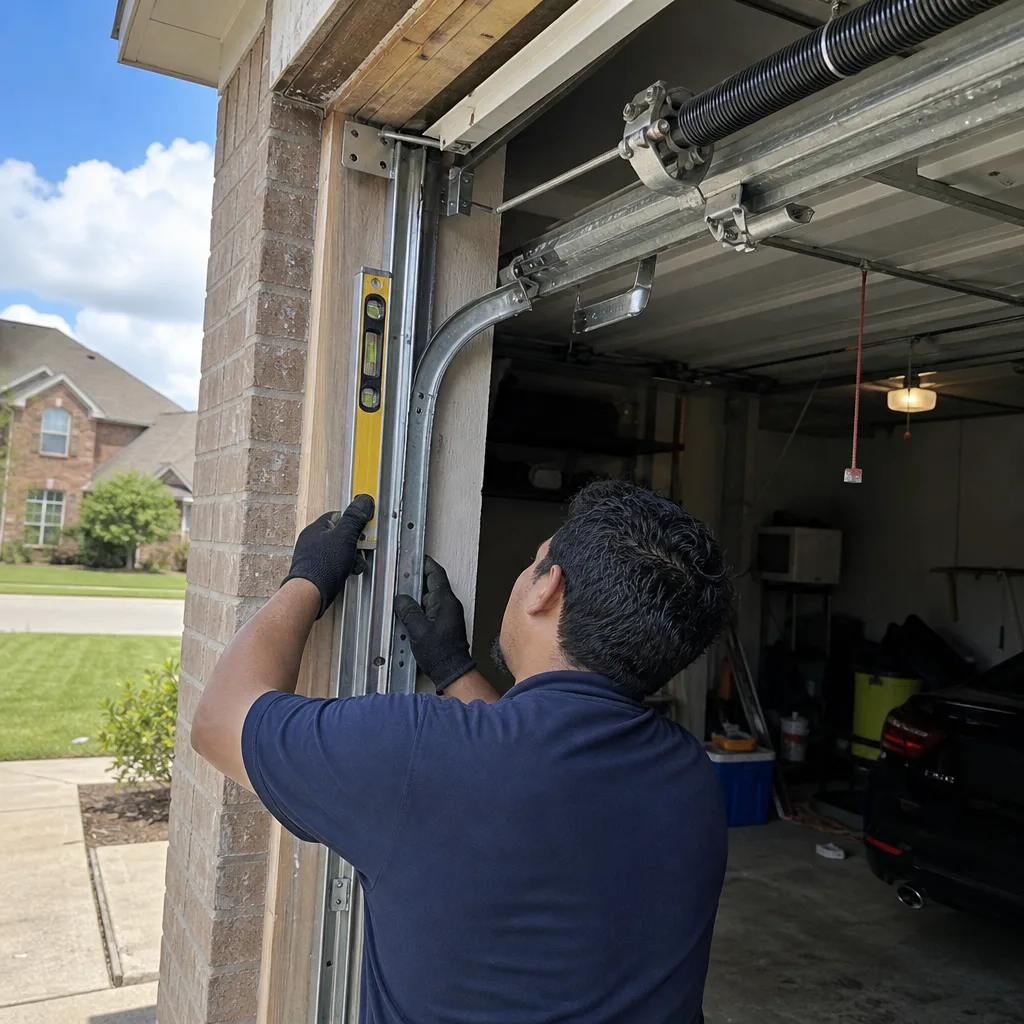
- How Missouri City Climate Destroys Garage Doors
- Reading Your Serial Plate: Actual Age and Warranty
- Component Breakdown: Springs, Cables, and Tracks
- Component Breakdown: Panels, Opener, and Safety Sensors
- Repair vs. Replacement: The Decision Tree
- What a Legitimate Written Quote Must Include
- Common Mistakes to Avoid
- When to Call a Professional
- Frequently Asked Questions
- The Bottom Line
 Before
 After
AfterHow Missouri City Climate Destroys Garage Doors
Missouri City sits in Fort Bend County’s subtropical humidity zone, where summer temperatures routinely hit 95°F and relative humidity lingers above 75% for months. This combination creates a specific wear pattern that national garage door lifespan averages don’t capture accurately.
Heat cycling is the primary killer of torsion springs. A spring wound to 10,000 cycles in a climate-controlled factory test performs differently when daily temperature swings of 30°F expand and contract the metal. In Sienna Plantation and Lake Olympia, we’ve measured spring fatigue rates approximately 15-20% faster than manufacturer’s dry-climate specifications. The spring doesn’t just break; it loses tension incrementally, forcing the opener motor to draw more amperage and overheating the logic board.
Humidity attacks the cable drums and bottom brackets through galvanic corrosion. Steel cables in a garage that isn’t climate-controlled - which describes most homes in Quail Valley and Meadow Creek - develop surface rust that frays individual strands before the cable snaps. A frayed cable is a predictable failure; a snapped cable under load is dangerous.
Fort Bend County’s clay-heavy soil creates foundation movement that misaligns vertical tracks over time. We’ve re-tracked more doors in First Colony and Riverstone than in comparable Houston subdivisions because the soil expansion during wet seasons shifts the header framing. A track that’s even 3/8 inch out of plumb forces the rollers to bind, transferring lateral load into the hinge points and eventually cracking steel or fiberglass panels.
Key climate failure patterns in Missouri City:
- Torsion springs: accelerated fatigue from heat cycling, 7-12 year actual lifespan vs. 10-15 year national average
- Cables and bottom brackets: humidity corrosion in unconditioned garages, 8-12 year lifespan
- Tracks and rollers: foundation shift misalignment, requires annual visual inspection
- Opener logic boards: heat damage from overworked motors compensating for weak springs
- Safety sensors: condensation on lenses causing false obstruction readings during humid mornings
Reading Your Serial Plate: Actual Age and Warranty
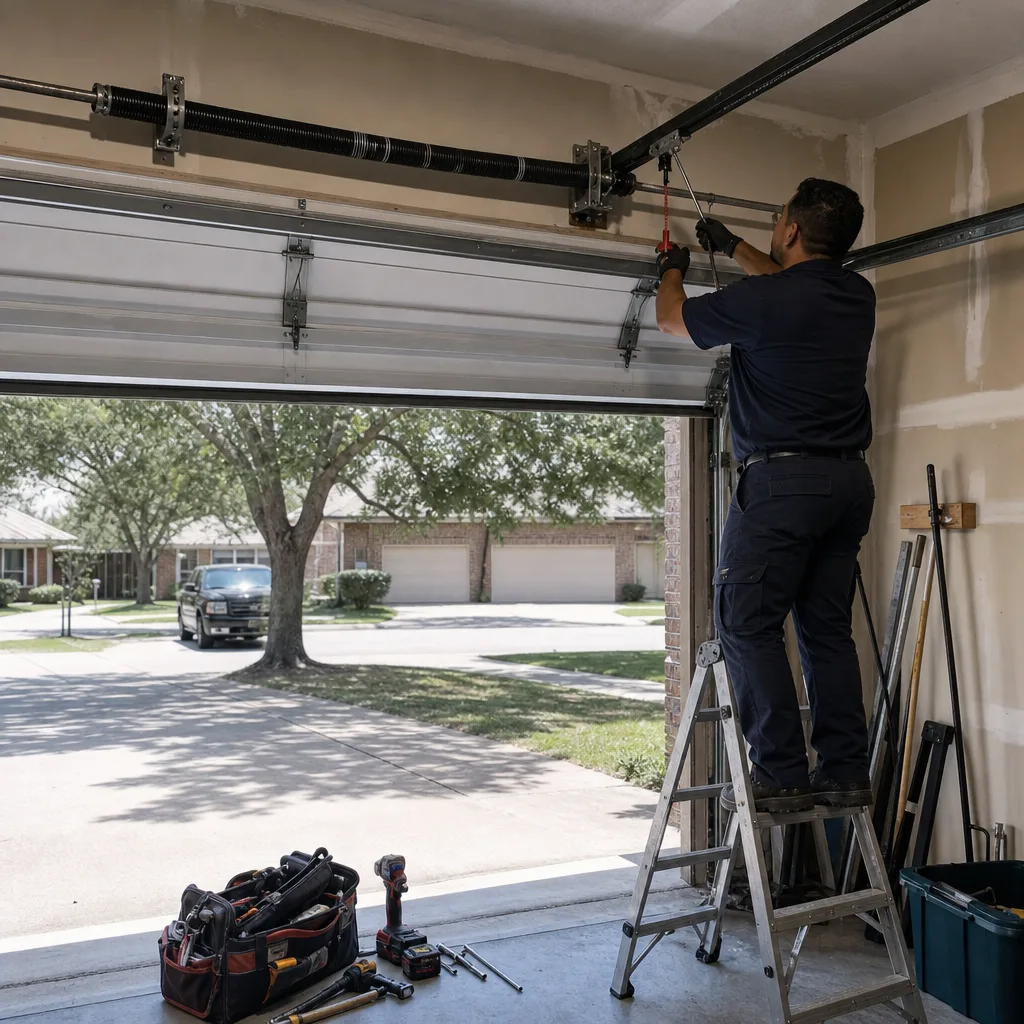
Most homeowners guess their garage door’s age based on when they bought the house. The serial plate tells the real story, and it determines whether you’re paying full price for a failed component or qualifying for a pro-rated manufacturer replacement.
Step 1: Locate the plate. On steel and aluminum doors, it’s typically a metal or foil sticker on the interior face of the bottom section, left or right of the center stile. On wood doors, look for a stamped plate on the top section’s interior edge. If the plate is missing or painted over, check the opener unit - the motor housing carries a separate manufacture date that at least brackets your system’s age.
Step 2: Decode the serial number. Most manufacturers use a date code in the first four to six digits:
- Clopay: First digit is the year (5 = 2015, 6 = 2016, etc., cycling every decade), followed by a two-digit week code. A plate starting “524” means week 24 of 2015 or 2025 - context from the home’s build date usually resolves the decade.
- Amarr: First two digits are the year, next two are the month. “1806” = June 2018.
- Wayne Dalton: Alphanumeric code where the letter indicates year (A=2010, B=2011, etc.) and following digits indicate week.
- Raynor: Often uses a Julian date format; first two digits year, next three digits day of year.
Step 3: Cross-reference warranty status. Most Clopay and Amarr steel doors carry a limited lifetime warranty on the panel sections for the original homeowner, but this rarely transfers on resale. Hardware - springs, cables, rollers - typically carries 1-3 years. Openers vary: LiftMaster and Chamberlain belt-drive units often have 10-year motor and 1-year parts warranties, while Genie screw-drive models historically carried 5-year limited coverage.
In Missouri City’s 2015-2025 housing stock, we’re seeing a wave of original-equipment spring failures right as manufacturer hardware warranties expire. A homeowner in Sienna Plantation with a 2017 build date is likely facing their first torsion spring replacement this year or next - and if they didn’t register the original warranty or aren’t the first owner, they’re paying market rate.
The documented photo record we deliver with every Garage Door Repair in Missouri City includes a photograph of the serial plate, so there’s no dispute about age or warranty status later.
Component Breakdown: Springs, Cables, and Tracks
These three components form the load-bearing skeleton of your garage door system. When one fails, the others compensate until they fail too. Understanding their interaction prevents the cascade.
Torsion Springs
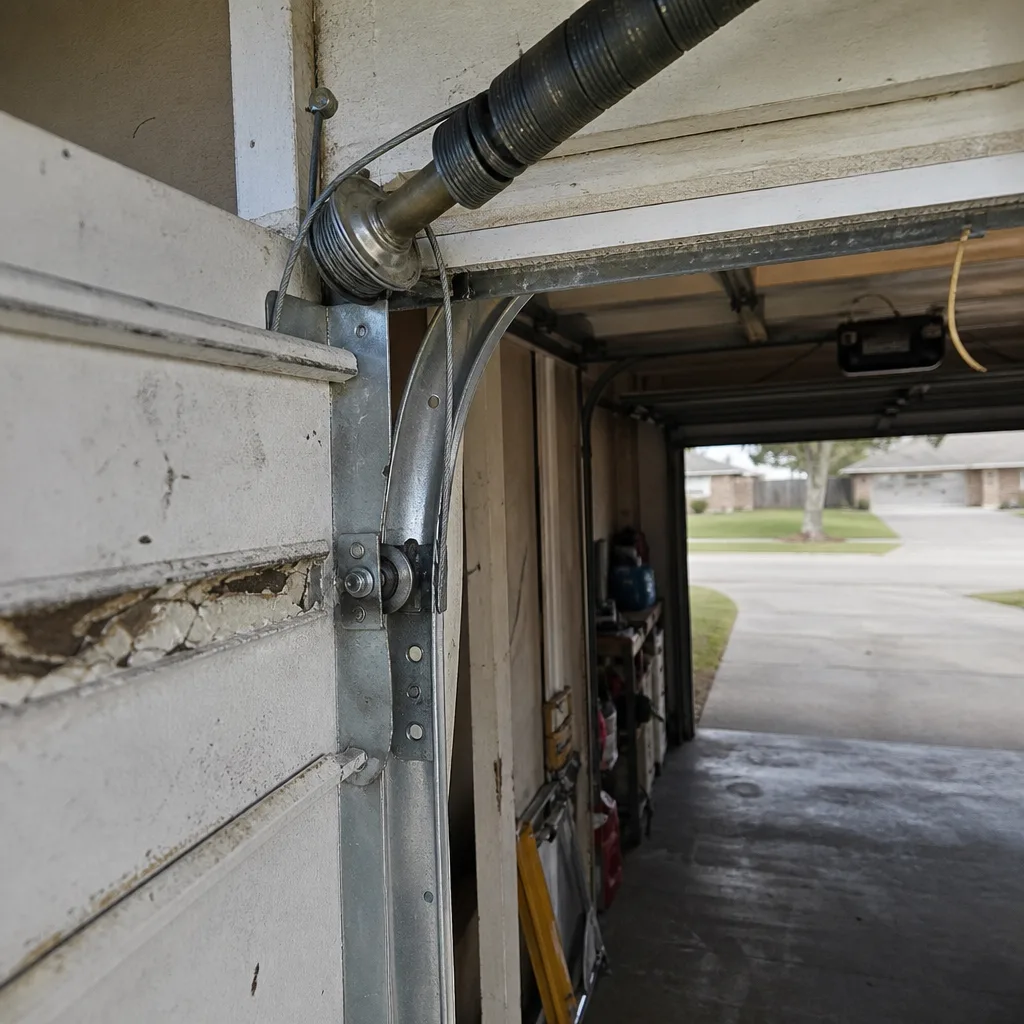
Torsion springs are wound steel coils mounted on a shaft above the door opening. They store mechanical energy to counterbalance the door’s weight, so a 150-pound door feels like 15 pounds when you lift it manually. The spring does the work; the opener just guides.
In Missouri City, we regularly see spring failures in the 7-10 year range, earlier in west-facing garages that absorb afternoon sun through the door surface and radiate it into the spring assembly. The failure mode is typically a clean break at the coil body, though we’ve documented fatigue cracks at the stationary cone in Riverstone homes where humidity corroded the cone’s set screws.
Replacement cost in Missouri City: $180-$340 for a standard 2-car residential torsion spring, including labor. High-cycle springs (25,000-50,000 cycle rating) run $280-$450. The price depends on wire diameter, inside diameter, and length - three measurements we take before quoting, not after.
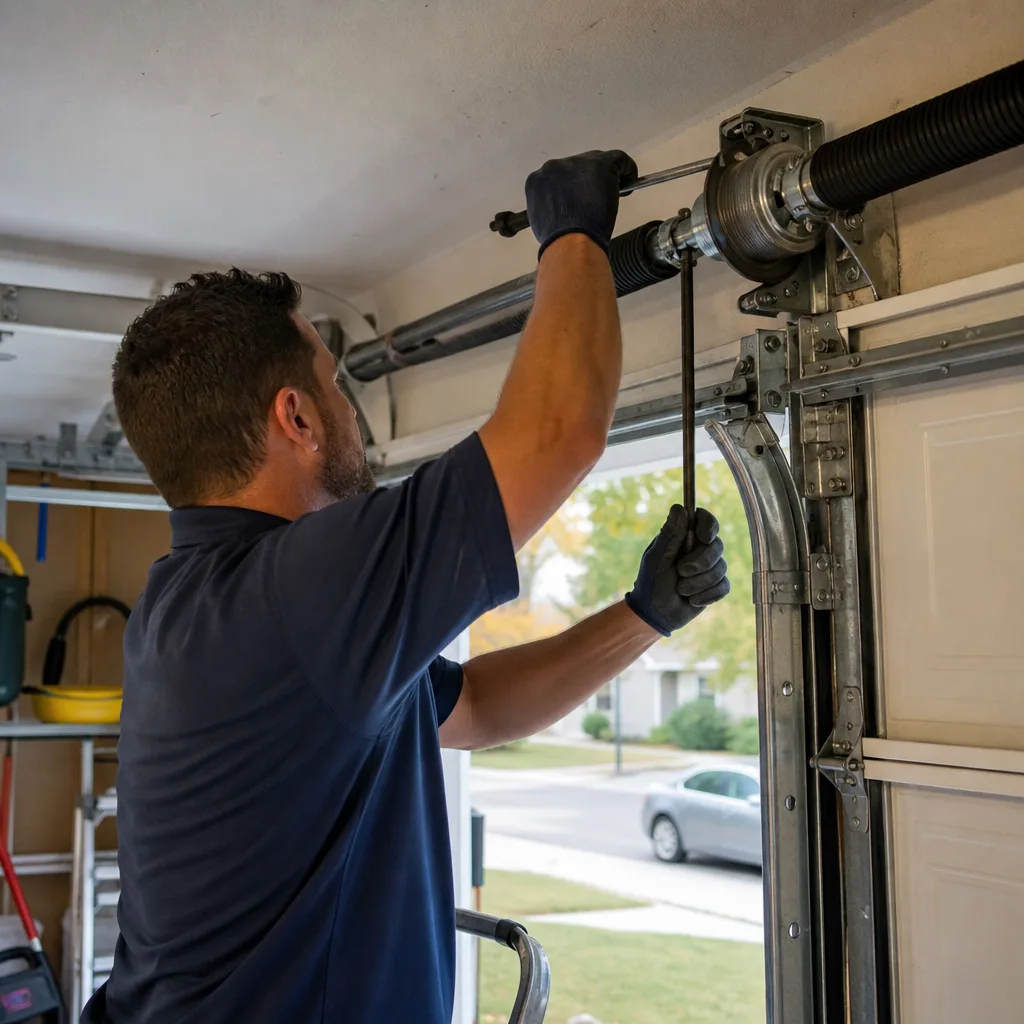
Safety note: Torsion springs are under hundreds of pounds of tension. A winding bar slip can cause serious injury or death. We do not recommend DIY replacement. Clause 4 of The Haven Standard requires our technicians to photograph the failed spring and show the customer the image before quoting replacement - evidence first, price second.
Cables and Cable Drums
Lifting cables attach to the bottom brackets and wind around the cable drums as the door opens. When a spring breaks, the cables often go slack and tangle, or the door drops crooked and jams in the tracks.
Humidity corrosion in Fort Bend County attacks the cable’s end fittings first - the loops that connect to bottom brackets. We’ve replaced cables in Meadow Creek garages where the fittings showed 30% section loss but the cable itself looked fine. A visual inspection catches this; waiting for the snap does not.
Replacement cost: $120-$220 for cable pair including labor. If the cable drum is grooved or cracked from the door dropping, add $45-$85 per drum.
Tracks and Rollers
Vertical tracks guide the door from closed to the curved transition (the radius), then horizontal tracks carry it to the motor. Rollers ride inside the track channels.
Foundation shift in Missouri City’s clay soils misaligns tracks gradually. The symptom is a door that “sticks” at a certain height or makes a rhythmic thumping. The danger is that the door jumps the track entirely, which can bend panels or cause the door to fall.
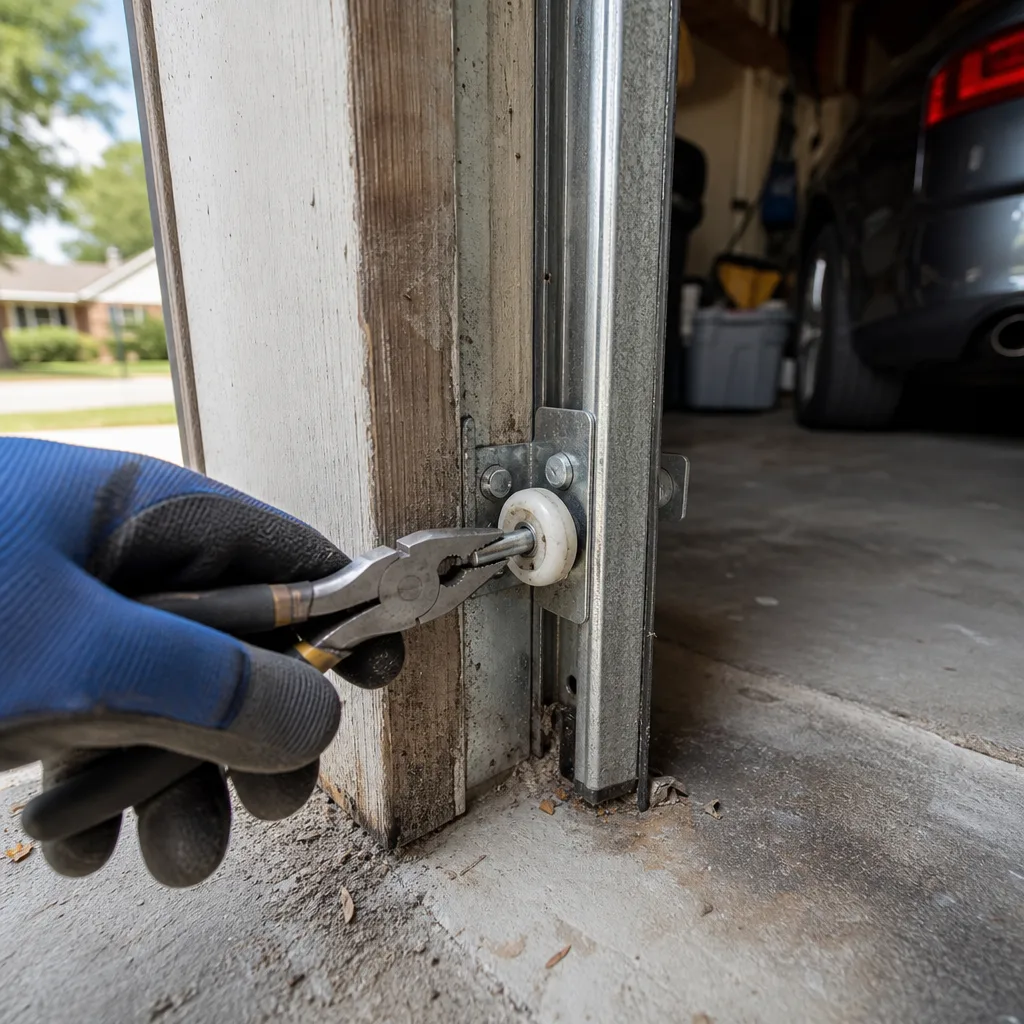
Steel rollers last 5-7 years; nylon rollers with sealed bearings last 10-12 years and run quieter. Track realignment runs $150-$280 depending on how many mounting points need adjustment and whether the header framing requires shimming.
Component Breakdown: Panels, Opener, and Safety Sensors
Door Panels
Steel, aluminum, wood composite, or fiberglass panels provide the visible surface and structural rigidity. In Missouri City’s climate, steel panels with inadequate factory primer show rust bloom at the bottom section within 8-10 years, especially in homes where lawn irrigation sprays the door face. We’ve replaced bottom sections in Quail Valley where the interior face was perforated but the exterior still looked acceptable.
Individual panel replacement runs $250-$600 depending on size, gauge, and insulation value. Full door replacement - the topic of our Garage Door Installation in Missouri City service - ranges from $1,200 for a basic uninsulated steel door to $3,800 for a fully insulated carriage-style unit with windows.
Garage Door Opener
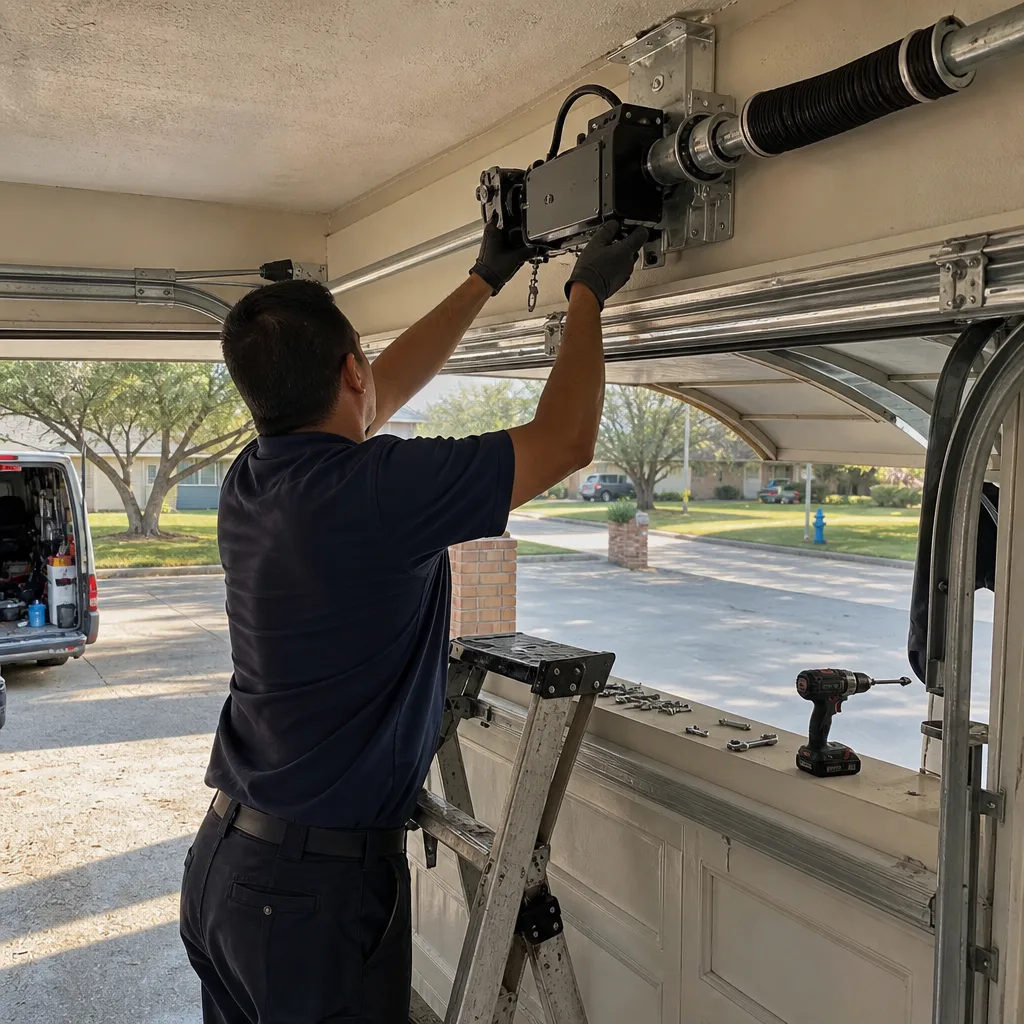
The opener is the most-misdiagnosed component in the system. A “dying” opener is often just an opener working overtime because the springs have weakened. The motor draws excess amperage, overheats the logic board, and fails prematurely.
Modern openers use either chain, belt, or screw drive mechanisms. Belt drives (LiftMaster, Chamberlain) are quietest and preferred for attached garages in Sienna Plantation’s denser sections. Chain drives handle heavier doors but require annual lubrication. Screw drives (Genie) have fewer moving parts but need specific lubricant and are sensitive to temperature extremes.
Opener replacement cost: $350-$650 for a standard 1/2 HP chain-drive unit, $450-$850 for belt-drive with Wi-Fi and battery backup. Our Garage Door Opener Repair & Installation in Missouri City page details when repair ($150-$280 for logic board or trolley carriage) makes sense versus full replacement.
Safety Sensors
Photo-eye sensors mounted 4-6 inches above the floor on each side of the door opening create an invisible beam. Interrupting the beam reverses a closing door. Federal law (UL 325) has required them since 1993.
In Missouri City, morning condensation on sensor lenses causes false obstruction signals - the door starts down, reverses immediately, and the opener light flashes. Cleaning the lenses with a dry cloth usually resolves this. Persistent issues may indicate misalignment from track shift or failing emitter/receiver units.
Sensor replacement: $85-$150 for the pair, including alignment and testing.
Repair vs. Replacement: The Decision Tree
Not every failed component justifies its own repair. The decision depends on the age of the system, the cost of the repair, and what other components are nearing failure.
Repair extends life when:
- The door is under 12 years old and the serial plate confirms original manufacturer warranty on panels
- Only one component has failed (single spring break, one frayed cable, isolated sensor failure)
- The repair cost is under 30% of replacement cost
- The opener is under 8 years old and was not damaged by prior spring failure
- Tracks are properly aligned and rollers move freely with no binding
Full replacement is the better math when:
- The door is over 18 years old and multiple components show fatigue (rust spots, roller noise, spring tension loss)
- A spring failure has damaged the opener - we test motor amperage draw to confirm
- Panel damage or style obsolescence makes individual section replacement unavailable
- Energy efficiency matters: pre-2010 doors rarely have adequate insulation for Missouri City’s heat
- The cumulative repair quote exceeds 50% of a new door system price
We document this analysis in writing. Clause 1 of The Haven Standard requires a flat, written price and written scope before any work begins - no exceptions. If our technician recommends replacement, the quote itemizes what we’d repair if you chose that path instead, so you can see the math.
What a Legitimate Written Quote Must Include
A verbal estimate or a texted “ballpark” is not a quote. It’s a number that changes when the truck arrives. Here’s what a legitimate written quote contains, and what omissions should make you pause.
Required elements:
- Company name, license number, and physical address. In Texas, garage door contractors must hold a valid contractor license. The number should appear on the quote, not be “available on request.”
- Date and expiration. Material prices fluctuate; a quote without expiration date isn’t fixed.
- Itemized parts and labor. “Replace spring: $280” is insufficient. The quote should specify: torsion spring size (wire diameter x inside diameter x length), cycle rating, manufacturer or source, labor hours, and whether old-part disposal is included.
- Scope boundaries. Does the price include lubricating all hinges and rollers? Testing force settings on the opener? Re-aligning safety sensors? A quote that doesn’t say what’s included often means these are upsells later.
- Warranty terms in writing. Not “lifetime warranty” - lifetime of what? Parts, labor, or both? Transferable or not? The 365-Day Done Right Promise specifies: if it’s not done right, we make it right, with terms on a page, not a handshake.
- Payment terms and cancellation policy. No deposit should exceed 10% for standard residential work. Full payment upfront is a red flag.
Common omissions that signal problems:
- No license number or “we’re insured” without carrier name and policy verification
- Single lump sum with no parts/labor breakdown
- “Plus materials” or “time and materials” language - this is not a fixed price
- No mention of permit requirements (Missouri City requires permits for new door installations in some zoning districts)
- Pressure to sign immediately or “today-only” pricing - this contradicts every principle of documented, evidence-based service
Our written quotes include a photo of the failed component, the specific replacement part number, and a copy of The Haven Standard terms page. The customer knows exactly what leaving looks like before we arrive.
Common Mistakes to Avoid
- Replacing the opener while ignoring weak springs. In Lake Olympia, we’ve replaced openers that failed within two years because the original springs were never tested. The new motor burned out doing the spring’s job.
- Using WD-40 on rollers and hinges. WD-40 is a solvent, not a lubricant. It strips existing grease and attracts dust. Use lithium-based garage door lubricant on metal-to-metal contact points, silicone spray on plastic rollers.
- Ignoring a door that reverses before hitting the floor. This usually means misaligned safety sensors or excessive close-force setting. Both are fixable in 15 minutes. Waiting risks the door closing on a vehicle or person.
- Assuming all springs are the same. A spring is specified by wire diameter, inside diameter, length, and wind direction. A “standard spring” from a big-box store rarely matches the door’s weight and track geometry. Incorrect spring selection overworks the opener and creates a safety hazard.
- Skipping the serial plate check on a home purchase. Missouri City homes built 2015-2020 are hitting their first wave of component failures. Knowing the install date lets you budget rather than react.
- Accepting a quote that doesn’t specify spring cycle rating. A 10,000-cycle spring in a 2-car household lasts 5-7 years. A 25,000-cycle spring costs 40% more upfront but doubles lifespan. The quote should make this choice explicit.
- DIY spring replacement after watching a video. The torque stored in a wound torsion spring can break bones or worse. This is not a skill acquired from content; it’s a trade with specific tools and safety protocols.
When to Call a Professional
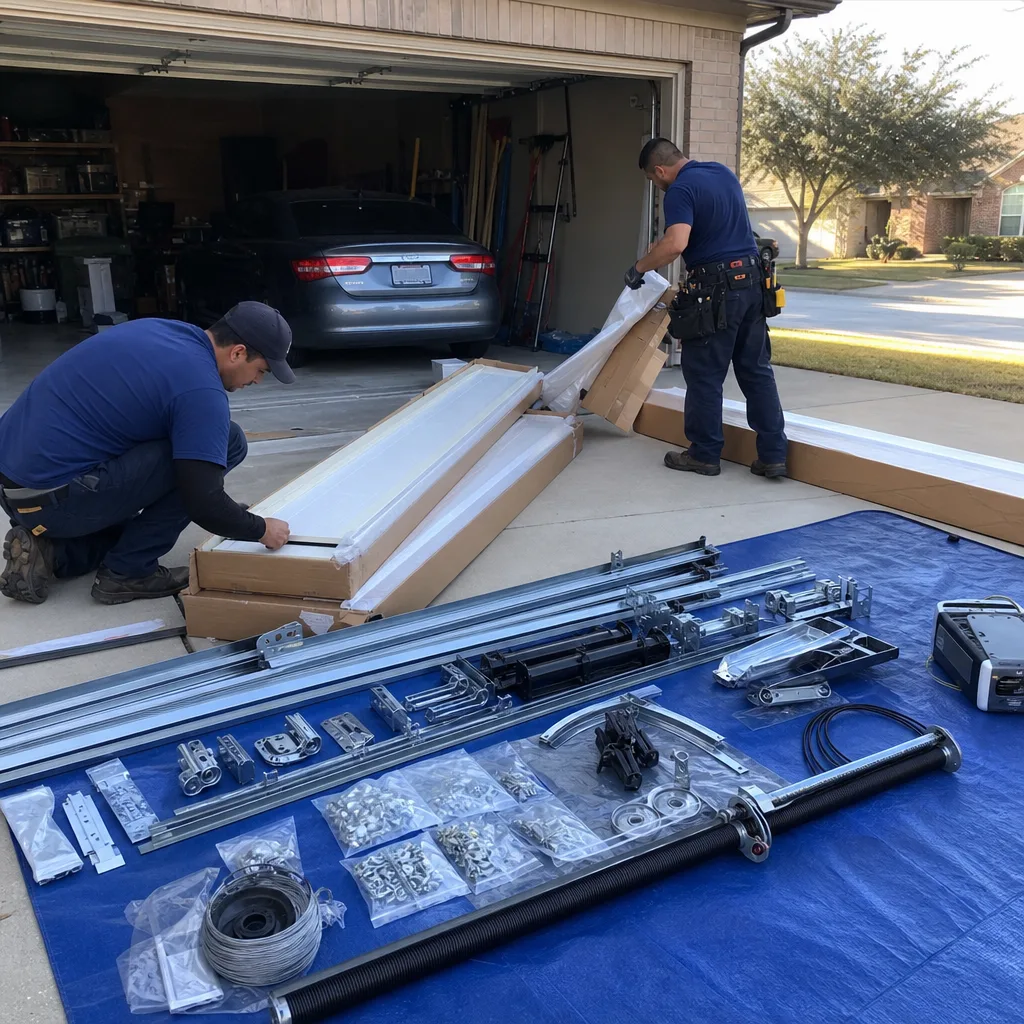
Call a technician when the door won’t open or close, makes loud grinding or popping noises, hangs crooked in the tracks, or reverses unexpectedly. These symptoms indicate component failure that will cascade if ignored. A door that drops when released from the opener is a spring failure - do not operate it manually except to get a vehicle out, and then only with assistance to control the door’s weight.
For new installations, professional measurement ensures proper header framing, spring sizing, and opener horsepower selection. Missouri City’s wind-load requirements in some Fort Bend County zones affect door specification; a permit-pulling contractor handles this verification. See Garage Door Permits, Codes & Inspections in TX: What You Need to Know for requirements.
Servo Garage Doors Missouri City offers free estimates in Missouri City - call (346) 456-5565. Every estimate includes a documented photo record of findings, a flat written price before any work begins, and no obligation to proceed. Browse our more guides & resources for additional homeowner guidance. Emergency calls are answered by a live person, 24/7, with a named technician and on-the-way text.
Frequently Asked Questions
Standard torsion spring replacement in Missouri City ranges from $180 to $340, including labor and disposal. High-cycle springs rated for 25,000-50,000 cycles run $280-$450. The exact price depends on the spring’s wire diameter, inside diameter, and length - three measurements we take and document with a photograph before quoting. Call (346) 456-5565 for a free estimate; estimates are free and carry no obligation.
In Fort Bend County’s heat and humidity, torsion springs typically last 7-12 years, roughly 15-20% less than manufacturer dry-climate ratings. West-facing garages in Sienna Plantation and Riverstone often see the shorter end of that range due to thermal cycling. The spring’s cycle rating matters too: a 10,000-cycle spring in a 4-use-per-day household lasts about 7 years, while a 25,000-cycle spring extends to 15+ years.
You can, but it’s often poor economics. If your springs are more than 8 years old or show tension loss, the new opener will work harder and fail prematurely. We test spring balance and motor amperage draw before recommending opener replacement. If the springs are fatigued, we itemize both options in writing so you see the 5-year cost, not just today’s invoice.
Check the serial plate on the interior face of the bottom or top door section. Decode the manufacture date using the manufacturer’s format - Clopay uses a year-week code, Amarr uses year-month. Most steel door panel warranties are limited lifetime for the original homeowner only and do not transfer on resale. Hardware warranties are typically 1-3 years regardless of ownership. Our technicians photograph the serial plate and include it in the documented record so warranty status is verifiable.
A legitimate quote includes: the contractor’s license number and physical address; itemized parts with specifications (spring size, cycle rating, manufacturer); labor hours and rate; scope boundaries (what’s included and excluded); written warranty terms with duration and coverage; payment terms; and quote expiration date. Omissions of any of these elements create room for price increases after work begins. Clause 1 of The Haven Standard requires all of this in writing before any work starts.
Permit requirements depend on whether you’re replacing components on an existing door or installing a new door system. New installations in some Fort Bend County zoning districts require permits, particularly if wind-load ratings or structural header modifications are involved. Component repairs (springs, cables, openers) typically do not. A licensed contractor verifies permit requirements and pulls them when needed. Never accept “you handle the permit” from a contractor - it’s their responsibility to know and comply.
The most common cause is misaligned or dirty safety sensors. In Missouri City’s humid mornings, condensation on sensor lenses interrupts the infrared beam. Clean both lenses with a dry cloth and verify the LED indicators on each sensor show solid illumination (not blinking). If the problem persists, the sensors may be misaligned from track shift or the emitter/receiver units may be failing. Persistent issues require professional diagnosis - sensor replacement runs $85-$150 including alignment and testing.
The Bottom Line
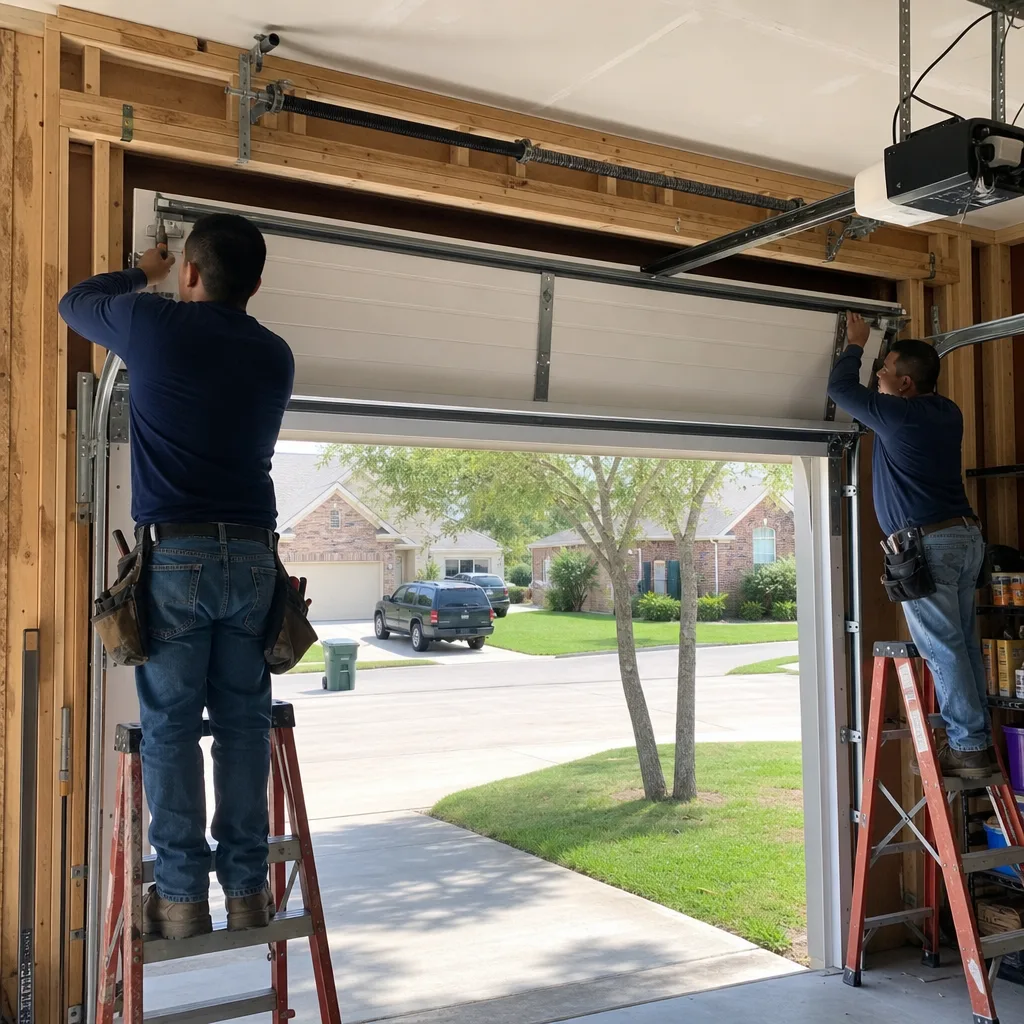
A garage door system is six components with six lifespans, and Missouri City’s climate accelerates the failure of at least three of them. The homeowners who spend least over 20 years are those who read the serial plate, understand the stack, and demand written, itemized quotes before any work begins. The ones who spend most replace the wrong component first, accept verbal estimates, and discover too late that a $280 spring repair would have prevented a $650 opener replacement.
We’ve documented 18,000+ garage doors since 2015, every one with a written price before work started and a photo record when the technician left. That documentation isn’t paperwork; it’s the evidence that makes “trust us” unnecessary.
Call (346) 456-5565 for a free estimate in Missouri City. A live person answers, 24/7. You’ll get a named technician, an on-the-way text, and a flat written price before any work begins - Clause 1 of The Haven Standard, no exceptions.
Written by Marcus Deller, Owner at Servo Garage Doors Missouri City, serving Missouri City since 2015.