
Last updated September 21, 2026
Full 25-point door and opener safety check with every visit - springs, cables, rollers, tracks, and your LiftMaster or Chamberlain opener included
You get a price before we start. It does not change when the truck arrives.

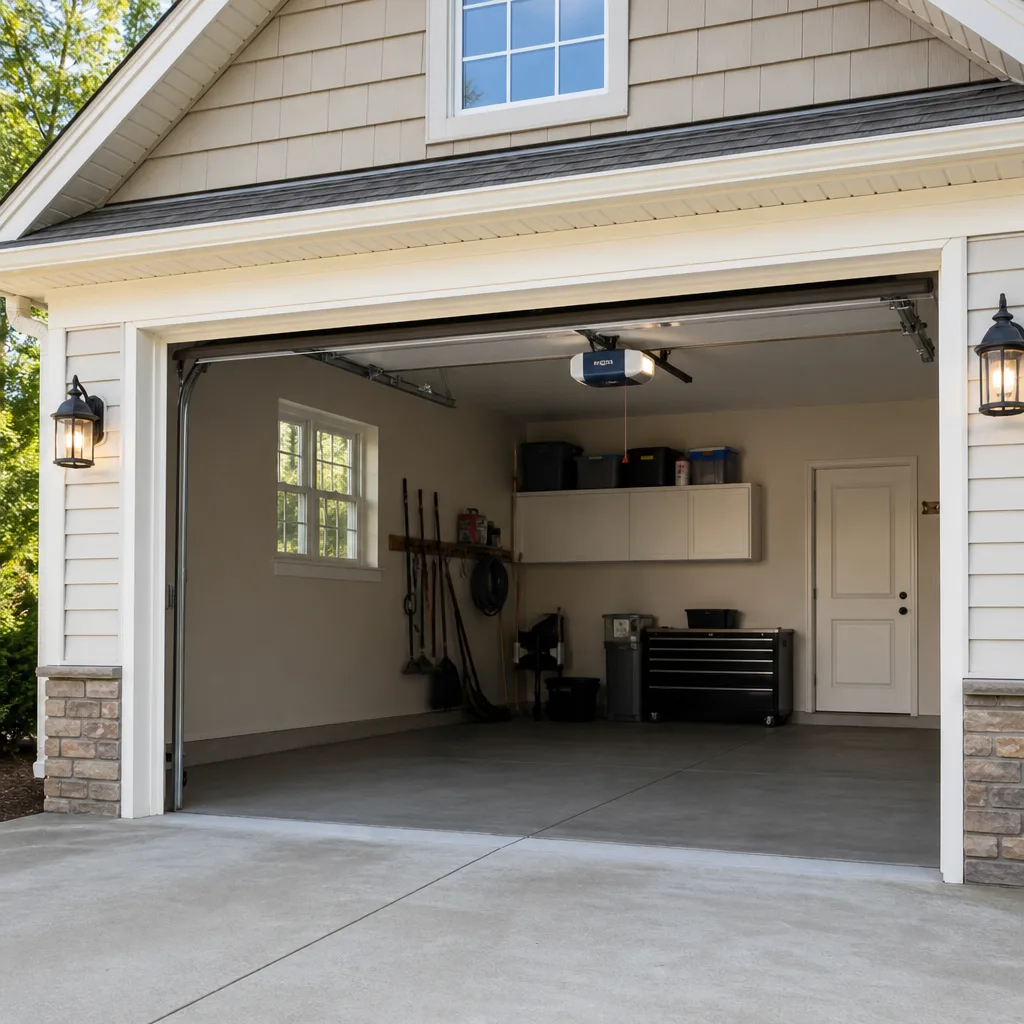
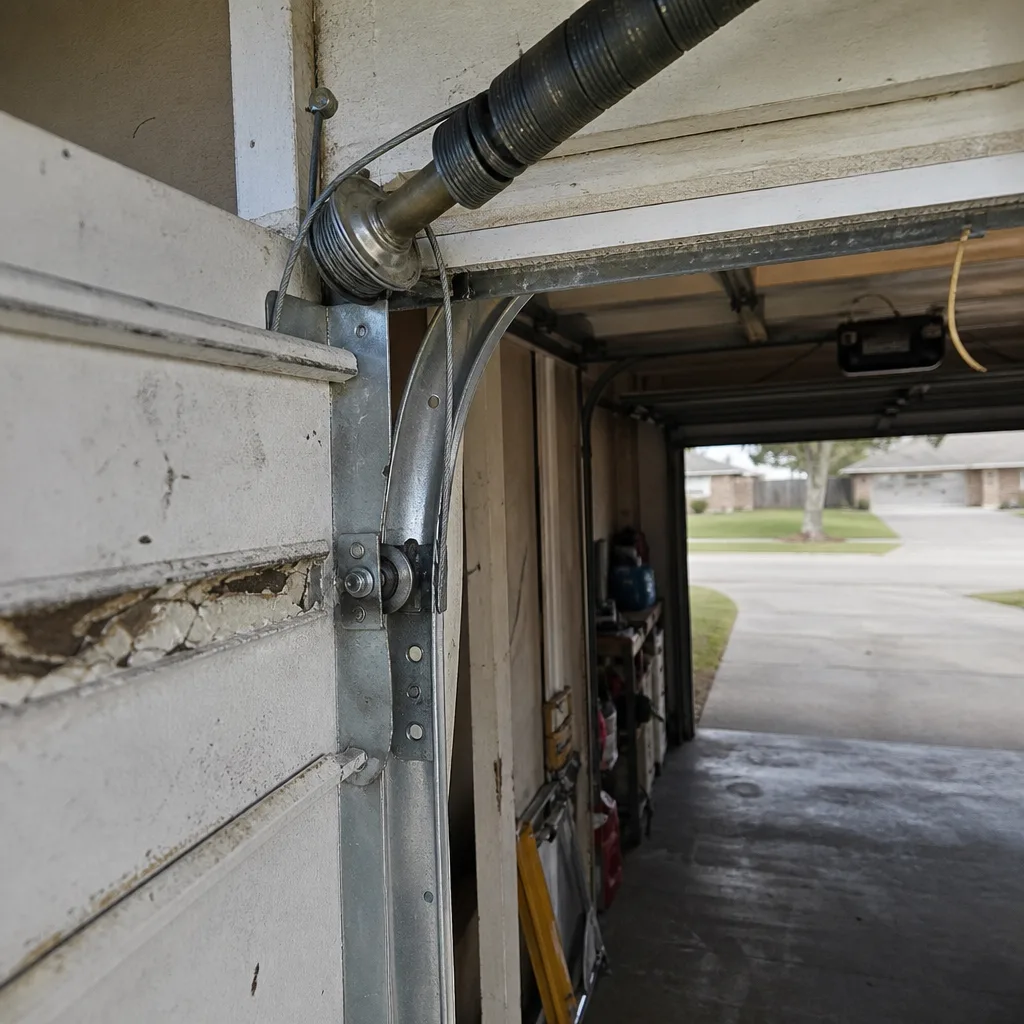 Before
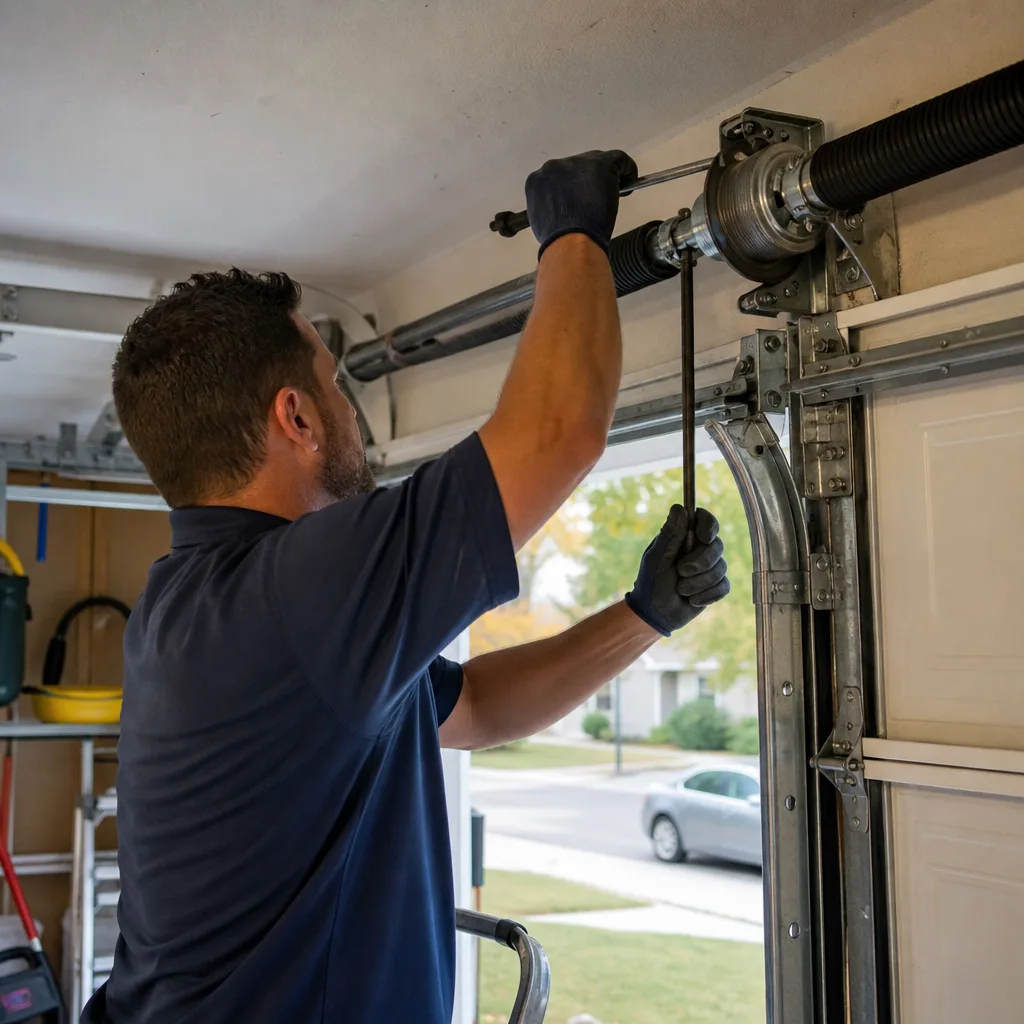 After
After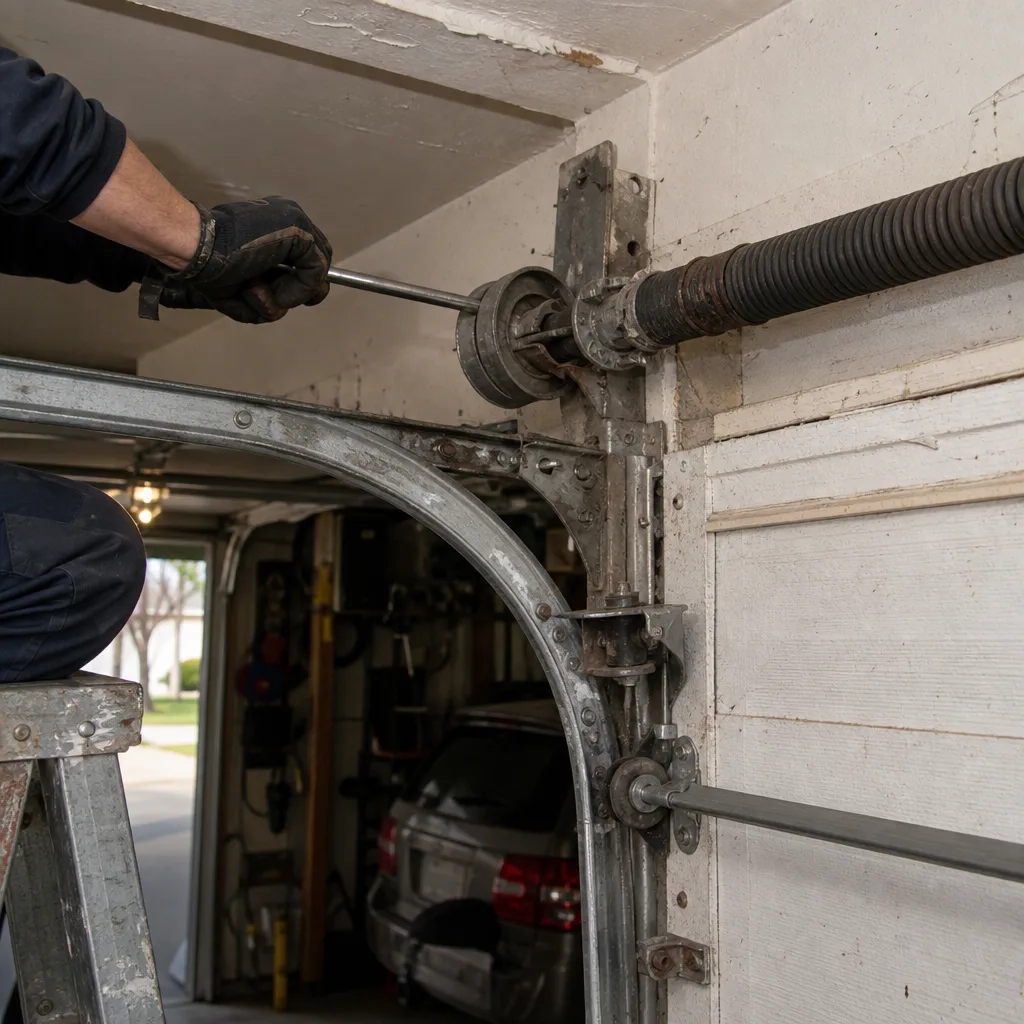 Before
 After
After Before
 After
AfterGarage Door Permits, Codes & Inspections in TX: What You Need to Know
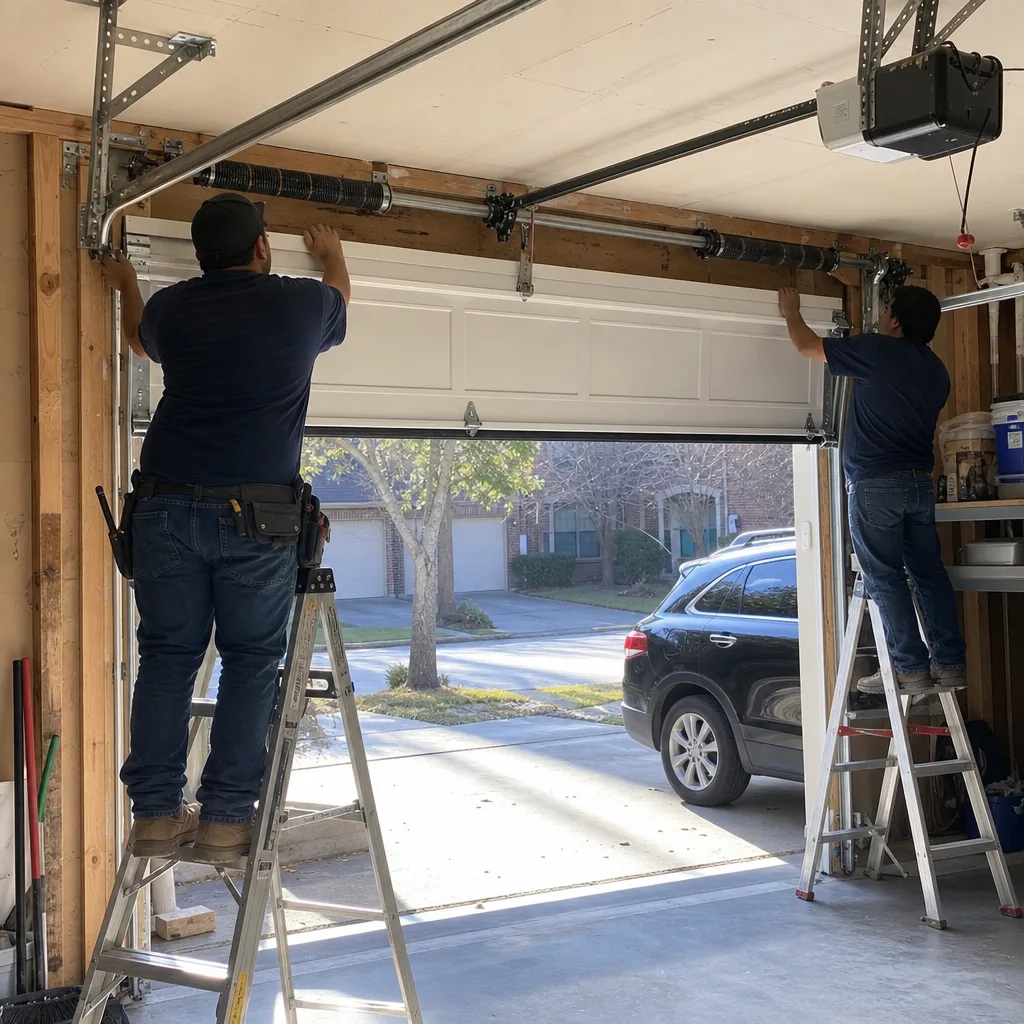
Most garage door replacements in Texas don’t require a permit. That’s the part every contractor repeats. What they rarely mention: the exceptions are specific, consequential, and expensive to discover after the fact. In Missouri City and across Fort Bend County, a simple door swap can turn into a structural modification if you’re widening the opening, raising the header, or replacing a fire-rated assembly between garage and living space. No permit means no inspection, which means no documentation that the header was properly reinforced or that the threshold seal meets IRC requirements. That documentation matters exactly once - when you file an insurance claim after a storm, or when a buyer’s inspector asks to see the permit history before closing. We’ve been replacing and repairing garage doors in Missouri City since 2015, and we’ve seen homeowners learn this the hard way. This guide covers exactly when a permit is triggered in Fort Bend County, what the inspection process actually verifies, and how to protect yourself whether you’re the one doing the work or the one buying the house.
Quick Answer
A standard garage door replacement in Missouri City - same size, same type, no structural changes - typically does not require a permit in Fort Bend County. You need a permit when the project modifies the rough opening, changes the header span, involves new construction, or replaces a fire-rated door between the garage and living space. Unpermitted structural work can void insurance coverage and create disclosure liability at sale.
Table of Contents
- When Is a Garage Door Permit Required in Texas?
- The Fort Bend County Permit Process Step by Step
- What Inspections Actually Check (It’s Not Just the Door)
- Wind Load Requirements: ASCE 7 and Missouri City’s Exposure Category
- Unpermitted Work and Insurance Claims: What Happens After the Storm
- How to Check Permit History Before You Buy a Home
- Fire-Rated Assemblies: The Overlooked Permit Trigger
- Common Mistakes to Avoid
- When to Call a Professional
- Frequently Asked Questions
 Before
 After
AfterWhen Is a Garage Door Permit Required in Texas?
The International Residential Code (IRC), as adopted by the State of Texas and enforced by Fort Bend County, treats garage door replacement as a maintenance activity when the work is limited to removing an existing door and installing a new one of identical dimensions and type. No permit. No inspection. This covers the majority of residential replacements we perform in Missouri City neighborhoods like Sienna Plantation, Lake Olympia, and Quail Valley.
Four specific conditions trigger the permit requirement:
- Opening modification: Widening, narrowing, raising, or lowering the rough opening changes the structural load path. The header above the door must be engineered for the new span and load. In Missouri City’s clay-heavy soils, header settlement is already a common issue; an undersized header on a modified opening will crack the surrounding framing within a few seasons.
- New construction: Any garage door installed in a newly built structure requires permitting as part of the overall building inspection sequence. The garage door inspection is typically the final trade inspection before the Certificate of Occupancy.
- Fire-rated assembly replacement: A door connecting the garage directly to a living space - not the exterior garage door, but the interior passage door - must carry a fire rating (typically 20-minute, labeled). Replacing this assembly triggers permit and inspection requirements under IRC R302.5.1.
- Structural repair following damage: If the door frame, header, or surrounding wall was damaged by vehicle impact, storm, or decay, the repair work may require permitting depending on the extent of structural involvement.
The Texas Department of Licensing and Regulation (TDLR) does not directly regulate garage door installation, but local jurisdictions enforce the IRC adoption through their building departments. Fort Bend County’s unincorporated areas and most municipalities within it, including Missouri City, follow the 2021 IRC with local amendments. Always verify with the specific jurisdiction - Missouri City Building Inspections maintains its own amendment list, and a door replacement in the city limits may face slightly different requirements than one in unincorporated Fort Bend.
We’ve arrived at jobs in Missouri City where a homeowner had a contractor install a 16-foot door in a 14-foot opening by cutting into the king studs and header without engineering review. The header sagged within eight months. Because there was no permit, there was no inspection, and the contractor had already disappeared. The repair cost more than the original installation. Clause 4 of The Haven Standard is why our technician photographs the existing structure before quoting any modification - the customer sees what they’re working with before anyone touches a saw.
The Fort Bend County Permit Process Step by Step
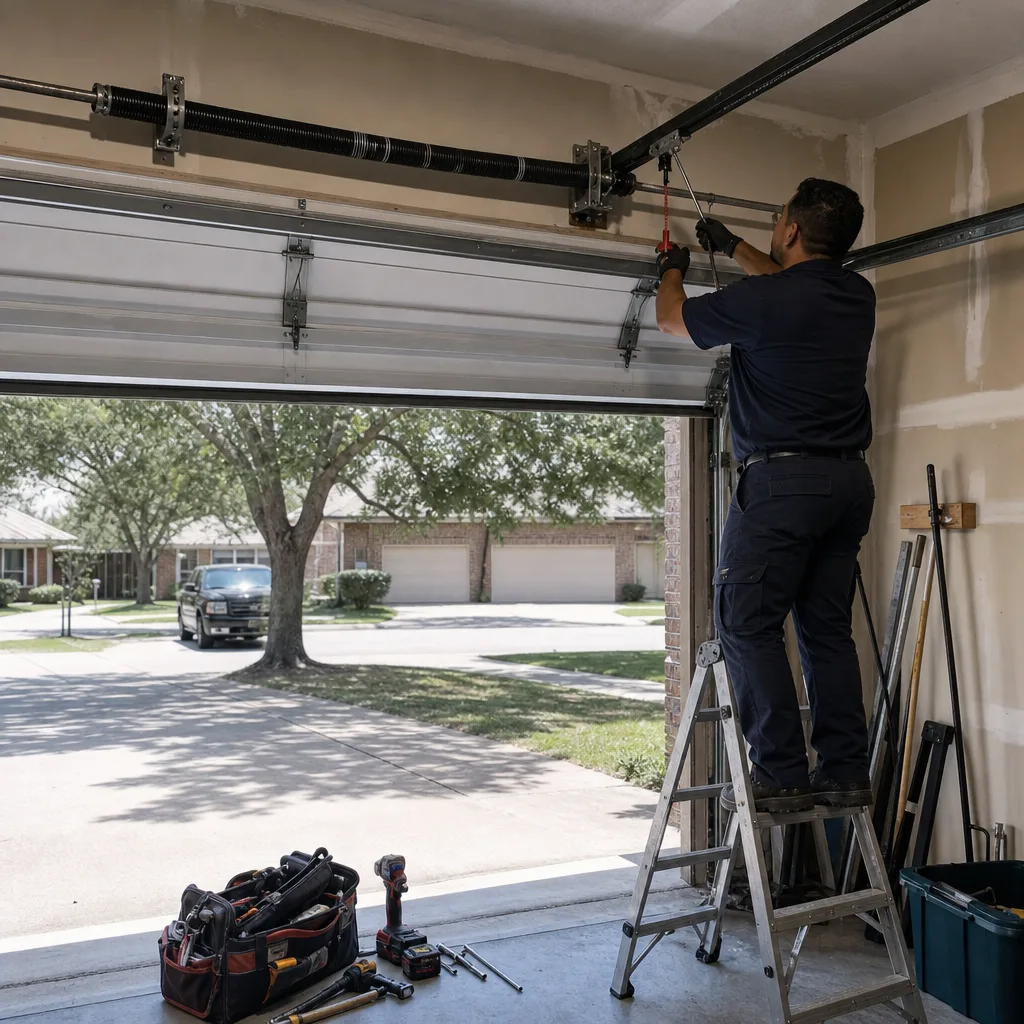
If your project triggers a permit, the process in Fort Bend County is straightforward but not fast. Plan for two to four weeks from application to final inspection, depending on the building department’s current volume. Here’s how it works:
- Determine jurisdiction: Missouri City maintains its own building department for properties within city limits. Unincorporated Fort Bend County falls under the county building department. The property’s address determines where you apply. Missouri City’s online permit portal accepts applications; the county still requires paper submission for some residential permits.
- Prepare documentation: You’ll need a site plan, the door manufacturer’s specification sheet showing wind load rating and fire rating (if applicable), and structural calculations for any header modification. For a standard replacement in a modified opening, the structural engineer’s letter specifying the header size, material, and connection detail is the critical document.
- Submit and pay fees: Fort Bend County’s residential building permit fees are calculated per valuation of the work. A typical garage door modification runs $150-$400 in permit fees. Missouri City’s fee schedule is similar, with a plan review fee added for structural modifications. Payment is due at submission; the clock doesn’t start until fees clear.
- Plan review: Staff reviews structural calculations for header adequacy, wind load compliance, and fire separation requirements. This takes 5-10 business days in normal periods. During post-storm surges, plan review can extend to three weeks.
- Issue permit and schedule inspections: Once approved, the permit is issued and inspections are scheduled. For garage door work, you’ll typically need a rough inspection (framing and header visible) and a final inspection (door installed, operational, safety devices tested). Some jurisdictions combine these for simple replacements.
- Pass inspection and receive Certificate of Completion: The inspector verifies code compliance and issues a Certificate of Completion or final approval. This document is what you’ll need for insurance records and future sale disclosures.
One detail competitors rarely mention: the permit application requires a licensed contractor’s information. Homeowner permits exist for some trades in Texas, but garage door work involving structural modification typically requires a contractor licensed with the jurisdiction. At Garage Door Installation in Missouri City, we handle permit submission as part of our scope when structural work is involved - the written price includes this, and the customer receives copies of all documentation.
What Inspections Actually Check (It’s Not Just the Door)
Homeowners often assume the inspector walks in, watches the door go up and down, and signs off. The actual inspection protocol for garage door installations under the IRC covers five distinct systems, and failure on any one requires correction and re-inspection.
Header load path and bearing: The inspector verifies the header is properly sized for the span and load, bearing on jack studs or approved hangers, and connected to the king studs with appropriate fasteners. In Missouri City’s gumbo clay soils, differential settlement can shift bearing points; the inspector checks for cracks or displacement that indicate movement. If you’re widening a 16-foot opening to 18 feet for a larger vehicle, the header upgrade is not optional - a double 2×10 won’t carry the load of a triple 2×12 or engineered LVL.
Threshold seal and weather protection: IRC N1102.4.1.1 requires garage door thresholds to be sealed against air infiltration. The inspector checks the bottom seal contact, side and top weatherstripping, and any threshold dam. This matters for energy compliance and for preventing garage-to-house air transfer, which is a carbon monoxide pathway in homes with attached garages.
Opener safety reverse compliance: Every automatic garage door opener must have a functioning safety reverse system, tested with a 2×4 laid flat in the door path per UL 325. The inspector watches the door contact the obstruction and reverse within two seconds. Photoelectric eyes must be installed no higher than six inches above the floor and aligned. We test this on every Garage Door Opener Repair & Installation in Missouri City - it’s not just a code item, it’s the difference between a bruised shin and a crushed pet.
Wind load resistance: The installed door must match the wind load rating on the approved plans. The inspector checks the label or documentation. We’ll cover wind load in detail in the next section - it’s the most commonly failed inspection item in coastal and near-coastal Texas counties.
Fire separation (where applicable): For fire-rated doors between garage and living space, the inspector verifies the label, frame integrity, self-closing device, and proper undercut (maximum 3/4 inch). No field modifications to the door or frame are permitted.
The inspection takes 20-40 minutes for a typical residential installation. The inspector documents findings on a standardized form. Pass, and you receive final approval. Fail, and you receive a correction notice with a re-inspection window. In Missouri City, re-inspection fees run $75-$150 depending on the jurisdiction and number of items.
Our documented photo record - included on every visit, tracing to the founding rule Servo was built on in 2015 - gives the customer evidence of pre-existing conditions before we start, and code-compliant installation when we finish. If an inspector has a question six months later, the customer has the documentation.
Wind Load Requirements: ASCE 7 and Missouri City’s Exposure Category
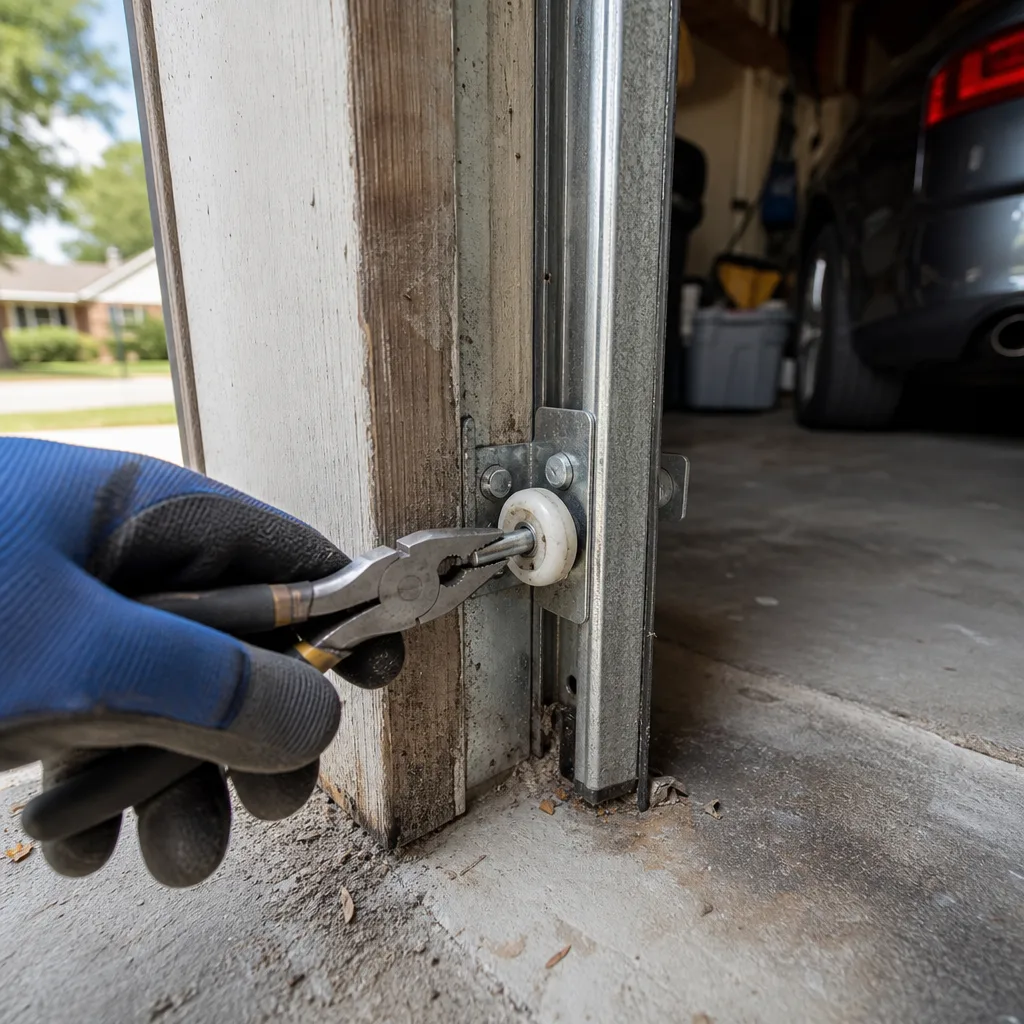
Texas has adopted ASCE 7-16 wind load provisions through the IRC and IBC. Garage doors are required to resist wind pressures calculated for the site’s exposure category, wind speed, and importance factor. This is where generic national advice fails Texas homeowners entirely.
Missouri City sits in Fort Bend County, roughly 25 miles inland from Galveston Bay. The design wind speed per ASCE 7-16 is 130 mph (3-second gust, Risk Category II). The exposure category is typically B or C depending on specific location and surrounding development density. Sienna Plantation’s mature tree cover might justify Exposure B; a new development on cleared land near Highway 6 likely faces Exposure C with higher pressure coefficients.
What this means in practice: a garage door rated for 120 mph design wind speed is not code-compliant in Missouri City. The door must carry a label showing compliance with ANSI/DASMA 108 or be engineered for the site-specific wind pressure. Most major manufacturers - Raynor, Clopay, Amarr - produce wind-rated doors in 130 mph and 140 mph configurations for this market. LiftMaster and Chamberlain openers don’t carry wind ratings themselves, but the complete assembly including track, hardware, and anchorage must be rated as a system.
The inspection failure we see most often: a homeowner or contractor installs a wind-rated door but uses non-rated track or insufficient jamb anchorage. The door label says 140 mph, but the installation doesn’t match the tested assembly. The inspector fails it. The correction requires track replacement and additional anchorage - often more expensive than doing it correctly the first time.
For Missouri City specifically, the Fort Bend County Floodplain Administrator and Building Official have coordinated to require wind-borne debris protection (impact-rated glazing or shutters) in certain flood zones, but garage doors in typical residential construction are governed by the wind pressure requirement alone. If you’re in a designated high-velocity hurricane zone, additional requirements apply - check your flood zone designation through the county GIS portal.
When we quote a door replacement in Missouri City, we specify the wind rating in the written scope. The customer knows what they’re getting before we order. No surprises at inspection. That’s Clause 1 of The Haven Standard: flat, written price and written scope before any work starts.
Unpermitted Work and Insurance Claims: What Happens After the Storm
This is the scenario no contractor wants to discuss, but every homeowner should understand. You replace your garage door without a required permit. Six months later, Hurricane Beryl’s successor drops a tree branch through the roof. The insurance adjuster inspects, notes the garage door was replaced, and requests permit documentation. You don’t have it.
What happens next depends on your policy language and your state’s insurance regulations, but the range of outcomes is not favorable. The insurer may:
- Deny the entire claim for the garage and any damage attributed to garage failure, citing material misrepresentation or policy violation
- Reduce the claim payment by the cost to bring the work to code, effectively forcing you to pay for permitting and re-inspection retroactively
- Non-renew your policy at term end, classifying the property as higher risk
- Accept the claim but subrogate against the installer if negligence is established
Texas is not a state with strong homeowner protection against insurer denial for unpermitted work. The standard HO-3 policy contains a “concealment or fraud” provision that insurers have successfully invoked. Even if the unpermitted door had nothing to do with the storm damage, the discovery of unpermitted structural work gives the insurer grounds to investigate the entire claim more aggressively.
The resale disclosure problem is slower but equally expensive. Texas Property Code requires sellers to disclose known defects and code violations. Unpermitted structural work is a known code violation once you’re aware of it. Failure to disclose exposes you to post-sale liability. Buyer’s inspectors in Missouri City’s competitive market increasingly pull permit history - it’s a standard practice in Sienna Plantation and Riverstone, where homes trade above $500,000 and buyers are represented by sophisticated agents.
We’ve been called to jobs where the seller’s disclosure flagged “garage door replaced 2022, permit unknown.” The buyer’s lender required a retroactive inspection and certificate. The seller paid $800 for engineering review, $350 for permit fees, and $200 for inspection - plus a two-week closing delay. The original installer was long gone. The permit would have cost $250 and added one day to the original timeline.
This is why we document everything. The photo record, the written scope, the permit copies if we pulled them. The customer receives a complete file. If they sell in five years, they have what they need. If they file a claim, they have evidence of code-compliant installation. The Haven Standard was built on this - not trust, but a paper trail.
How to Check Permit History Before You Buy a Home
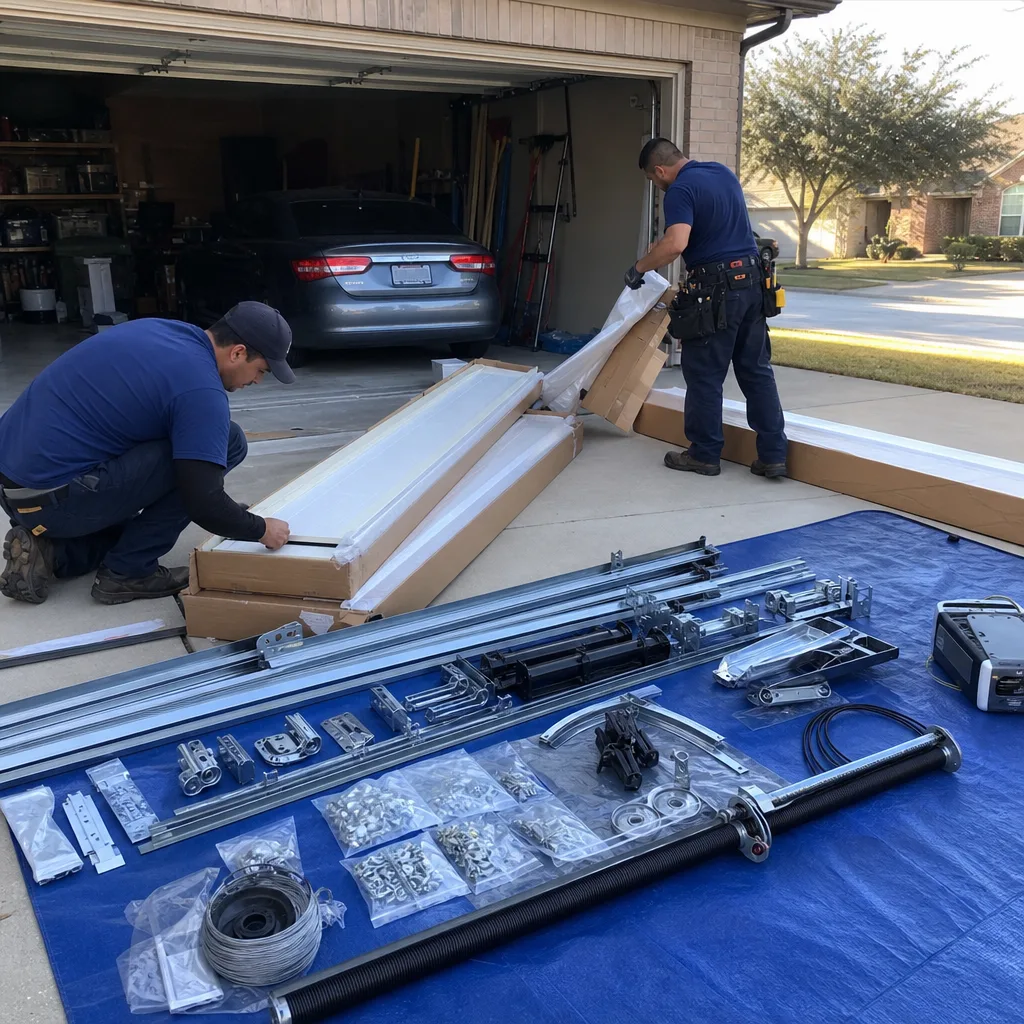
If you’re purchasing a home in Missouri City or anywhere in Fort Bend County, the permit history is part of your due diligence. Here’s how to access it:
- Identify the jurisdiction: Missouri City properties are handled by Missouri City Building Inspections. Unincorporated Fort Bend County properties fall to the county. Cross-reference the address with city limits maps - some addresses that say “Missouri City” are actually county.
- Request a permit history report: Missouri City provides this through their online portal or by email request to buildinginspections@missouricitytx.gov. Include the property address and request “all permits issued since [year].” Fort Bend County uses a different system; call (346) 456-5565 for residential permit records.
- Review for garage-specific permits: Look for permits with descriptions including “garage door,” “garage modification,” “residential alteration,” or “structural repair.” Note the issue date, contractor listed, and final inspection status. An open permit - issued but never finalized - is a red flag requiring resolution before closing.
- Cross-check with visual inspection: Walk the garage. Does the door size match the original construction? Are there signs of header modification - newer framing, different paint, or patched drywall above the door? Does the interior garage-to-house door have a fire rating label? Discrepancies between permit history and current condition suggest unpermitted work.
- Request documentation from the seller: If permits exist, ask for copies of the Certificate of Completion and any contractor invoices. If the seller claims work was done but no permit exists, that’s a disclosure issue to resolve with your agent and attorney.
In Missouri City’s older neighborhoods like Quail Valley, built primarily in the 1970s and 1980s, original garage doors were often non-wind-rated and smaller than modern standards. A current 18-foot door in a home that originally had 16 feet almost certainly involved structural modification. No permit on record means you need to investigate further, or budget for potential retroactive compliance costs.
We’re not home inspectors, but we’ve been in enough Missouri City garages to recognize the signs. If you’re under contract and want a second opinion on garage door conditions before closing, we offer free second opinions on any written estimate - including inspector reports. Bring the paperwork. No coupon required.
Fire-Rated Assemblies: The Overlooked Permit Trigger
The garage door that gets all the attention is the big one facing the street. The one that actually kills people in house fires is the 32-inch passage door between garage and living space.
IRC R302.5.1 requires this door to be 20-minute fire-rated, self-closing or self-closing-equipped, and installed in a labeled frame. The intent is to slow fire spread from garage to house long enough for occupants to escape. Vehicle fires, gasoline storage, and workshop activities make garages ignition sources. The door is the barrier.
When this door needs replacement - rot, damage, or renovation - it’s not a hardware-store pick. A standard solid-core wood door is not fire-rated. A fire-rated door has a label from a recognized testing laboratory (UL, Warnock Hersey, Intertek) permanently affixed to the hinge edge. The frame must be labeled or built to tested dimensions. Field trimming of the door or frame voids the rating.
Permit requirements for fire-rated door replacement vary by jurisdiction interpretation. Fort Bend County generally requires permitting when any fire-rated assembly is modified or replaced, because the assembly’s performance is life-safety critical. Missouri City follows this interpretation. The inspection verifies the label, the self-closing device operation, the undercut dimension, and the frame integrity.
We’ve seen homeowners in Lake Olympia replace a swollen, sticking garage-to-house door with a nice solid-core pine door from a big-box store. No label. No self-closing hinge. The installation was professional-looking, completely wrong for code, and discovered at resale. The correction required a new labeled door, new frame, and permit - plus the original installation cost was sunk.
If you’re unsure whether your garage-to-house door is fire-rated, check the hinge edge for a paper or metal label. If there’s no label, assume it’s not rated. If you’re planning replacement, verify permit requirements with Missouri City Building Inspections before ordering. The 20-minute rating adds cost - typically $150-$300 over a standard door - but it’s not optional where code requires it.
Common Mistakes to Avoid
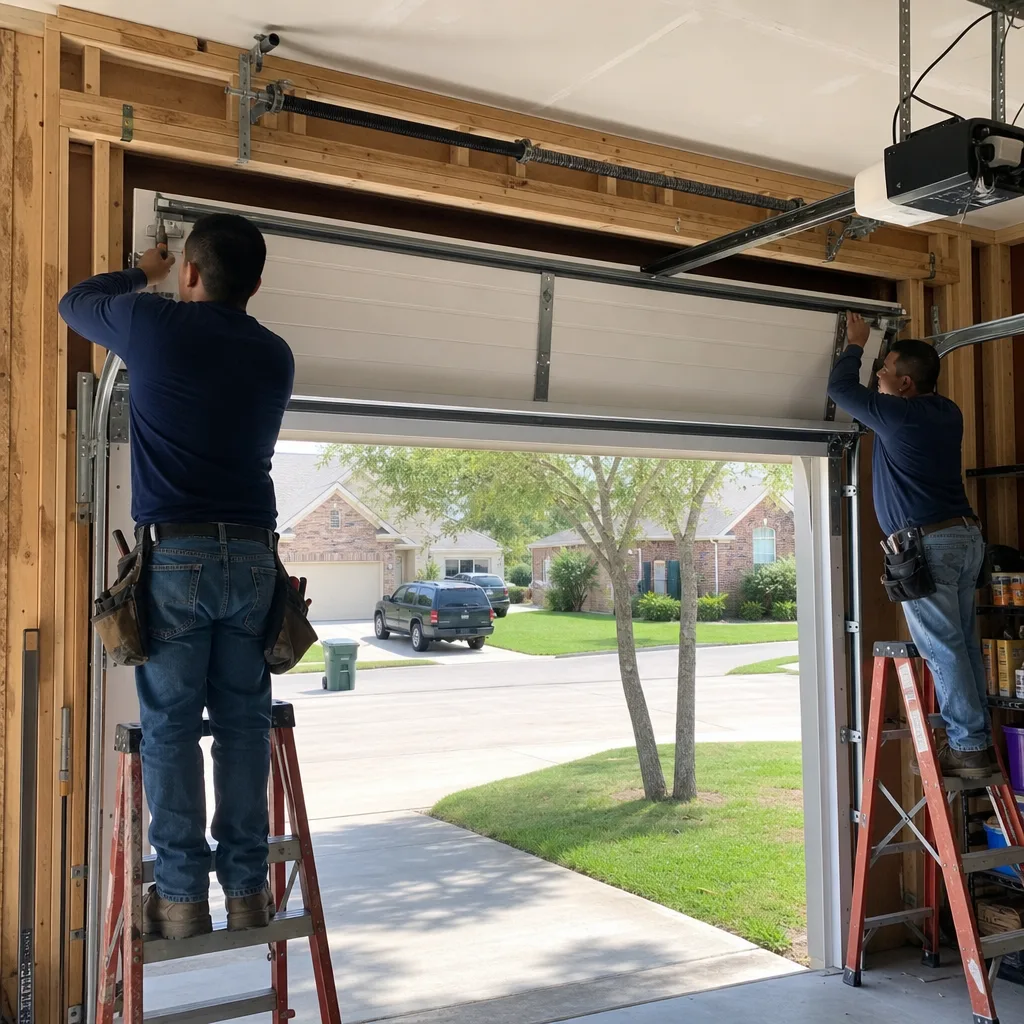
- Assuming “same size” means “no permit”: A door can be the same nominal size but different weight, requiring header reinforcement or spring system changes that trigger structural permitting. Always verify with the building department if there’s any modification to framing or hardware anchorage.
- Trusting the contractor to pull permits: In Texas, the property owner is ultimately responsible for permit compliance. If your contractor says they’ll handle it, request the permit number and verify it’s active in the jurisdiction’s system before work starts. We’ve cleaned up jobs in Missouri City where the contractor “forgot” and the homeowner faced retroactive compliance.
- Ignoring wind load on “inland” properties: Missouri City’s 130 mph design wind speed applies regardless of distance from the coast. A door rated for Dallas or Austin may fail inspection here. Always specify location when ordering.
- Buying a fire-rated door and installing it in a non-rated frame: The assembly is rated as a system. A labeled door in an unrated frame with no self-closing device fails inspection. The complete assembly must match the tested configuration.
- Not requesting final inspection documentation: An issued permit means nothing without passed inspection and Certificate of Completion. Some contractors abandon jobs after rough inspection, leaving the permit open. Request final documentation before final payment.
- Failing to disclose unpermitted work at sale: Texas disclosure requirements are strict. “I didn’t know” is not a defense if the work was visible or should have been known. When in doubt, disclose and provide context.
- Using storm damage as an excuse to upsize without permitting: Insurance may cover like-for-like replacement, but widening the opening for a larger door is improvement, not repair, and requires permitting. The adjuster and inspector will notice.
When to Call a Professional
Call a professional when your project involves structural modification, fire-rated assemblies, or any uncertainty about permit requirements. The cost of consultation is negligible compared to retroactive compliance or insurance denial. Garage Door Repair in Missouri City from Servo Garage Doors Missouri City includes structural assessment when needed - we photograph the existing conditions, specify what permitting is required in the written scope, and handle submission when we perform the work. Every quote is flat, written, and delivered before any work starts. No exceptions. That’s Clause 1 of The Haven Standard. If you’re under contract on a home and need a garage door assessment before closing, we offer free estimates in Missouri City - call (346) 456-5565.
Frequently Asked Questions
A standard replacement of the same size and type typically does not require a permit in Missouri City or Fort Bend County. You need a permit if you’re modifying the rough opening, changing the header, installing in new construction, or replacing a fire-rated door between garage and living space. Call Missouri City Building Inspections at (346) 456-5565 to confirm for your specific project.
Residential garage door permits in Fort Bend County typically range from $150 to $400 depending on project valuation and whether structural modification is involved. Missouri City adds a plan review fee for structural work. Re-inspection fees run $75-$150 if corrections are needed. These fees are minor compared to the cost of retroactive compliance or insurance complications from unpermitted work.
Missouri City requires garage doors rated for a 130 mph design wind speed per ASCE 7-16, with exposure category determined by specific site conditions. Most properties fall under Exposure B or C. The door must carry an ANSI/DASMA 108 compliance label or site-specific engineering. Always verify the complete assembly - door, track, hardware, and anchorage - is rated as a system, not just the door panel.
Texas allows homeowner permits for some trades, but Fort Bend County and Missouri City typically require a licensed contractor for structural modifications involving headers, load-bearing elements, or fire-rated assemblies. For simple like-for-like replacement with no structural changes, a homeowner permit may be available. Contact the specific jurisdiction to confirm; requirements change and interpretations vary.
Request a permit history report from the jurisdiction - Missouri City Building Inspections or Fort Bend County depending on location. Look for permits with “garage door,” “structural repair,” or “residential alteration” descriptions, and verify each shows final inspection status. Open permits or missing documentation for visible modifications suggest unpermitted work requiring further investigation before purchase or sale.
Insurance coverage for unpermitted structural work is not guaranteed. Texas HO-3 policies contain concealment provisions that insurers have invoked to deny claims. Even if the unpermitted work didn’t cause the damage, its discovery can trigger broader claim investigation, delay, or denial. The safe course is permitting when required and retaining all documentation. Call (346) 456-5565 for a free estimate on code-compliant replacement - we handle permits as part of our scope when needed.
The Bottom Line
Most garage door replacements in Missouri City don’t need permits. The ones that do - opening modifications, new construction, fire-rated assemblies - carry consequences that far exceed the permit cost. No permit means no inspection, no documentation, and potential exposure on insurance claims and resale disclosures. Wind load requirements under ASCE 7-16 apply to every door in this market, not just coastal properties. Before you buy a home, pull the permit history. Before you modify a garage, verify requirements with the building department. And before you hire any contractor, confirm they’ll provide written documentation of what was done and why it complies. At Servo Garage Doors Missouri City, we’ve operated under The Haven Standard since 2015: written price before work starts, documented photo record when we leave, and every customer receives the file. Evidence beats promises. Call (346) 456-5565 for a free estimate.
Written by Marcus Deller, Owner at Servo Garage Doors Missouri City, serving Missouri City since 2015.